




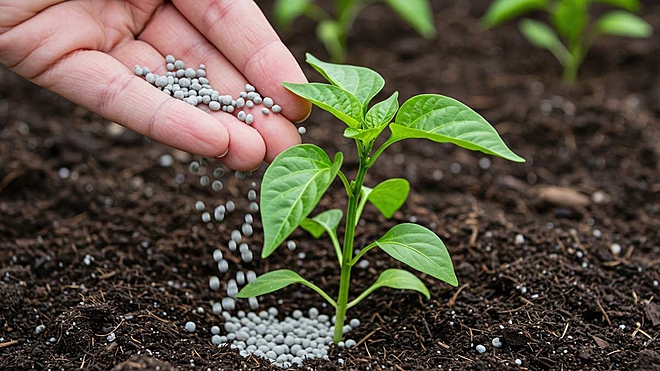
 Adobe Stock
Summary: Behind the headlines of China’s export curbs lies a quieter opportunity in India’s fertiliser space. This story reveals where the real long-term winners may emerge.
In late 2024, India’s fertiliser shipments from China, its biggest supplier, slowed to a crawl. What looked like routine paperwork delays at Chinese ports soon piled up into real shortages back home. By mid-2025, some fertilisers simply weren’t arriving. Prices jumped, supplies thinned and farmers felt the squeeze. By August, Beijing eased the restrictions. And now reports suggest the curbs could be placed again from October. The stop-go supply has once again spotlighted how unfavourable India’s import dependence really is, but it has also brought to notice a potential opportunity in this corner of the market. Let’s take a detailed look at where this potential opportunity is arising from and who can benefit from it.
First, which fertilisers saw an impact?
India’s fertiliser needs fall into two broad groups.
The basics: Bulk fertilisers—urea, DAP (diammonium phosphate), MOP (muriate of potash)—are the essential fertilisers widely used for staple crops like wheat and rice. They are heavily subsidised by the government and are thus sold cheap. This price support keeps farm costs under control and ensures the country’s food supply doesn’t suddenly get expensive. India makes most of its urea but still imports nearly half of its DAP and almost all its potash, mainly from China. As a result, their supply was hampered as China halted its exports.
The precision products: These are the fertilisers, clean and high-yield products, crucial for higher-value crops like fruits, vegetables and flowers. Farmers prefer them because they boost yields. Companies like them because they are exempted from subsidies and therefore enjoy unregulated pricing.
It’s this second group that saw the sharpest shortage when Chinese shipments slowed. India uses only a few lakh tonnes of these specialty fertilisers each year, but about 80 per cent of the supply comes from China.
Why it matters
These fertilisers, though primarily used by large-scale farmers given their higher pricing, lead to higher output. Their shortage means lower yields and eventually lower agricultural output, which in turn, risks raising prices and causing food inflation. For the fertiliser industry, it is a reminder that relying so heavily on one country is a dangerous gamble.
The response: building a buffer
The disruption has jolted both policymakers and companies into action. The government, together with cooperative entities like Indian Potash and Kribhco, has stitched up long-term phosphate supply deals with Saudi Arabia, ensuring a steady flow of DAP, the second-most important fertiliser after urea.
At the same time, private firms are working to build local capacity in products:
- Coromandel International commissioned a nano-DAP plant in June 2024 in line with the expansion of its specialty nutrients portfolio.
- Deepak Fertilisers is in partnership with Israel’s Haifa to expand its water-soluble range.
- Rallis India has commissioned an 8,000-tonne water-soluble plant.
- Gujarat State Fertilizers is marketing its water-soluble range tailored for drip irrigation.
- Aries Agro is doubling down on chelated micronutrients and water-soluble lines.
- Paradeep Phosphates is strengthening its phosphoric-acid and complex fertiliser base while pushing into value-added formats, including nano-fertilisers.
- Rashtriya Chemicals & Fertilizers is setting up a 1,200 metric tonne (per day) DAP-based complex plant.
What’s in it for investors?
The direction is clear: India wants to cut its dependence on China and build its own capabilities in the high-value end of the fertiliser spectrum. This is where disruption can turn into opportunity.
Fertilisers remain a small slice of the market today, but their appeal is rising fast thanks to higher yields and better efficiency. If domestic players can reduce import reliance and price these products competitively, farmers will adopt them in greater numbers. That adoption creates a virtuous cycle: stronger farm demand encourages more production, which further improves availability and affordability. This could evolve into a rare win-win—farmers gain productivity, while companies capture a growing, higher-margin market.
What needs to go right is execution. fertilisers (nano-fertilisers, water-soluble products, micronutrients, etc.) require high technical know-how and tight process control. Since India has long leaned on imports for this know-how, domestic capability is still nascent and execution will be critical.
For investors, the signs to watch are simple:
- Are these new plants running on schedule and at consistent quality?
- Are companies diversifying supply chains beyond China?
- Is farmer adoption of these fertilisers picking up?
If the answer to those is yes, firms with the financial muscle and technical know-how stand to benefit the most. Disciplined execution can turn this nascent opportunity into durable profits.
Which fertiliser stocks deserve a place in your portfolio?
Behind the noise of global supply squeezes, the fertiliser industry remains a bedrock of India’s economy. At Value Research Stock Advisor, we go beyond short-term supply shocks to uncover businesses building lasting moats in this vital sector.
Find our recommendations that include companies positioned to benefit from enduring demand while building moats that protect investors for the long haul. These are the players that can keep compounding over years, not just quarters.
Also read: Market is overlooking dairy stocks. That spells opportunity
This article was originally published on September 02, 2025.
Ask Value Research 
 New episodes every Friday









 New Process Alert
  Seems like you've uploaded a wrong QR code. Please upload the QR code downloaded from MF Central platform.


