




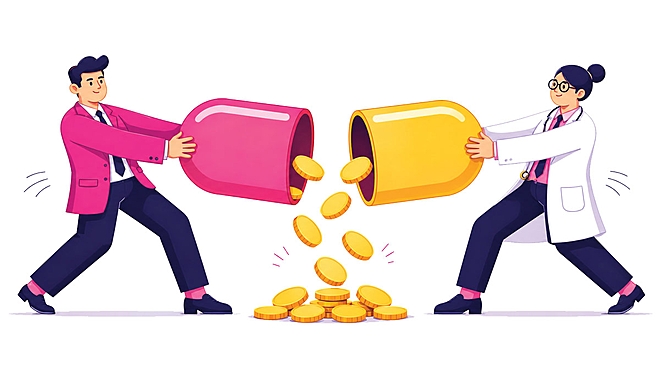
 Aprajita Anushree/AI-Generated Image
Summary: A successful pharma company needs far more than good products or manufacturing capacity. This story explains how doctor relationships, chronic therapies and regulatory compliance shape long-term success and where the biggest risks for investors lie.
Summary: A successful pharma company needs far more than good products or manufacturing capacity. This story explains how doctor relationships, chronic therapies and regulatory compliance shape long-term success and where the biggest risks for investors lie. In Part 1, we covered why pharma demand is structurally resilient, how India built its global position and the vocabulary every investor needs. In Part 2, we followed the supply chain and looked at the economics of each business model. What we have not yet covered is how these businesses actually win or lose in the market. A company can have the right molecules and the right manufacturing capability and still underperform if its commercial machine is weak or its regulatory standing is fragile. Part 3 looks into that machine. The doctor is the actual customer When a doctor prescribes a medicine, the patient has almost no say in what they buy. They walk out of the clinic with a prescription for a specific brand, take it to the chemist, pay for it and go home. The person who chose the medicine has no financial stake in that choice. The person who paid had no role in making it. This separation shapes the entire commercial logic of domestic pharma. A television campaign cannot persuade patients to ask for your brand by name. Discounting cannot win market share because the patient never sees a competing price. The only path to prescription share is reaching the doc
This article was originally published on August 01, 2026.
 New episodes every Friday











 New Process Alert
  Seems like you've uploaded a wrong QR code. Please upload the QR code downloaded from MF Central platform.


