 Widely read:




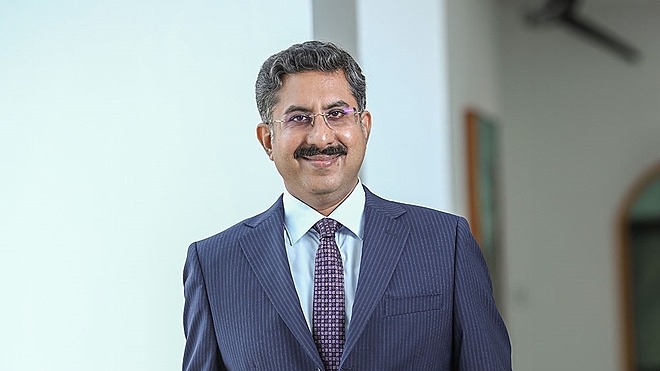


Ajay Tyagi, head of equities at UTI Asset Management Company (AMC), discusses his insights from his two-decade career in asset management. He discusses his investment strategy and why he has stayed with the same fund house for the past 23 years. Edited transcripts...
You started your journey at UTI AMC way back in 2000 as an analyst through campus placement. Did you have a brush with markets while you were studying?
If you look at my family background, none of my elders has been in the financial sector. So, it was a new domain for me, with no background or understanding of the markets. But when I was in college, Indian markets started inviting foreign investors, and there was a lot of news and glamour associated with the financial markets. Indian equities were coming out of the erstwhile traditional broker-driven markets and entering the more professional-driven markets. Some of the foreign brokerages, domestic private sector and mutual funds had already started making a splash. Those changes in the financial markets, post-liberalisation, caught my attention to start my journey in the financial world.
Can you tell us about your starting days and what it was like to analyse stocks for the biggest fund house in the country?
I would say analysing stocks was not materially different from how we do it today. As I said, at least three or four years before I joined in the year 2000, you did have a lot of professionals enter the market. We had an advantage to the extent that we knew exactly what processes needed to be followed. Of course, those processes have been refined time and time again over the last two and a half decades here at UTI. Earlier, we used to rely a lot on the annual balance sheets and we would put those numbers into Excel sheets and then analyse them.
There weren't as many 'analyst calls' as you see now. I remember when I joined, the most popular analyst call was the one conducted quarterly by Infosys, while the majority of companies in India would have one physical analyst meet at Nariman Point (in Mumbai). And very rarely, if at all, a few companies did a quarterly teleconference, which has now become part of the course.
So, I would say the methods were slightly different. Access to information was not as free-flowing and easy as it is today. But the framework, I don't think, has been materially different between now and what it used to be 24 years ago.
When did you start managing the funds, and how has your work as an analyst helped you in fund management?
I will answer the second part of your question first. I would say it is imperative for any fund manager to actually be an analyst for some time before they start to manage money. This is because the basic framework gets clearer to you only when, as an analyst, you've been crunching numbers, you've been trying to figure out what the value of a company is by using different techniques, and you've been analysing balance sheets.
I think the basic groundwork is extremely essential to becoming a successful investor or fund manager, and there is no better training than being an analyst. So that's the second part of your question.
When did I finally start managing money? This was basically around the financial crisis of 2008 when I moved from the role of an analyst to that of a fund manager.
You've been with UTI for over two decades. What made you stick to one fund house? And how have things progressed for you?
As far as what made me stay back, it is basically this question, which I always ask myself, which I still ask myself: "What would be the reason for me to leave UTI and go elsewhere?"
I just felt that whether I'm managing money at UTI or at any other fund house, it ultimately boils down to looking at those sets of companies, following the framework that I have, and making decisions.
In terms of independence, getting the right kind of resources and getting the right team, we've always been blessed here at UTI. Staying here has helped me stay focused and I have realised that there is nothing that I can't do here that I can possibly do elsewhere.
There has been a sequence of events over the last two and a half decades. But to cut a long story short, we felt that UTI was the best platform to learn and grow. And that continues to be the case even today. I come to work every morning thinking that I'll use the collective wisdom of the team to gain more insights about different sectors and different businesses. That keeps us going.
How will you define yourself as an investor? What kind of stock or situation excites you?
My investment philosophy is very simple. I just believe in buying high-quality businesses that create strong economic value, which I define as the ability of the business to generate Return on Capital Employed (RoCE) higher than the cost of capital.
My approach is to look at the economic value that a business is creating through the cycle and in the fullness of time rather than at a particular point in time. Any business that generates high RoCE over the business cycle will also generate strong cash flows. As such, these businesses have surplus cash on their balance sheets and do not have to rely on borrowings to fund their growth. So, the ability of the business to generate strong RoCE and cash flows is the starting point. It is also the hygiene factor for me.
I will never own a company that has generated poor RoCE in the last 5-10 years. There could be instances where a company is going through a turnaround currently, which the market is excited about, but such a turnaround story is not the right candidate for my strategy. I look for consistency in outcomes over the long term.
The second most important thing for me is the long-term growth runway available to the business. While there may be significant economic value being generated by a business, I need to gain conviction about whether the business can compound this economic value over the next several years or not.
In a nutshell, I can condense the entire philosophy into these two important factors. The portfolio is constructed at the intersection of quality and growth, and we want to be convinced of both parameters. Even if an industry has robust growth prospects but does not qualify on the filter of generating high RoCE, like infrastructure or the aviation industry, we won't touch it. These industries don't have the quality attribute going for them.
Similarly, if there is a high-quality business that lacks long-term growth drivers due to various reasons, we wouldn't like to have it in our portfolio. So, my ideal portfolio comprises businesses that can deliver both quality and growth together. That is my investment philosophy.
When and what kind of stock becomes a compelling buy for you?
My framework starts with quality, moves on to growth and ends at valuation. But valuation alone never excites us. If something is trading cheap, rather than getting excited, we will be sceptical about it. We will always try to ask ourselves this question: "Why is it that this company has been cheap for decades?"
What I would look for in a business is its quality and growth attributes. Valuations will follow the sequence and come in the end. I've seen between 2008 and 2012, when there was a massive scramble for these power stocks, when the buzzword was creating ultra-mega power plants, and when people had this amazing extrapolation of demand that India would witness regarding energy requirements. But nobody was bothering about whether these plants would actually be able to make a respectable return on equity or not.
As it turns out, by 2013, more than half of these power plants couldn't even meet the cost of capital, many went into restructuring, and many had to shut down. I see the same amount of excitement about renewables today. People just feel that "renewables", including green Hydrogen, is the next buzzword. While I would agree with the fact that these are sunrise industries that will see significant capital investments over the next few years, I would stay away from investing in such businesses till the time a framework for their return on equity, cash flows and quality of balance sheet gets established.
I'm again coming back to the core hypothesis of my investment philosophy, which is that we should start with quality, then look at growth and finally, look at valuation. If I find a great company that delivers scores high on both quality and growth but is not very attractive in terms of valuations, I wait for a good entry point, start by building exposure gradually and scale it up over time as my conviction about the business strengthens.
We looked at your Flexi Cap Fund portfolio and found many positions there since you started managing in 2016. Don't you have any price targets that prompt you to sell?
There is no price target that I have. If I had a price target, I would have sold Titan way back in 2012 or 2013, which had already become 3x to 4x the initial buying price. I would have sold Havells or Info Edge in 2013-2014. Having done that, I would have missed out on the compounding that these companies delivered over the years since then. So, we do not invest with a price target in mind, which can lead us to an untimely exit from a great business.
When do we exit a stock? Our decision to exit from a business is the exact opposite of our entry. As I have explained earlier, we have a very simple stock selection process based on the long-term track record of a company on quality and the ability to compound at a high growth rate over several years. We hold on to a company for as long as our thesis for each company on these two parameters remains intact. We would exit from a company only if our conviction on either of these two parameters weakens.
For instance, if a high-quality business witnesses an irreversible deterioration in its growth rate, say to just 10-11 per cent, we would not like to hold on to it and so exit that business. Similarly, if there is a lack of pricing power due to which its profit margins are suffering, it would show up in an inferior return on capital and inferior cash flow generation. That's when we would like to exit the business.
Stocks like Jubilant Foodworks, Avenue Supermarts and Info Edge are in your portfolio, and the market refers to them as Buy At Any Price (BAAP). They are at a level that makes them risky. Does that scare you?
The P/E implies applying a multiple to near-term earnings. It is nothing but shorthand for discounted cash flow analysis or intrinsic value analysis. But for simplicity, let's say that the price-earnings multiple is a derivative of only two factors: return on equity and growth.
So, think of it like this: on the one end, you have a multinational fast-moving consumer (FMCG) that generates 100 per cent RoE. On the other hand, you have a domestic steel company that generates 10 per cent of RoE. So even if both the companies have 100 crores of profit, their cash flows will be very different.
The FMCG company's cash flow will keep increasing every year, while for the steel company, the cash flow will be negative leading to inferior cash conversion. So obviously, the price that you should be willing to pay for the FMCG would be many times higher than that of the steel company. If markets are giving a multiple of 10 to the steel company, they should be happy giving a multiple of 50 to the FMCG company because of this massive cash flow generation every year.
The second factor is growth. If you find a business that is showing secular growth, which keeps compounding at 13-14 per cent every year, that business obviously should trade at a multiple much higher than a business that is just growing at 7-8 per cent every year.
The problem is that the price-earnings multiple only looks at the next year and, at best, at the next two years. It misses out on the long-term compounding potential of the business. So, when you're valuing a great business with great growth potential based on P/E, you are only trying to value the next year's earnings and maybe earnings two years down the line.
However, you're unable to capture the compounding of these earnings over the next 10-15 years. And that creates a huge difference. As long as RoEs and growth rates remain strong, a business that has remained expensive for the last 20 years can continue to remain expensive for the next 20 years. There are many such companies. It's very easy to look at them and realise they have justifiably remained expensive and still created strong returns for investors.
But those high-quality companies failed to deliver any returns in the last one to three-year period? How do you deal with such a situation when they continue to underperform for a prolonged period?
So, we deal with the situation by segregating the price movement of the stocks from the business. We remain focused on the business outcomes. Price is something that is beyond our control.
Markets have their own predictions for their favourite sectors, which keep rotating from time to time. What we wish to do is stay very calm and consistent when such a thing is happening and remain focused on the business outcomes.
That said, what we keep evaluating every quarter, every six months, is whether the hypothesis with which we invested in a business is still alive and whether the quality and growth vectors that we cherish are still getting checked. If that's the case, we remain invested patiently.
The markets may not be rewarding private sector banks today and favouring PSU banks, but that does not perturb us. If the outcomes of these private sector banks continue to be as solid as they have been, we are happy because we are finding them cheap today, which means that the prospective returns could be very, very high. So, we just try to segregate the price behaviour from the business behaviour.
How do you want to return the glory to UTI Flexi Cap fund?
The glory will return only if you remain patient and don't act irrationally. And it goes back to the previous question that you asked. If I try to act on things, if I feel extremely frustrated about the fact that the performance hasn't been good and, therefore, rankings are going down, I will start committing mistakes.
We've all heard about these stories: a great sportsman is one who doesn't look at the scoreboard but only focuses on their game. Because if you start looking at the scoreboard, you become nervous and start doing stupid things and not focusing on the game. The same is the case with fund managers. If you start looking at your scoreboard or your rankings, if that is something that is giving you anxiety, you will end up making mistakes.
We've seen these phases of value-outperformance at least twice in the last 15 years. I can recall that 2010 was a period when quality massively underperformed value. 2017 was another period when quality underperformed massively. 2022 has been another such phase. But we always come out victorious, and using your own words, we bring glory back to our fund by just thinking long-term, not doing irrational things, not looking at the scoreboard.
We don't have to worry too much about our companies; they will take care of themselves. We have to take care of our emotions. I have to insulate the portfolio from my emotions. My companies know how to take care of themselves. They are sector leaders and champions in their respective sectors. They are the best-of-breed companies; they will find more and more avenues to grow their businesses and grow them profitably.
How closely do you work with your CIO?
The role of the CIO is to hand-hold the entire team. As head of equity, I report to the CIO. So, we have discussions pretty much every other day on a variety of issues. We also have a robust framework for monitoring, analysing and discussing with each of our fund managers. We do that every quarter. We try to review the portfolios of all our portfolio managers. These are headed by the CIO and I join him for those reviews. I also get reviewed by the CIO for our Flexi Cap Fund. So, you know, he's playing the role of 'Bhishma Pitamah' (the central character) in our firm as he doesn't manage money anymore.
To put the record straight here, we don't interfere with the portfolios of our respective fund managers. We give them an amazing amount of freedom. We never guide them to buy this or sell that. We just devise a structure in place, so that our portfolio managers stay true to style.
Also read: Interview with Rukun Tarachandani of PPFAS Mutual Fund
Ask Value Research 

 New episodes every Friday










 New Process Alert
  Seems like you've uploaded a wrong QR code. Please upload the QR code downloaded from MF Central platform.


