




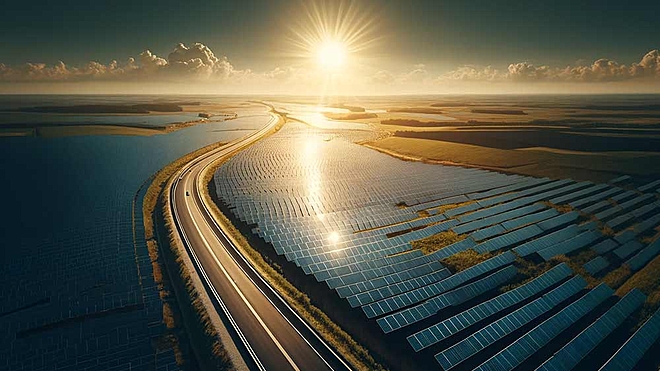

To err is human but not for solar power producers. They simply cannot afford any mistakes. The stakes are too high. By that we mean both investor expectations and their actual shareholding in these companies. NTPC Green Energy, Adani Green, and ACME Solar are grabbing headlines for their sky-high valuations. NTPC Green, for instance, continues to climb despite debuting at a staggering P/E of 290 times. Adani Green's trading at 160 times, while ACME Solar is holding a P/E of 24 times even though it's actually loss-making (if we exclude other income and extraordinary gains). What's fueling the market frenzy?
1) Roaring demand for renewable energy
India's energy landscape is undergoing a seismic shift. In the past five years, the country's renewable energy capacity has grown 9 per cent annually, ballooning from 118 GW in FY18 to 201 GW in FY23. This isn't just impressive—it's critical. With electricity demand increasing nearly 7 per cent each year, India has set an ambitious target: 50 per cent of its energy needs should be met by renewable power by 2030.
For solar power producers, this is a golden opportunity. And they are capitalising on it by ramping up their operational capacities to meet the demand surge.
2) Tapping into the demand
What the major players are doing:
- Adani Green: Currently at 11.2 GW, the company is targeting to reach a staggering 50 GW capacity in the next five to six years, with solar portfolio leading the charge.
- NTPC Green: Operating at 3.3 GW, NTPC Green has an expansion pipeline of 23 GW, of which 13 GW is already awarded.
- ACME Solar: With 1.3 GW operational, it has another 2.2 GW under construction and 1.8 GW in the pipeline currently.
With such significant expansion plans, these companies are not just growing in size—they are positioning themselves to tap into the booming demand for renewable power. The industry also enjoys long-tenured supply contracts, which ensure high operating margins, given maintenance costs are low.
High expectations are vulnerable
What are the expected gains from adding capacity? And do current valuations support them? We did an analysis. Here's what we found:
To achieve an annual return of 15 per cent, which is just above the long-term market average, the three companies will have to grow their revenue and profit after tax by five to six times in the next five years! This is achievable since demand is buoyant and companies are reporting solid operating margins due to lower expenses (after initial costs for setting up capacities). But that's assuming nothing goes wrong. There are many risks that threaten the industry's profitability.
For one, government regulation, especially on pricing is a major peril. Any downward pressure on tariffs could severely shrink profits. NTPC Green, for instance, earns below industry-average revenue per GW due to unfavorable power purchase agreements with the government. Adani Green has also seen a fall in prices from Rs 5 per KW for its older contracts to now around Rs 2.5 for recent projects.
Power producers have also traditionally grappled with issues of non-payment from distribution companies (due to government's lack of repayments to discoms), which hammered their cash flows. Renewable energy producers are not immune to these risks. These pitfalls make the industry's earnings vulnerable.
The bottom line
The risks highlight that the current pricey valuations or entry points leave no room for error and neither a margin of safety for investors. Any deviation from the industry's profit goals, which have earned them the recent rally, will lead to severe drawdowns. Remember sometimes sitting out the frenzy can be just as prudent as diving in.
Also read: With valuations at historic lows, should you be investing in Indraprastha Gas?
Ask Value Research 

 New episodes every Friday













 New Process Alert
  Seems like you've uploaded a wrong QR code. Please upload the QR code downloaded from MF Central platform.


