




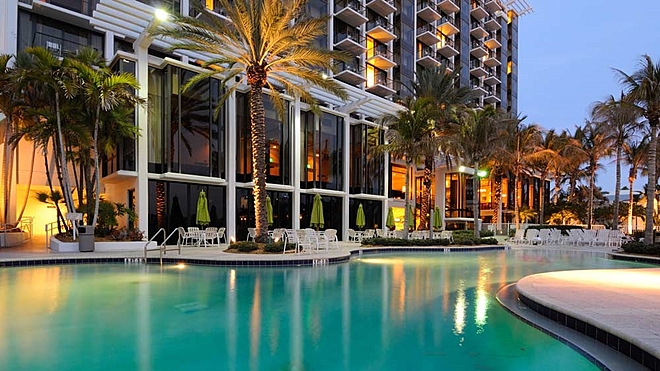
SAMHI Hotels, a branded hotel ownership and asset management platform in India, has launched its IPO (initial public offering). Here's a breakdown of the company's strengths, weaknesses, and growth prospects to help investors make an informed decision.
In a nutshell
-
Quality
: SAMHI Hotels has reported losses in the last three years. Moreover, its net worth was negative over the same period.
-
Growth
: Its topline grew by 129 per cent and 90 per cent in FY23 and FY22, respectively, mainly due to an increase in RevPAR (revenue per available room) and occupancy rate.
-
Valuation
: The stock value is at a P/B of 7 times compared to its peers' average of 7.3 times.
- Overview : The increasing discretionary income and tourism in India will increase demand, which can help the company grow. However, significant debt on the balance sheet and high-interest costs remain a threat.
About SAMHI Hotels
SAMHI Hotels comprises a portfolio of 4,801 keys across 31 operating hotels in 14 of India's major urban cities (as of March 2023). The company operates with renowned hotel operators such as Courtyard by Marriott, Sheraton, Hyatt Regency, Hyatt Place, Fairfield by Marriott, Four Points by Sheraton, and Holiday Inn Express. As of FY23, it has India's third-largest number of keys (rooms) as of FY23.
Strengths of SAMHI Hotels
- Third-party operators, including Marriott (11), IHG (10), and Hyatt (2), manage twenty-three of its hotels across India.
- The company has long-standing relationships with Marriott, Hyatt and IHG, with terms generally ranging from 20 to 30 years.
Weaknesses of SAMHI Hotels
-
The company has not been able to generate profits in recent years, and the net worth of the company stands negative.
-
SAMHI Hotels has a substantial net debt (total debt - cash and cash equivalents) of Rs 2,613 crore. While it intends to use most of the IPO proceeds for debt repayment, a considerable debt burden will remain on its balance sheet.
-
In the past, the company did not comply with certain debt covenants (contractual restrictions and requirements that borrowers must adhere to) under certain financing agreements.
- The company's growth strategy hinges on acquiring and successfully turning around hotels (mainly business hotels). A significant acquisition that turns sour can put the business in jeopardy.
IPO Details
| Total IPO size (Rs cr) | 1370 |
| Offer for sale (Rs cr) | 170 |
| Fresh issue (Rs cr) | 1200 |
| Price band (Rs) | 119-126 |
| Subscription dates | September 14, 15 and 18, 2023 |
| Purpose of issue | To repay debt |
Post-IPO
| M-cap (Rs cr) | 2747 |
| Net worth (Rs cr) | 392 |
| Promoter holding (%) | 0 |
| Price/earnings ratio (P/E) | NA; loss-making |
| Price/book ratio (P/B) | 7 |
Financial history
| Key financials | 2Y growth (% pa) | FY23 | FY22 | FY21 |
|---|---|---|---|---|
| Revenue (Rs cr) | 108.7 | 739 | 323 | 170 |
| EBIT (Rs cr) | 66.8 | 141 | -89 | -181 |
| PAT (Rs cr) | 15.8 | -339 | -443 | -478 |
| Net worth (Rs cr) | -808 | -639 | -195 | |
| Total debt (Rs cr) | 2744 | 2646 | 2444 | |
|
EBIT is earnings before interest and taxes
PAT is profit after tax |
||||
Key ratios
| Ratios | 3Y average (%) | FY23 | FY22 | FY21 |
|---|---|---|---|---|
| ROE (%) | NA | NA | NA | NA |
| ROCE (%) | NA | NA | NA | NA |
| EBIT margin (%) | -38.4 | 19.2 | -27.6 | -106.8 |
| Debt-to-equity | NA | NA | NA | |
|
ROE is return on equity ROCE is return on capital employed EBIT is earnings before interest and taxes |
||||
Risk report
Company and business
-
Is SAMHI Hotels' earnings before tax more than Rs 50 crore in the last 12 months?
No. The company's loss before tax for FY23 was Rs 339 crore. -
Will SAMHI Hotels be able to scale up its business?
Yes. Increased discretionary income and travel tourism in the country can help the company scale up its business. However, the company's profit after tax has been negative due to high interest costs and depreciation. -
Does SAMHI Hotels have recognisable brands with client stickiness?
Yes. The company partners with internationally branded hotels and operates them across leading urban cities. -
Does the company have a credible moat?
No. The hotel faces stiff competition from other players.
Management
-
Do any of the company's founders still hold at least a 5 per cent stake? Or do promoters have over a 25 per cent stake in the company?
No. There is no identifiable promoter in the company. -
Do the top three managers have over 15 years of combined leadership at SAMHI Hotels?
Yes. Ashish Jakhanwala (Chairman) and Manav Thadani (non-executive director) have been with the company since its inception in 2010. -
Is the management trustworthy? Is it transparent in its disclosures, which are consistent with SEBI guidelines?
Yes. No information to suggest otherwise. -
Is the company's accounting policy stable?
Yes. No information to suggest otherwise. -
Is SAMHI Hotels free of promoter pledging of its shares?
It is not applicable, as there is no promoter.
Financials
-
Did the company generate a current and three-year average return on equity of more than 15 per cent and a return on capital employed of more than 18 per cent?
No. The company is making losses and has a negative net worth. -
Was the company's operating cash flow positive during the last three years?
Yes. The company generated positive cash flows from operations in the last three years. -
Is the company's net debt-to-equity ratio less than one?
No. The company's net debt stood at Rs 2,613 crore as of FY23. The ratio is not applicable as it has a negative net worth. -
Is SAMHI Hotels free from reliance on significant working capital for day-to-day affairs?
No. The company's business affairs are working capital-intensive. It relies on short-term debt to fulfil its working capital requirements. -
Can the company operate its business without relying on external funding in the next three years?
No. The company's operations are highly capital-intensive. Even though the company reported positive operating cash flow over the last three years, it still has to rely on external funding to repay its debt and meet interest obligations. -
Is SAMHI Hotels free from meaningful contingent liabilities?
Yes. The company had Rs 28 crore worth of contingent liabilities.
Valuations
-
Does the stock offer an operating earnings yield of more than 8 per cent on its enterprise value?
No. The stock will offer an earning yield of 2.6 per cent. -
Is the stock's price-to-earnings less than its peers' median level?
It is not applicable since the company is loss-making. Therefore, P/E is not applicable. -
Is the stock's price-to-book value less than its peers' average level?
Yes. The stock will trade at a P/B of 7 times compared to its peers' average level of 7.3 times.
Disclaimer: This is not a stock recommendation. Do your due diligence before investing.
Suggested read: Learning from IPOs
Ask Value Research 

 New episodes every Friday











 New Process Alert
  Seems like you've uploaded a wrong QR code. Please upload the QR code downloaded from MF Central platform.


