




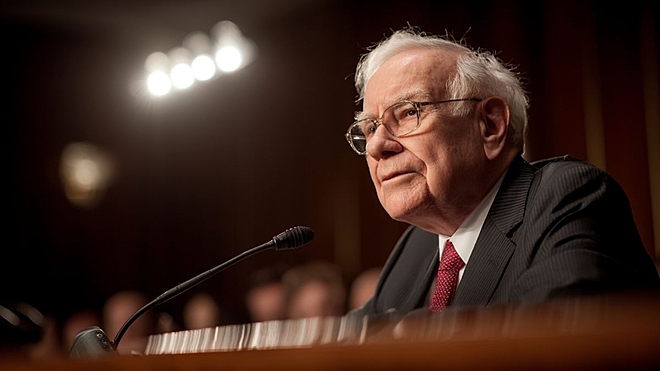
 Aditya Roy/AI-Generated Image


Last Saturday, for the first time in six decades, the Berkshire Hathaway annual meeting was held without Warren Buffett on stage. Charlie Munger passed away in November 2023. Buffett stepped down as CEO at the end of last year. On Saturday, he was in the audience, making the occasional remark from the floor. At one point, he noted that it was not his show anymore.
It was, in every sense, the passing of a baton.
Greg Abel, who took over as CEO at the start of this year, ran the meeting alongside Ajit Jain. By all accounts, it was a competent, businesslike affair. Abel talked about operational performance across Berkshire’s sprawling empire, discussed AI, and even deployed a deepfake video of Buffett to illustrate the risks of the technology. It was thorough, professional, and entirely unremarkable.
That is exactly as it should be.
Abel and Jain had the good sense not to try to replicate what came before. For decades, the Berkshire meeting was not really a shareholders’ meeting at all. It was a performance. A masterclass. A cultural event. Buffett and Munger would sit on stage for hours, fielding questions on everything from derivatives to human nature, dispensing the kind of wisdom that made you feel you were getting a private tutorial from the two sharpest minds in investing. The interplay between them, Buffett’s storytelling and Munger’s terse one-liners, was unrehearsed theatre of the highest order. No corporate event came close.
The new leadership, wisely, did not try to be a Tim Cook to a Steve Jobs. Cook was fabulously successful at Apple, but never tried to be Jobs on stage. He understood that mimicry only invites unfavourable comparison, and that the smarter move was to be effective rather than entertaining. Abel appears to have understood the same thing. Saturday’s meeting was a proper shareholders’ meeting of a trillion-dollar company. Not a variety show. The arena was only a little over half full. The “Woodstock for Capitalists” is over.
For me personally, watching this transition feels like the end of something I have drawn from for much of my writing life. I am not a Berkshire shareholder, and never have been. Nor were the vast majority of people around the world who waited all year for the Omaha meeting. We were not there for the stock price or the earnings. We were there for the wisdom, the humour, and the common sense delivered with a twinkle. Over the years, I have written so many columns drawing on Buffett and Munger’s insights that I feel a deep gratitude to them for being who they were.
That era is gone, and I accept it.
Almost. I do have one regret.
All these years, I could have made the effort and actually gone to Omaha. I could have joined the tens of thousands milling about, buying See’s Candy and listening to the masters in person. I always thought there would be time. Now that the chance has gone, I wish I had taken it.
There is a small investing lesson buried here, one Buffett himself would appreciate. The best time to act on something you value is now. Not later. Whether it is starting an SIP, rebalancing your portfolio, or making a pilgrimage to a shareholders’ meeting in Nebraska that doubles as a life education, the window does not stay open forever.
Buffett, speaking from the audience on Saturday, compared markets to a church with a casino attached. He complained that too many people are gambling rather than investing. Even from the audience, the old man still had something worth hearing.
But now, that time is gone.
Also read: The straight-line trap
Ask Value Research 

 New episodes every Friday











 New Process Alert
  Seems like you've uploaded a wrong QR code. Please upload the QR code downloaded from MF Central platform.


