




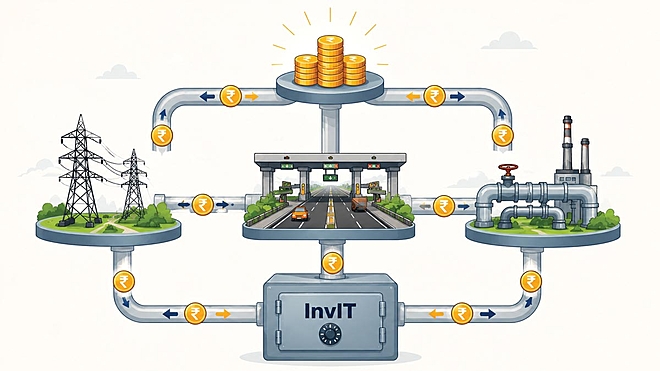
 Yogesh Sharma/AI-generated image
Summary: InvITs are drawing retail investors with yields of 9 to 20 per cent. The headline number is real. What it includes is the part most investors never check. And the difference between the yield and what you actually earn can be surprisingly large.
Summary: InvITs are drawing retail investors with yields of 9 to 20 per cent. The headline number is real. What it includes is the part most investors never check. And the difference between the yield and what you actually earn can be surprisingly large. Amid the recent market turmoil, retail investors are looking for alternatives to equity. The search is bringing many to InvITs, or Infrastructure Investment Trusts. And for good reason. InvITs promise steady cash payouts on top of whatever the unit price adds. Annual yields ranging from 9 per cent to as much as 20 per cent in some cases naturally make them appealing to options like a fixed deposit or a debt fund. The trouble is that the headline yield and what investors’ actual pocketed returns are two different things. And that is because of how an InvIT is structured. What InvITs own At its simplest, an InvIT is a trust that owns income-producing infrastructure and passes the cash from those assets to its unitholders. Buying an InvIT is really three decisions rolled into one: which asset class, which counterparty (entity on the other side of the contract), and which concession profile (terms and duration of the agreement). The nine listed InvITs sort into three buckets on this basis. Transmission: IndiGrid and PowerGrid InvIT own electricity transmission lines and earn tariff-based, regulated returns from central and sta
 New episodes every Friday













 New Process Alert
  Seems like you've uploaded a wrong QR code. Please upload the QR code downloaded from MF Central platform.


