




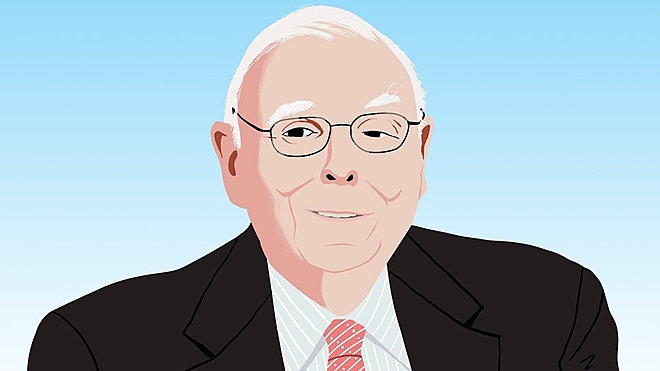
Charlie Munger needs no introduction. This remarkable individual has captured our admiration from afar for a long time, and his impact on the business world is nothing short of legendary.
In this article, we will present some excerpts from the latest annual general meeting of Daily Journal (a publishing company catering to lawyers). Munger was formerly the chairman of the company, and continues to be on the Board as a director. You can watch the entire meeting here.
On capital allocation
Munger says that capital should be allocated to the business with the highest ROE. He cites the case of the Daily Journal itself. In its heyday, the publishing company made good money. But its monopoly was destroyed when the internet came along. As a result, instead of holding on to cash, the surplus cash was invested in common stocks and, lately, their subsidiary (Journal Technologies).
On the impact of ChatGPT and AI on businesses and civilisation at large
While he feels that artificial intelligence (AI) is important, there is a lot of hype around it. He quips, "AI is not going to cure cancer. It is not going to do everything we want done."
He sees a lot of nonsense in it too and therefore, regards it as a mixed blessing. In terms of business applications, he says that some people have used it very well in insurance underwriting. But he is sceptical about its application in areas like buying office buildings.
On the most challenging mental bias to overcome
(Interestingly, this question was created by ChatGPT)
This is what he had to say, "If I had to name one factor that dominates human bad decisions, it would be what I call denial. If the truth is unpleasant enough, people's minds play tricks on them. And of course, that causes enormous destruction of business when people go out throwing money."
To substantiate this, he gives the example of investment management. He remarks, "How many managers are going to beat the indices, all costs considered? I would say, maybe 5 per cent can consistently beat the index. Everybody else is living in a state of extreme denial, used to charging big fees and so on for stuff that isn't doing their clients any good. It is a deep moral depravity... In most places, everybody is trying to take what they need. And then rationalising whether it is deserved or not."
Why BYD (a Chinese electric vehicle manufacturer) over Tesla?
To make his case as to why he picks BYD over Tesla, he notes that Tesla reduced its prices in China twice in 2022 while BYD increased its prices. He says, "We're direct competitors. BYD is so much ahead of Tesla in China, it's almost ridiculous."
Munger continues, "If you count all the manufacturing space BYD has in China to make cars, it would amount to a big percentage of all the land on Manhattan Island. And nobody ever heard of them a few years ago."
Why did he use leverage to buy Alibaba?
Munger once said that the most destructive L's are: Ladies, Liquor, and Leverage. Then, why did he use leverage to purchase Alibaba shares? He says that it is not unusual for him (or Buffett) to use leverage to buy stock.
He asks himself a mental question, "What is the percentage of net worth you should put in a stock if you think it is an absolute cinch?" If you are right, then the answer, to Munger, is 100 per cent or maybe 200 per cent. To his surprise, he finds that nobody teaches people to think this way in finance.
However, he did caution that leverage is not appropriate for most people. He quotes a friend to drive this point home, "The young man knows the rules and the old man knows the exceptions."
His worst investment mistake
We come back to Alibaba. Munger says that he got charmed by the idea of Alibaba's dominance of the Chinese internet. He realised that it is just a "goddamn retailer" and that it is going to be a competitive business. He says that he overestimated the future returns from Alibaba.
On banning cryptocurrencies
Not someone to shy away from making his feelings known, this is what Munger had to say on cryptocurrencies, "I don't think there are good arguments against my position (of banning cryptocurrencies). I think the people who oppose my position are idiots. I don't think there is a rational argument against my position... You can't think of hardly anything on Earth that has done more good to the human race than national currencies... So if someone says that I am going to replace the national currency, it is like saying that I am going to replace the national air. It's asinine."
Ramifications of higher interest rates
Munger says, "There is no question about the fact that higher interest rates are hostile to stock prices. But they should go up. We couldn't have kept them forever at zero... Investment life is such that there are headwinds and tailwinds. One of the headwinds is inflation. And I think more inflation over the next 100 years is inevitable given the nature of democratic politics. So, I think we will have more inflation...
...All politicians in a democracy tend to be in favour of printing money and spending it. And that will cause some inflation over time. It may avoid a few recessions and it may not be all bad but it will do more harm than good, I think, from this point forward."
Business or management - which comes first?
Munger prefers a great business over a great manager. A great business with a great manager is a blessing and he says, "We have not made a huge success by investing in a great manager in lousy businesses."
The biggest surprise in his career
Munger says, "One of the things that surprised me the most was how many businesses die. The business world is very much like the physical world where all the animals die and the species die. When I was young I didn't realise that that same system applied to capitalism and all the businesses. They are all on their way to die so that other things can replace them. It causes some remarkable death. Imagine having Kodak die... They knew more about the chemistry of film than anyone else on Earth. And of course, the whole damn business went to zero."
He quotes Bill Gates to explain this further, "It's almost a rule that when a really disruptive technology comes along, the incumbents screw up their reaction to it." It is hard to change your ways when you have been successful for a long time and go to a totally different way of behaving.
Most important quality that has helped him in life
"That's easy. Rationality. If you are just not crazy, you have a big advantage over 95 per cent of the people. Because most people have all kinds of crazy patches... If you are consistently not crazy, you have a big advantage. And if you are patient and able to defer gratification, in addition to not being crazy, then it is a cinch!"
Suggested read: Timeless wisdom from Charlie Munger
This article was originally published on February 17, 2023.
Ask Value Research 

 New episodes every Friday









 New Process Alert
  Seems like you've uploaded a wrong QR code. Please upload the QR code downloaded from MF Central platform.


