 Widely read:




 Anand Kumar/AI-Generated Image

Summary: Most financial mistakes in your 20s don't happen because of bad decisions. They happen in the absence of any decision at all, money moving in the direction of least resistance before you notice it's gone.
Personal finance advice loves the 20s. Start early. Invest small. Avoid debt. The advice is correct. It is also, for most people, completely ignored.
Not because they do not know better. But because knowing and doing are separated by something the advice columns rarely account for: the texture of that decade. The way a raise gets absorbed before you notice. The way a credit card does not feel like debt until it very much is. The way "I'll start once things settle down" becomes the plan itself.
None of this is an argument for living like a monk. Your 20s are worth enjoying. The point is to enjoy them deliberately, not to wake up at 30 wondering where the money went. Here is how most people in their 20s can go wrong.
Lifestyle creep
Most people in their 20s celebrate every raise the same way: they upgrade something. A vacation. A newer phone. A restaurant that was previously "for special occasions." It happens so naturally that it barely registers as a decision. By the time the third raise arrives, you are spending everything you earn and wondering why your account looks exactly the same as it did two years ago.
Lifestyle creep is not about extravagance. It is about these upgrades that rarely get reversed. Each one is reasonable on its own. Together, they swallow every rupee of income growth before it can compound into anything.
The fix is not complicated. Every time your income rises, commit a portion of that increase to savings before it touches your lifestyle. Even half the increment, invested immediately, changes the trajectory over time.
Waiting to invest
Ask most people in their early 20s when they plan to start investing and the answer is some version of the same thing: once the salary is better, once life is a little less chaotic. It is a reasonable answer. It is also how a decade disappears.
The cost of waiting is not abstract. It just takes a decade to show up. Consider a Rs 5,000 monthly SIP started at the age of 22 versus the same SIP started at 30. At 12 per cent annual returns, the person who started at 22 accumulates nearly Rs 2.2 crore by age 55. The person who started at 30 reaches a little over Rs 85 lakh. Same monthly commitment. Same fund. The 22-year-old would have contributed Rs 19.8 lakh in total. The 30-year-old, Rs 15 lakh. That extra Rs 4.8 lakh of contributions spread over eight additional years generated Rs 1.35 crore of extra corpus. That is what compounding actually looks like when you give it time.
The early years carry the longest compounding runway. Every year spent waiting is a year that money could have been working instead.
Using credit cards as extra income
A credit card is not a salary supplement. It is a short-term loan with a very expensive default rate.
The problem is that it does not feel like a loan when you are swiping it. It feels like money. Until the bill arrives. Many people in their 20s carry a revolving balance without quite realising they are paying 36 to 48 per cent interest a year on purchases they have already forgotten making.
If you are paying only the minimum due each month, you are not managing credit. You are feeding it. Before taking on any credit card debt, build an emergency fund covering six to nine months of expenses. A liquid buffer in place means a job loss or a medical bill gets absorbed without reaching for more debt.
Chasing hot investments without a plan
There is always someone in the group chat making money on something. Crypto in 2021. Defence PSUs in 2023-24. Small-cap funds at valuations that had already run far ahead of earnings by late 2023. Every cycle produces a new category that looks like it is printing money for everyone else.
People pile in late, get caught in the correction and either panic-sell at a loss or hold on hoping to get back to zero. The pattern repeats because the impulse is always the same: acting on what just happened rather than having any real view on what you are trying to build.
A plan does not have to be complicated. It just needs to answer two questions before you invest: what is this money for and when will I need it? Without those answers, every hot tip is a gamble dressed up as a strategy.
Buying insurance as an investment
ULIPs and endowment plans are sold as the best of both worlds, combining protection and returns in one product. They deliver neither particularly well.
The insurance cover is usually inadequate for any family that actually depends on one income. The returns, once agent commissions and annual charges are stripped out, are meagre. If you need insurance, buy a term plan. If you want to invest, invest separately. Combining the two mostly serves the person selling it.
Spending to match social media
Scroll through any feed on a Friday evening and everyone seems to be somewhere better, eating something nicer, wearing something newer. Nobody posts the credit card bill that followed. The platforms are designed this way—to show the highlight, never the hangover. And for young earners in their 20s, the result is a pattern of spending money they do not have on experiences they barely enjoy, to impress people who are doing exactly the same thing.
This is not a personal failing. It is a design outcome. Knowing that does not make it cheaper. But it does make it easier to catch yourself mid-scroll, mid-splurge and ask whether the spend tracks back to anything you actually want.
Not investing in yourself
The biggest financial lever most people in their 20s have is not their portfolio. It is their earning capacity.
Early-career compensation growth, typically 15 to 20 per cent annual hikes through years two to five, compounds into lifetime earnings in a way no portfolio decision in your 20s can match. A certification, a course or even the right books can accelerate that trajectory. Spending Rs 20,000 on something that leads to a better role or a meaningfully higher salary is often a better return than the same amount sitting in a fixed deposit at 7 per cent. The portfolio matters. But in your 20s, you are also the most important asset in it.
The real mistake underneath all of these
Read back through the list and a pattern shows up. Lifestyle creep, deferred investing, social media spending, chasing returns: none of these happens because someone sat down and made a bad decision. They happen in the absence of any decision at all.
Money in your 20s does not wait for you to feel ready. It moves the moment it arrives, usually in the direction of least resistance. The people who build something in that decade are not the ones who knew more. They are the ones who set things up so the right choice was also the easy one. A SIP on auto-debit. A savings account you do not check daily. A term plan bought before someone tried to sell you something more complicated.
In your 20s, the biggest financial decisions are not the ones you make. They are the ones you set up so you never have to think about them again.
Not sure where to start?
Value Research Fund Advisor tells you exactly which funds to invest in and how to build a portfolio so the right choice stays easy.
In your 20s, the biggest financial decisions are not the ones you make. They are the ones you set up so you never have to think about them again.
This article was originally published on May 27, 2026.
Ask Value Research 
 New episodes every Friday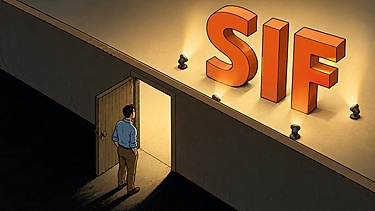










 New Process Alert
  Seems like you've uploaded a wrong QR code. Please upload the QR code downloaded from MF Central platform.


