




 AI-generated image

Whenever I invest in mutual funds, I notice that instead of the full amount being allocated, the units are calculated for a slightly lesser amount. While the difference is negligible, I'd like to understand why this happens. - Anonymous
The slight reduction you notice is because a small portion of your investment amount is deducted upfront in the form of stamp duty. This deduction is mandated by the government and applies to all mutual fund purchases.
How does it work?
Stamp duty is charged at a rate of 0.005 per cent of the investment amount. The remaining amount after deducting the stamp duty is used to allocate units.
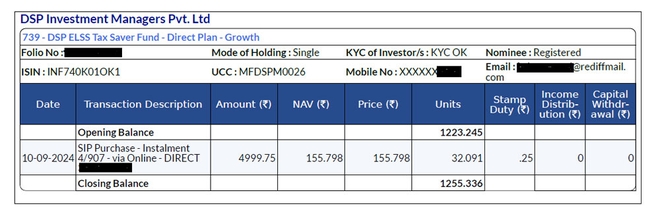
- For a Rs 5,000 SIP, the stamp duty deduction would be:
Rs 5,000 × 0.005 per cent = Rs 0.25. So, the units will be allotted for Rs 4,999.75 instead of the full Rs 5,000.
The stamp duty deduction applies to every mutual fund purchase you make.
Where does this apply?
Stamp duty is deducted on SIPs, lumpsum investments and dividend reinvestments in mutual funds. However, it does not apply to redemptions or switches between mutual fund schemes.
Final thoughts
Don't worry too much about these deductions. Stamp duty is a government-mandated charge and is applied uniformly to all mutual fund investors. It cannot be avoided. Instead of focusing on these minor details, keep your attention on your investment plan and long-term goals. Remember, what truly matters is the discipline of investing and the power of compounding over time.
Also read: How can you measure the success of a fund without dividends?
This article was originally published on December 26, 2024.
Ask Value Research 
 New episodes every Friday






 New Process Alert
  Seems like you've uploaded a wrong QR code. Please upload the QR code downloaded from MF Central platform.


