




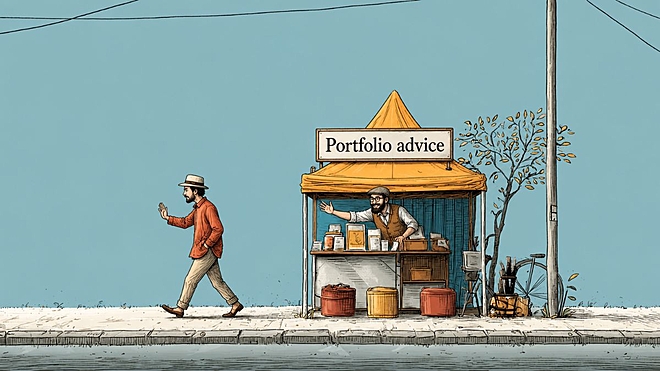
 Aditya Roy/AI-Generated Image


I spoke to someone long ago who considered himself a seasoned stock investor. Yet, he was puzzled why all the stocks he had invested in were down to less than half the price he had bought them at. He wanted some 'feedback' on why this had happened. Normally, I try to wriggle out of these situations, but this was a cousin's wedding, and he was a fellow guest, so, more for social reasons than anything else, I asked him which companies he had invested in. He reeled off a dozen or so names, and I was in for a shock. There wasn't a single recognisable name. Like any other investment analyst or business mediaperson, I have a passing acquaintance with a few hundred companies, or at least have heard their names. And yet, every single one of the names was a complete unknown.
On the face of it, I had no right to be surprised since there are a few thousand listed companies in this country. However, it is a fact that the vast majority of them are utter duds as investments, and no one looks at them seriously. Well, I'd always assumed that there were investors who got stuck with one or two such companies, but there couldn't possibly be anyone who would go about building a portfolio exclusively out of just duds. Or so I'd thought. However, it goes without saying that the culprit was not my friend. Instead, this portfolio wasn't a result of his own research. Each one of these stocks was recommended to him by a broker with an accompanying story on how it was a great investment.
However, my exciting time at this wedding wasn't yet over. I next ran into someone who was doing something similar with mutual funds. This gentleman had one of the largest and most directionless collections of mutual funds that I'd ever seen. Basically, practically every single equity fund that anyone had ever heard of was there in a tiny percentage. And was this portfolio a result of the investors' own initiative? Absolutely not. It was entirely guided by the advice of a professional 'advisor', whose advice was always to sell whatever fund can be sold and buy the latest one that's being sold.
What I found particularly galling was that in each case, the questions that the investor was asking about their investments were the right sort. Both men had the instinct to figure out what was wrong with their investments and to try to do things right. However, both had been actively and deliberately misled by people who were in the profession of providing investment services. I don't know whether this is relevant or not, but all this took place in Delhi or Bombay, but in Jamshedpur. Now, Jamshedpur is hardly a hick place, and on a drive across town, one sees signboards of all the major banks, 'new-age' brokers, and mutual funds. Maybe there was a connection, who knows? Maybe investors in Mumbai and Delhi had more channels to seek out second opinions. Or maybe not.
Also read: The body and soul of investing
Ask Value Research 

 New episodes every Friday











 New Process Alert
  Seems like you've uploaded a wrong QR code. Please upload the QR code downloaded from MF Central platform.


