




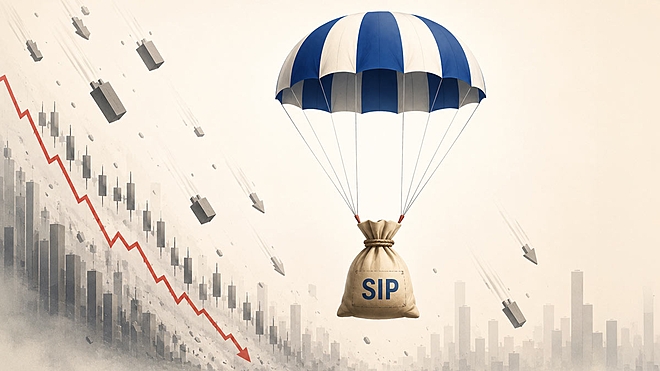
 Yogesh Sharma/AI-generated image
Summary: When markets fall sharply, it's easy to assume your investments must have suffered just as much. But are you measuring the right return in the first place? This piece explores why the index and the average investor can end up telling very different stories.
Summary: When markets fall sharply, it's easy to assume your investments must have suffered just as much. But are you measuring the right return in the first place? This piece explores why the index and the average investor can end up telling very different stories. The BSE Sensex fell 9.7 per cent in the first six months of 2026 on a total-return basis. That makes it the worst first half since 2020, when Covid wiped out 15 per cent in the same period. A statistic like that has one job. It wants you to panic. Stop the SIP, sell out, wait for clarity. Before you do any of that, look at what your own money has actually earned. The index and the investor have gone through two very different market journeys. This was a slide, not a crash The fall itself is not news. There was no single bad morning, no single event that broke the market. The Sensex peaked on September 26, 2024 and has gone nowhere since, drifting within a range. From that peak, it has returned -5.3 per cent a year. The first half of 2026 is only a portion

 New episodes every Friday












 New Process Alert
  Seems like you've uploaded a wrong QR code. Please upload the QR code downloaded from MF Central platform.


