




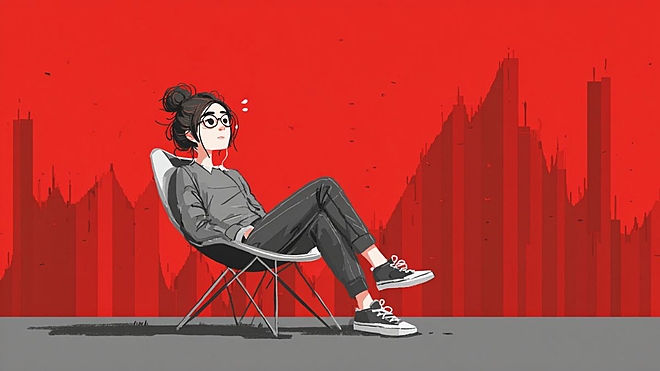
 Aditya Roy/AI-Generated Image
The inbox response to the latest Editor’s Note by Dhirendra Kumar, Not your emergency, revealed something interesting. Readers didn’t dispute the argument about leveraged investors driving morning panic. If anything, many seemed relieved to finally have a clear explanation for a pattern they had watched for years without fully understanding.
K V Narayan captured that moment of recognition perfectly. The column, he wrote, helped explain “why panic often arises in the morning hours—how a few individuals amplify it, especially within social media groups, making it feel as though the sky has fallen.”
For him, the key insight was simple: “leveraged investors create leveraged prices.”
That idea, he said, finally clarified what had always felt mysterious about those dramatic market openings. “I used to wonder what or who was behind this effect on people’s minds.” Now he plans to share the explanation with friends so they can stay calmer when headlines erupt.
The distinction he drew is important. “After all, we are equity investors, not traders.”
The emotional side of volatility
If the concept makes sense intellectually, living through it is another matter entirely.
Pradeep Kumar Dudeja admitted that when markets plunge suddenly, the emotional reaction is hard to avoid. Watching “the profits being wiped off and the portfolio in complete red,” he wrote, “really keeps a normal investor palpitating.”
The explanation about leveraged traders and forced selling was reassuring, he said, but it also raised another question in his mind: why do foreign institutional investors sometimes sell aggressively during these episodes? “Thanks to the DIIs for the support extended to the market,” he added, reflecting a concern many long-term investors quietly share.
Rajesh Shah interpreted the column as a reminder that retail investors should simply avoid getting dragged into that emotional cycle. The message, as he saw it, was straightforward: “don’t panic, continue to invest for the long term to create wealth.”
But he also pointed out how difficult that discipline can be in today’s media environment. Constant updates, social media commentary and television coverage create what he called “emotional blackmail,” pulling investors back into minute-by-minute market watching.
Discipline versus borrowed panic
Several readers returned to the central theme of the article: the difference between investors with time on their side and traders operating under leverage.
Arvind Padmanabhan noted that volatility is inevitable in markets and especially intense for those participating in futures and options. “Long-term investors who understand this volatility by this time hopefully don’t react to every headline,” he wrote, describing the column as helpful advice that could reduce the fear of missing out triggered by dramatic news events.
Sarita Pandya took the same idea further, putting it in characteristically vivid language. History, she wrote, shows that markets recover after wars and crises. “The market may fall, but your own patience should not fall.”
Her metaphor captured the danger of leverage succinctly: “Borrowed garments never fit well.”
Those trading with borrowed funds, she argued, are the ones losing sleep during wars, banking crises or global shocks. Long-term investors relying on mutual funds and SIPs should simply stay the course.
Ponnudurai Ratna agreed with the logic but raised a more uncomfortable question. While discipline is ideal, he wondered how many investors can actually maintain it, especially after a year of weak returns. Speculators and gamblers using borrowed money, he warned, often erode the confidence of genuine long-term investors. The dramatic gap between the pre-open fall and the closing level that day was a clear example of that volatility.
What emerges from these responses is less a debate than a shared struggle. Most readers understand the difference between leveraged panic and long-term investing. The challenge lies not in the theory, but in holding one’s nerve when markets flash red and headlines amplify the noise.
The morning panic may belong to leveraged investors. But resisting it requires something that cannot be borrowed from anyone else: discipline.
Credits
K V Narayan, Arvind Padmanabhan, Pradeep Kumar Dudeja, Sarita Pandya, Rajesh Shah, Ponnudurai Ratna
Aldo read: Hype, déjà vu and smashed keyboards
This article was originally published on March 10, 2026.
Ask Value Research 

 New episodes every Friday









 New Process Alert
  Seems like you've uploaded a wrong QR code. Please upload the QR code downloaded from MF Central platform.


