 Widely read:




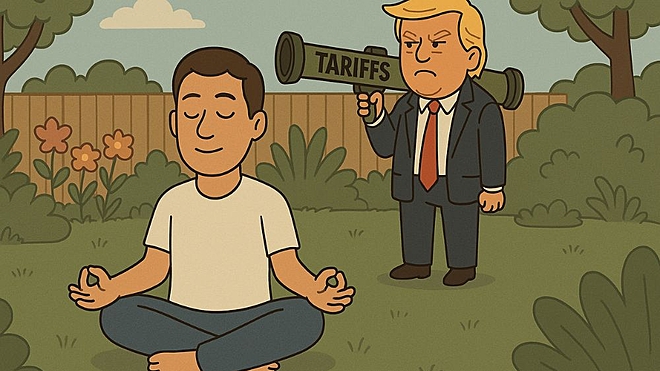 AI-generated image


If there's one thing that doesn't change in the topsy-turvy world of investing, it's the uncanny ability of global events to trigger market panic with clockwork reliability. The latest illustration of this timeless pattern comes courtesy of the trade war unfolding between the US and almost everyone else. As tariffs fly back and forth like diplomatic hand grenades, the Indian markets display their customary nervousness, with the Sensex performing what financial journalists call a 'nosedive'.
What fascinates me about these events isn't the macroeconomic analysis or geopolitical posturing but how predictably we react as investors. The moment markets tumble, our evolutionary fight-or-flight responses kick in, urging us to 'do something' - anything - rather than appear passive in the face of perceived danger. Yet this instinct, so valuable in evolutionary times, becomes our worst enemy when navigating market volatility.
Suggested read: The cycle inside your head
Consider what's happening: President Trump imposes sweeping tariffs, markets plunge, China retaliates, markets plunge further, a 90-day pause is announced (except for China), markets rally partially - and through it all, investors obsessively refresh their portfolio apps, contemplating whether to sell everything or perhaps 'buy the dip'. The financial media, meanwhile, serves up the usual thali of explanations, with experts confidently drawing direct lines between Trump's TruthSocial account and your stock returns.
But step back for a moment. What has changed about the fundamental nature of the Indian economy since last month? Are Indians suddenly consuming less? Has our technological prowess diminished overnight? Will we stop needing homes, healthcare, or financial services because of tariffs? Of course not. The market reaction reflects uncertainty, not fundamental economic collapse.
Suggested read: The crisis crisis
This isn't to downplay the potential impacts of a trade war. Certain sectors, particularly export-oriented ones like IT, may face genuine challenges. Companies deeply embedded in global supply chains will need to adapt. But extrapolating from 'some businesses face headwinds' to 'sell everything' represents exactly the kind of short-term thinking that destroys wealth rather than creates it.
History offers a compelling perspective. Think about what India has weathered in the past few decades: wars, currency crises, political upheavals, demonetisation, banking scandals, a global pandemic, and previous rounds of trade tensions. Yet, through it all, disciplined investors who maintained regular investments and diversified portfolios have done remarkably well. The noise of daily news eventually fades, but the underlying growth trajectory remains.
Suggested read: Not just the day's numbers
This brings us to many investors' questions: "What should I do now?" My answer might disappoint those hoping for sophisticated market-timing strategies or sector rotation advice: For most people, the best course of action is to do absolutely nothing.
If you're investing for goals five or more years away, this market turbulence will likely appear as a minor blip in retrospect. If you're making regular SIP investments, continuing them through down markets is precisely what allows the magic of rupee-cost averaging to work in your favour. And if you're sitting on extra cash, deploying it gradually over the coming months while others panic may prove rewarding in the long run.
Suggested read: Fear, Greed and Panic
The worst possible response is to attempt to time your exit and re-entry based on tariff negotiations, presidential tweets, or expert predictions. Such timing is nearly impossible to execute successfully, and it transforms investing from a wealth-building strategy into a stress-inducing guessing game.
The irony is that doing nothing in turbulent markets requires tremendous discipline and emotional control. It means resisting the constant barrage of alarming headlines and ignoring well-meaning friends who insist that "this time is different." It means understanding that short-term volatility is simply the price of admission for long-term returns.
So, as tariff threats continue to dominate headlines, remember that the biggest threat to your financial future isn't trade policy - it's your reaction to it. In investing, as in much of life, wisdom often lies not in frantically responding to every new development but in knowing which developments deserve no response.
Also read: Spectacular wealth through simple investing
Ask Value Research 
 New episodes every Friday











 New Process Alert
  Seems like you've uploaded a wrong QR code. Please upload the QR code downloaded from MF Central platform.


