 Widely read:




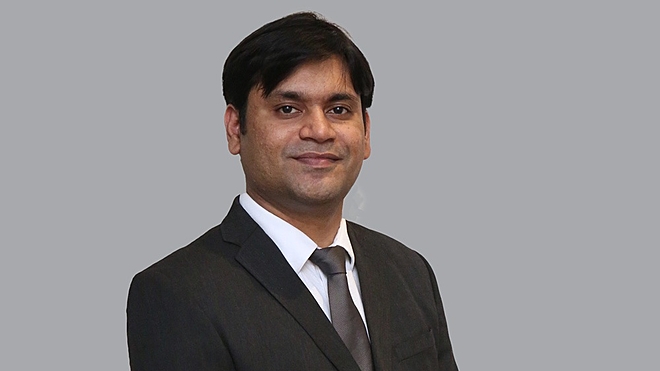

Ashutosh Bhargava oversees eight funds and heads the equity research division at Nippon India Mutual Fund. Of them, he is the lone fund manager of Nippon India Passive Flexicap FoF and Nippon India Quant Fund.
In this interview, Bhargava describes his investment philosophy and emphasises that although valuations are crucial, quality of growth is more important. He further highlights how overpaying does not result in better medium- to long-term performance.
Here's an edited transcript of the interview:
You started working here in 2008. How do you remember the period of the global financial crisis (GFC)?
It was a challenging environment. Just before the GFC, we believed that markets could only go up. Some had forgotten that markets are cyclical, risk management is a virtue, and leverage is a double-edged sword. More importantly, I realised that fear is a powerful emotion to encounter. But if you are patient, you will safely reach the other side.
Hence, being more patient, being more systematic, and trying to remain more level-headed were the virtues that helped me navigate the tough times in 2008. We have seen time and again that even after the GFC, there have been periods where we encountered this kind of volatility, so these learnings have helped.
How do you balance running four sizeable funds and managing a team of analysts?
It's a blessing to have the opportunity to lead the whole team and our research and contribute whatever learnings I've had over the last 18 years. Most of our investments rely on research, our investment team's backbone.
Once I began managing the team and tracking stocks with the analysts who are experts in their domain, my learnings helped me express those ideas to the various funds that I co-managed. Thus, we are being more bottom-up in our approach.
Also, having a dual role is a complementary kind of thing where learning from research helps fund management. At the same time, having one foot in the shoes of the fund manager ensures that we understand the gaps in the research that we need to correct over time.
What is the focus of your research? How big is your team?
In terms of research, we don't marry into a particular style. Our approach is more balanced. So, we are neither too much on the growth side of the spectrum nor heavily tilted towards a value investing style.
In investing, we prefer a type of growth at a reasonable price (GARP), which we also encourage at a research level. We cover more than 470 stocks and have a 15-member research team.
The approach is straightforward; we must identify the right sectors and companies. We look at factors like the opportunity size, competitive environment, management quality and governance. A lot of focus is on numbers and being ranked on estimates from a profit and loss (P&L) and cash flow perspective.
Our message to our research team members is to be thorough in numbers but have a medium to long-term timeframe and avoid getting swayed by shorter-term volatile effects.
Can you describe your overall investment philosophy and approach to managing equity portfolios?
We are style-agnostic and rely heavily on data and insights to identify stocks. The focus is more on growth and earnings than just valuation. The valuations are essential, but the quality of growth comes much before valuations for us. So, this is a broad framework. Then, we look at the edge of most of those individual companies' managerial competence, governance, etc.
For smaller companies, we also place a greater emphasis on management quality. It's a mix of everything, but more focused on bottom-up rather than top-down and more evidence-based. We give everyone enough freedom to express themselves because every sector has nuances. No one size fits all, but the basic framework and approach remain the same.
When and what kind of stock becomes a compelling buy for you?
We prefer stocks with strong tailwinds. A sectoral tailwind is always preferable. But when we look at individual securities, we examine their fundamentals. Both the earnings and their quality should be improving. I rely on a few quantitative factors and identify stocks on quality, growth, sentiment, and other tailwinds. There has to be some price value gap regarding the valuation.
Alongside the factor investing framework, if analysts are also optimistic, it makes a very compelling case for the entry of a stock into a portfolio. But at a broader team level, the faith in the research team members and the involvement of the senior fund managers drive the whole investment research piece. A healthy balance exists in identifying and rewarding analysts for short-term and long-term ideation. That's why it's a very holistic process.
But the good thing is that every fund manager has a broad framework for portfolio management. Within that framework, they independently evaluate what stocks should come into the portfolio, depending on the mandate and their individual style preferences. It is an unsaid rule that research is the backbone for every fund manager when providing inputs from a bottom-up, stock-picking perspective.
What kind of stocks will you never buy?
There are a few ways to avoid looking at companies for evaluating business risk. There are sectors and companies where we identify phenomenal growth-risk problems. They may have a poor financial future or dismal addressable markets, which becomes one of the criteria by which we become less interested in evaluating those companies.
Apart from these factors, we also look at the quality of governance. If there are red flags in management, we don't even bring such companies into our coverage universe. We need to find competent management who can maintain their market share and gain market share, enter new categories, and increase the pie for us as shareholders.
Last but not least is the capital allocation policy. Typically, we exclude companies with low capital efficiency. So, we have these three or four broad risk parameters. And if the companies do not clear those parameters, they are not included in our coverage universe.
What's your take on the section of stocks that investors have taken fancy to and Buying at Any Price (BAAP)?
We have encountered this kind of environment before. Pre-COVID, we had that kind of environment where there was a lot of disregard for valuation in general. I'll be frank here; there has been some performance pressure on us sometimes, but we have always stuck to our broad framework and product philosophy, called the GARP philosophy. At the portfolio level, we've always focused on growth and its quality.
Overpaying doesn't lead to superior medium to long-term performance. That has been the cornerstone of our investment philosophy for many years. It has come in handy in the previous 2-3 years because high-value stocks with astronomical valuations without commensurate growth upside have been trailing compared to cyclical stocks where growth is coming back.
Your portfolio shows stocks like Linde India, Macrotech Developers, Mahindra CIE, Avenue Supermart and Infoedge with higher multiples. How do you justify buying those stocks?
We aim to participate in various profit pools while building a portfolio. These can include new-age tech companies and some discretionary compounder enterprises in retail industries. Those stocks may not be inexpensive; thus, they may have a high P/E, but valuations are far more about the price value gap than P/E or P/B, according to our view.
Individually, we are happy to have those companies in the portfolio as compounders and long-term players. Still, when you see them at the overall portfolio level, it is relatively well diversified. It is a good mix of value and growth companies at the portfolio level. Even the P/E multiples of our portfolios are not significantly different from the benchmarks and, in many cases, are lower than the benchmark.
How will you define yourself as an investor? What kind of situations or what kind of stocks excite you?
My investment style is more evidence-based and data-driven. My interest and inklings also lie in examining quantitative, fundamental, and technical factors. For instance, I look at parameters like growth quality and value momentum sentiment in a quant fund and identify companies that tick the most boxes. It is a diversified approach and a very thick model.
I recall not relying on one or two parameters but on increasing evidence about some particular sector or set of stocks. Also, the views of our internal research analysts give me a lot more confidence to add those stocks to the portfolio.
How often do you face a situation where research points to a sale, but you see it as an opportunity as a fund manager? How do you deal with it?
From the research point of view, it is not uncommon to diverge from what a fund manager perceives during any given timeframe. These disputes are normal and appropriate provided they meet two conditions: research efforts focus on the medium to long term, and the research team has an independent viewpoint. We address disputes with the research and fund management team if they arise. As a group, we endeavour to reconcile our differing views.
Even if the differences persist, our mandates and fund structuring are in place at the fund management level and mid-level. Often, we end up owning equities that differ from the views of our research staff. However, we must also manage and maintain the fund casings and mandate criteria. As a result, we are a more evolved team. And we understand the ongoing process and journey where independent opinions are highly valued.
We looked at your multi-cap fund portfolio and found many positions there for decades. Don't you have any price target which prompts you to sell?
Just because a stock has run up, we don't necessarily exit. As I said, we make decisive calls for this particular fund. For example, the senior fund manager and I can take calls on two or three themes. These themes are selected, keeping in mind a multi-year perspective.
We would keep holding on to good companies with excellent management as long as we understood the thesis behind them and there was constant improvement in growth. And they were still broadly within the range of what we pay for those kinds of businesses. So, the churning is optional from our perspective.
It's not that we buy and forget about a stock; we evaluate those stocks continuously. At the same time, we won't shy away from keeping stock for ten years as long as those stocks and management continue to deliver and surprise us and the market positively.
When do you decide to sell a stock?
Selling is also a function of a few things. For example, if the stock we bought is cyclical and we believe the cycle will turn adverse, we might consider exiting those stocks. If we find the valuations so high that we cannot justify them with the current and foreseeable cash flows, that would also trigger stock selling. If we find something that crosses the boundary of suspicion regarding management, quality governance, etc., the potential sale idea comes in.
Lastly, research is essential for us, and if our research team has better opportunities than our existing portfolio holdings, that also becomes a reason to trim or exit a particular position. We need to create space for a better risk-reward probability in our portfolio.
We also saw a few stocks held for a brief period. When does this happen?
Typically, such incidents don't happen. Orientation is always for the medium to long term, but the stock run-ups are often fast, or we identify some problems and try to trim the position. Similarly, in the cyclical sector, the tactical opportunity gets realised in a shorter time frame, so we move to look for better risk-reward opportunities.
At a broader level, there may be churning, but it is kept well contained as per the mandates. Most stocks are bought at least from a medium- to long-term perspective. With that mindset, we plan the portfolio's core; the tactical ideas could be 10-20 per cent and not more than that in the overall scheme of things across portfolios.
You manage large-cap funds. Has size been a problem?
It's all about the context. Yes, size is perceived to be the enemy of return. So there's some truth to it—that manoeuvrability gets compromised with size. Once you reach there, you must make specific tweaks and identify opportunities early. We must remember that there will be some impact costs when you enter or exit particular positions.
However, this is not a new problem for us or most other institutions in our peer group. The fundamentals remain the same; you buy good businesses that bet on suitable themes and stay invested long-term. If done correctly, size shouldn't be a make-or-break factor.
How do you create alpha in a large-cap fund?
It's a myth that large-cap portfolios cannot generate alpha. Yes, the weight of evidence is slightly against them. Typically, if you look at the large-cap universe, you realise there's enough dispersion across different sectors and within the industry across various stocks.
There are enough price-value gaps and overreactions and underreactions that keep taking place for fund managers to create that alpha. We refrain from doing what people call closet indexing.
It would help if you took deviation or suitable risks to generate alpha over and above the expenses and fees. Hence, you have to take advantage of the dispersion, which is available annually. Also, you must be right on the top-down and bottom-up approaches and rely on more than just the bottom-up investing style.
You can generate alpha in the large-cap category with a little extra effort regarding the proper allocation and choosing the right sector.
The Indian market is well-researched now with increased institutionalisation. How do you discover new ideas and opportunities ahead of others?
Yes, the Indian markets are well-researched. But at the end of the day, mispricing opportunities keep rising while the participants remain the same.
Market participants overreact on both sides when the valuations are high and low. For example, during the COVID-19 crash in March 2020, there was a lot of mispricing in public sector companies (PSU), and anyone could have exploited it, but it's also about behavioural aspects. Here is where experience, process, and orientation count.
To continuously check for mispricings, those behavioural edges will always remain; that is where one needs to spot opportunities.
Your funds have performed well in recent times. But they were very inconsistent before. What did you do to address that?
It is the right kind of observation that returns were volatile, and the experience was relatively less smooth for our investors five or six years ago. However, the funds have been consistent performers across the board in the last two to three years.
What we are doing differently now is that we have a framework called fund casing, where we are taking into account a few of the time-tested principles, which makes consistency the core of our overall investment philosophy. So we take the right amount of risk—not too little, not too much.
We have focused significantly on our risk management framework for each of the 470 stocks, and we rate them on all kinds of risk parameters. That becomes the cornerstone of how we construct our portfolio.
There is a limit to what a fund manager can buy in lower-risk rated stocks in the portfolio because we want alpha to stay on the quality curve. Typically, this happens in bull markets when fund managers focus less on liquidity and quality. We consciously avoid these things and have embedded these elements in our fund casing framework.
The results of our strategy are visible; the benefits of those efforts have started to kick in across our portfolios. There has been a lot of emphasis, handholding, and learning from our parent company. Nissay Asset Management also helps us pass on their learning and experience, particularly regarding risk management.
In your long career, which investment decisions are you very proud of?
The most significant learning at the individual or team level was to stick with our convictions on domestic demand-oriented stories. We had invested in domestic cyclical sector stocks in 2019 and early 2020, but that recovery couldn't take shape.
However, we kept faith in the strategy, and the framework supporting that belief has worked. Taking that call has played out across our portfolio, large-cap, multi-cap, small-cap, and mid-cap, both individually and at the collective level. Getting the right call on the cycle and those segments is very satisfying even at the collective level.
Anything that you regret in your two-decade-long career?
Regret is a powerful word. It is more like a learning lesson for us. And honestly, we make our share of mistakes almost always. So that's something we are open to.
We are in the business of probabilities and often go wrong. But learning from the mistakes and not repeating them is something we systematically instil at the collective level.
There's never a point where we believe, individually or collectively, that we have cracked the code of a solid probabilistic game. We must have complete faith in the process and keep learning, keep making mistakes, minimise those mistakes, and keep evolving.
Also read: Interview with Taher Badshah of Invesco Mutual Fund
Ask Value Research 


 New episodes every Friday






 New Process Alert
  Seems like you've uploaded a wrong QR code. Please upload the QR code downloaded from MF Central platform.


