 Widely read:




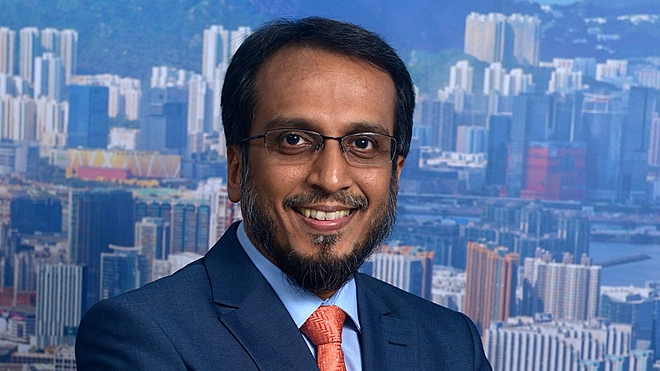

We speak with Taher Badshah, CIO, Invesco Mutual Fund to understand his stock selection framework and reasons for the Invesco India Contra fund's recent mixed performance. Invesco has an in-house stock categorisation framework that influences the inclusion and removal of stocks from the fund. Within this context, can you shed light on the specific financial and non-financial parameters that designate a stock as either 'Diamond' or 'Frog Prince' - the two categories with a value-oriented essence? Diamonds would typically reflect absolute cheapness basis investments it owns or sum-of-the-parts basis. In the case of the latter, there could be a situation where individual businesses are not cheap, but at an aggregate level, the entity is cheap. So, there are some parts which are at a discount, some which are at a premium to its average. Thus, typically, diamonds have to be trading at reasonably beaten down multiples. I don't think that we will have a diamond of anything more than 12-13 times PE multiple or they could be even companies which are trading on an EV/EBITDA of less than seven-eight times. This is typically the range in which some of these diamonds get identified. But the most important point for diamonds is that they have to be cheaper than the intrinsic part of those businesses. And the intrinsic value of the business, at times, might be determined based on what kind of compounding they achieved in the past and what they're likely to achieve in the future on a rolling three-year basis versus the last five-year basis.So, it is more about intrinsic value understanding. Sometimes they show you how to either understand them through an intrinsic value lens or sometimes you have to understand them through absolute cheapness which might be reflected in the multiples of those companies. In the case of Frog Prince, the valuations are generally the worst in the sense that they're not cheap to begin with, because their earnings are deflated. If earnings are depressed, the multiples will actually start looking higher. So, you will say how is t
This article was originally published on September 07, 2023.
Buy, hold, or switch. Get the call.
How's my portfolio doing? What do I need to fix? Where should I invest next? Fund Advisor answers each one. The Advisor Note every Saturday. A live session with Dhirendra Kumar every second Saturday.
No commissions. No conflicts. Since 1991.
See Plans
Already a subscriber ?Log In
 New episodes every Friday










 New Process Alert
  Seems like you've uploaded a wrong QR code. Please upload the QR code downloaded from MF Central platform.


