




 Anand Kumar/AI-Generated Image


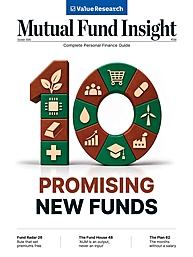
Summary: Value Research's rule stands: wait three years before judging a fund. But with lakhs of crores flowing into new funds anyway, this cover story offers a four-test method to track how young funds are doing during that wait
When I answer a certain type of question from readers, I always feel like an overly strict parent. Your children ask you what flavour of ice cream they can have, and you say, “None, all ice cream is bad.”
I’m actually talking about funds that are too new. Over the years, readers have sent a steady stream of requests asking for our opinion on funds we haven’t rated. Typically, the fund is a few months or a year old; it has done well, someone is trying to sell it to readers, and they want to know what Value Research says. The answer is always to wait until the fund is at least three years old. Whether it’s the star rating or just an opinion, we say nothing about the quality of any fund for its first three years.
The rule has an obvious statistical basis: until we have 36 months of accumulated data, we don’t have a large enough sample size to judge. Actually, there’s also another, ‘softer’ reason. The period right after a fund launches is generally easy for the AMC. The timing of launch is always when the market is rising, and the fund is smaller, so it’s easier to manage, and the portfolio can easily be tuned to whatever is hot at the moment. What the AMC cannot control or manage is the timing of the next weak phase of the market. That’s when the going gets tough. Generally speaking, three years is enough for a turn in fortunes and therefore a much more solid test of a fund’s quality.
However, events in the Indian mutual fund space have complicated the story. Telling readers to wait was always the correct answer, and it still is. The problem is that while we are giving the right answer, readers who can’t wait have invested lakhs of crores in new mutual funds. In the past three years alone, about Rs 2.5 crore has been invested in new funds. Our advice is right, and we stand by it. However, some investors, including many of our readers, have bypassed it.
We can take the easy way out and say that our job is to say the right thing and let the investor decide. However, I’ve come to believe this would be an abdication of what we stand for. We would be exposing our readers to bad investments while taking a position that is comfortable for us. Instead, it’s better to do the hard work of figuring out how to judge funds with a short track record, as we did in this cover story. I must emphasise that this is not a replacement for the three-year wait, but a way to get a sense of how a fund is doing during the proper three-year wait. This whole business is similar to our recent launch of an IPO rating system, but that’s a slightly different story.
As part of this method, we evolved a four-test process to judge such funds. Here’s an interesting tidbit. Of the 171 actively managed equity and hybrid funds between one and three years old, 100 passed all four tests this August. This sounds good, but here’s the real kicker: between 52 and 73 per cent of funds pass in their first three years, but only 29-64 per cent do so when they are older. So if many more young funds pass than older ones, and with a broader range, that tells us that it’s easier to pass when your track record is short. And that’s the reason why we’ve always told you to wait.
Our cover story finally gives you 10 funds but notes that this is not a recommendation. Instead, it’s a statement that they have done nothing wrong so far. That’s more than we could have said when we launched, but far less than we can say about funds older than three years, which we can rate and otherwise evaluate.
Ask Value Research 


 New episodes every Friday









 New Process Alert
  Seems like you've uploaded a wrong QR code. Please upload the QR code downloaded from MF Central platform.


