




 Yogesh Sharma
Summary: Real estate stocks are rallying again, reviving memories of the spectacular boom and bust of 2008. This story examines the key change that could make today’s cycle a fundamentally different bet.
Real estate stocks are booming again, and anyone who lived through the last boom knows how that story can end. In the run-up to 2008, developers borrowed aggressively, land prices soared, and the BSE Realty index fell nearly 90 per cent when the cycle turned; it still hasn’t recovered. The temptation is to look at today’s rally and brace for a repeat. The more useful question is narrower: What exactly caused the 2008 collapse, and has that specific thing changed?


How a boom became a Ponzi-like structure
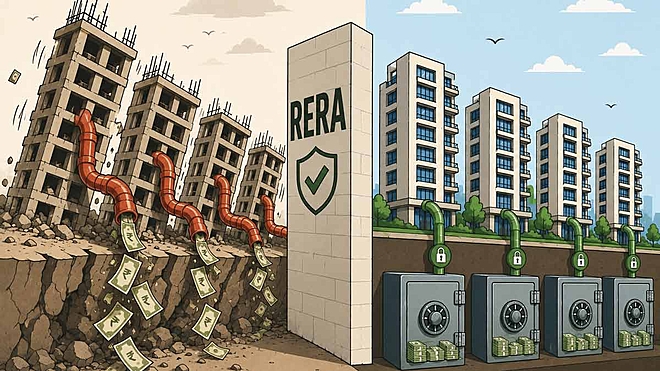
The mechanism was specific, not just excess optimism. Developers across the sector routinely used money collected from buyers for one project, ostensibly meant for construction, to fund land purchases for the next launch. Sales from that next launch then covered the previous project’s shortfall, and so on down the chain. It worked only as long as new launches kept generating fresh money. Global investment banks took direct stakes in individual projects rather than in the developers themselves, betting on land appreciation rather than execution. When credit froze in 2008, every link in that chain broke at once, and the entire sector’s earnings and share prices collapsed.
The rule that closed the loophole
The specific fix arrived in 2016, with the Real Estate Regulation Act. RERA requires developers to keep the bulk of what they collect from buyers in an escrow account, ring-fenced for that project alone, and forbids launching a project before every approval is in hand. Both rules attack the exact failure mode of 2008: money raised for one project can no longer be quietly redirected to fund land for the next, and developers can no longer pre-launch on hope while approvals are pending. This is not a sentiment shift. It is a change to how cash is legally allowed to move inside a developer’s balance sheet.


Growth came back, funded differently
Leverage has not disappeared from this rally, but where it comes from has changed. A large share of the capital behind the sector’s recent growth has arrived through equity, public listings and structured credit, rather than the bank borrowing and buyer-advance diversion that defined the last cycle. Sector-wide, developers have spent the years since RERA paying down the kind of debt that once tied one project’s survival to another’s, even as sales volumes across the industry have grown sharply. That does not make the sector immune to a slowdown. It does mean a weak patch now shows up as softer sales, not the kind of chain-reaction default that pulled the whole sector down together in 2008.
The honest trade-off
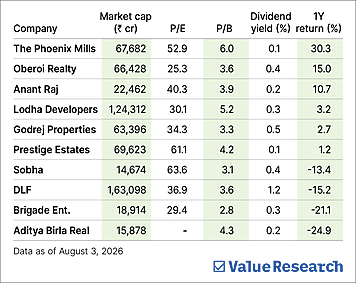
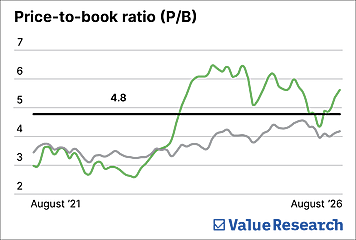
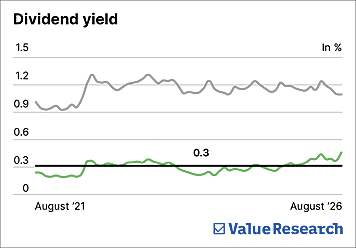
None of this means the cycle has been abolished, only that regulators have removed its most dangerous failure mode from easy reach. Real estate remains a business that moves in wide swings, and outcomes still diverge sharply across the sector depending on how well individual developers execute. An index does not need to identify which one gets that execution right. It needs the sector’s underlying growth, and the discipline RERA has forced into it, to hold. That is a genuinely different bet from the one that failed in 2008.
This article was originally published on September 01, 2026.
Ask Value Research 













 New Process Alert
  Seems like you've uploaded a wrong QR code. Please upload the QR code downloaded from MF Central platform.


