




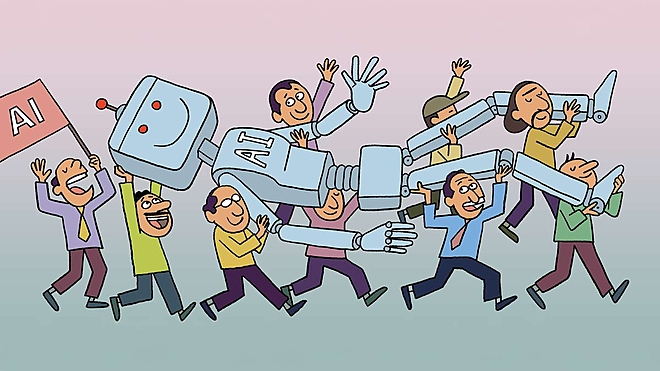
 Illustration: Anand Kumar
Summary: AI is undeniably disrupting Indian IT, but the impact is far from uniform. This piece explores where the real risks lie and which segments could emerge stronger in the next phase of the sector’s evolution.
Summary: AI is undeniably disrupting Indian IT, but the impact is far from uniform. This piece explores where the real risks lie and which segments could emerge stronger in the next phase of the sector’s evolution. There is a certain irony in the current narrative around Indian IT. Every large IT services company is now positioning itself as an AI company. But investors who own these stocks have been left unimpressed. Instead of a re-rating, the market has responded with a de-rating, selling on the fear that AI will hollow out the very business model that made Indian IT one of the great wealth compounding stories of the last two decades. The fear is not irrational. But it is imprecise. And imprecision in markets creates opportunity for those willing to do the harder analytical work. Pause here and ask the question that rarely appears in either the bullish brokerage notes or the bearish ones: What exactly is being disrupted and for whom? Because the AI threat to Indian IT is not equal. Treating every company in the sector as equally exposed is as sloppy as treating every company equally positioned to benefit. The revenue machine and what threatens it To understand why, you need to understand where Indian IT actually earns its money. Strip away the platform narratives and the GenAI brochures and the revenue base looks remarkably similar to what it looked like a decade ago. The single largest category by a wide margin is managed services and application management: running a client’s IT operations on their behalf, fixing software when it breaks, answering employee technology queries, watching over servers and systems around the clock, and keeping ageing software alive. Think of it as the housekeeping function of a large organisation’s technology estate. This is precisely the category that AI is now learning to do on its own.
This article was originally published on May 01, 2026.

 New episodes every Friday










 New Process Alert
  Seems like you've uploaded a wrong QR code. Please upload the QR code downloaded from MF Central platform.


