




 Aman Singhal/AI-Generated Image

Summary: The US-Iran conflict has unsettled markets, and understandably so. But if you're waiting for the war to end before you invest, you may be making a grave mistake. Here's why.
Is it better to enter the mutual fund market now or wait for the outcome of the Iran war before investing? – Saravanan Rangamannar
Every few months, there is a new reason not to invest.
A few years ago, it was Covid. Then it was the Russia-Ukraine conflict. Then it was the overheated markets. And now, many investors are asking: "Should I wait for the Iran War to de-escalate before I start investing in mutual funds?"
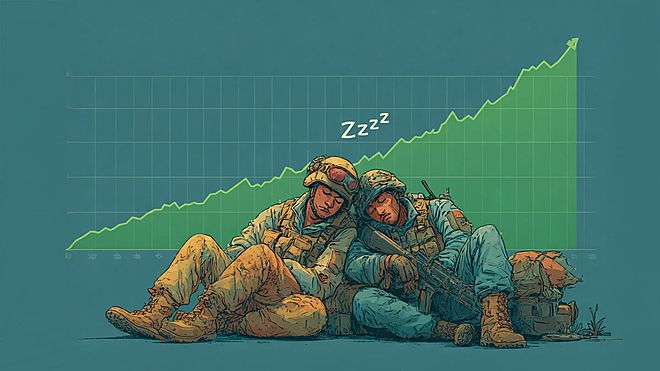
It is a fair question. Nobody likes watching their portfolio turn red. But here is the uncomfortable truth: waiting for the ‘right time’ to invest is one of the most expensive habits a long-term investor can develop.
The script is familiar. Markets are at an all-time high, so you wait for a correction. The correction comes and things feel unstable, so you wait for clarity. Markets recover, and now you feel you've missed the bus, so you wait for the next fall. And just like that, years go by as investors keep waiting for the perfect moment to start investing.
What history tells us
Think back to March 2020. The world was shutting down, and the Indian equity market had crashed badly. Most investors froze. A brave few stayed put, or even invested more. Within 18 months, the markets had not just recovered but hit fresh highs. While those who remained invested saw their wealth multiply, the people who waited for ‘clarity’ missed one of the sharpest recoveries in recent memory.
The Iran situation, like every geopolitical event before it, will eventually resolve itself, one way or another. But by the time it does, markets may have already moved. Markets are forward-looking. They do not wait for the evening news.
The real cost of waiting
When you sit on the sidelines, you are not avoiding risk; you are simply swapping market risk for a different kind of risk: the risk of missing out on compounding.
Consider this: an investor who starts an SIP today and stays invested for 25 years will end up with a significantly larger corpus than one who waits just five years before starting the same SIP. Same monthly amount. Same mutual fund. The only difference is a five-year delay, and that gap can cost you lakhs, as seen from the table below.
|
|
Investor A | Investor B |
|---|---|---|
| Monthly SIP | Rs 10,000 | Rs 10,000 |
| Time period | 25 years | 20 years |
| Annual rate of return | 12 per cent | 12 per cent |
| Final corpus | Rs 1.7 crore | Rs 91.98 lakh |
A temporary dip in your portfolio stings, yes. But it is a paper loss. Staying out of the market altogether turns a temporary setback into a permanent missed opportunity.
The psychology behind the wait
Two things tend to hold investors back. First, regret aversion, or the fear of investing today and seeing a fall next month, feels louder and more painful than the silent cost of not investing at all.
Second, the illusion of control, or the belief that if you consume enough market commentary, you will eventually know what happens next. You won't. Neither do the commentators.
So what should you do?
If you have a lumpsum and are nervous about investing it all at once, you don't need to freeze. Invest it into the market gradually over 6-12 months via SIPs. This way, you don't bet everything on one day's NAV, but you also don't sit on cash indefinitely.
Remember, time in the market will always beat timing the market. The only time markets ever feel ‘safe’ is when you're looking at a chart from 10 years ago, wishing you had started then.
The world will always have problems. Your financial goals cannot afford to wait for the world to sort itself out. Start small. Start simple. But start.
Also read: Don't play the waiting game
This article was originally published on April 03, 2026.
Ask Value Research 
 New episodes every Friday









 New Process Alert
  Seems like you've uploaded a wrong QR code. Please upload the QR code downloaded from MF Central platform.


