 Widely read:




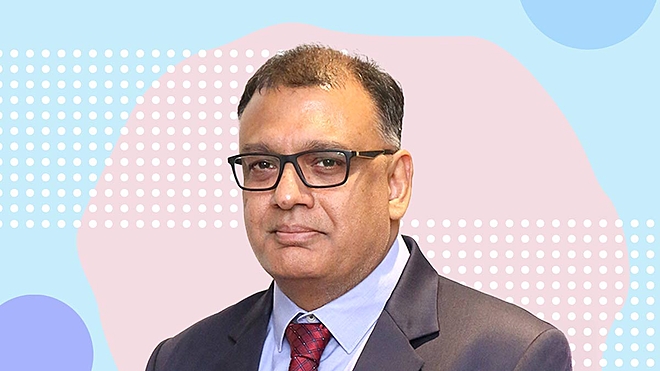
Summary: Nippon India Mutual Fund’s Vikram Dhawan shares his views on the surge in gold and silver prices, whether the rally is here to sustain and the reasons for the growing investor inflows in gold and silver ETFs.
Over the past year, gold and silver prices have zoomed (gold and silver have delivered three-year annualised returns of 23 per cent and 23.4 per cent, respectively). While central bank buying has been a major driver, rising inflows into gold and silver ETFs (exchange-traded funds) have also fuelled this rally. According to Vikram Dhawan, Head – Commodities and Fund Manager at Nippon India Mutual Fund, ETFs are gaining favour over holding gold and silver in their physical form owing to their ease of investment, superior liquidity and regulatory oversight.
Dhawan, who manages the Nippon India ETF Gold BeEs and Nippon India Silver ETF, the largest funds in their categories, also shares his views on whether the rally can sustain or if there’s potential consolidation ahead and the risks investors should watch out for when adding gold and silver ETFs to their portfolios.
Gold prices have surged sharply over the past year. What are the key global and domestic factors driving this rally, and how sustainable is it?
Every gold bull run has a different set of factors. If you consider bull runs that occurred before Covid, then at that time, physical demand and ETF investment flows were the two most significant factors that impacted prices. Thus, physical demand was strong, and ETF flows were robust, allowing gold to perform well. The reverse was also true.
However, post-Covid, we observed that, in addition to physical demand, investment flows and macroeconomic factors, central bank buying became a significant influence on the gold market and gold bullion prices. The reason they were buying gold was varied.
Firstly, during the Covid pandemic and the past economic crises, central banks observed that volatility in US yields and the dollar was something that was not very palatable for them. Imagine that in a small period, the yields on US Treasuries went from zero to 5 per cent. Historically, most central banks have the US dollar as their primary holdings. So, they realised that there is a need to diversify.
Additionally, the US Federal Reserve has not provided any forward guidance in the past few years, instead becoming very data-dependent. In the absence of guidance, it becomes challenging. It's like holding your portfolio, and the largest stock in it becomes volatile, yet you're unable to get any clarity. That's when it's time to reduce. Essentially, they were attempting to mitigate the concentration risk. Gold was one of the beneficiaries.
Not only gold, but they also diversified into the Euro and the Yuan. Gold also benefited from this. People now refer to this as de-dollarisation, whether you prefer to call it that, diversification or managing concentration risk, it's up to you. So, this is the reason why central banks started increasing their allocation to gold.
Historically, central banks have been buyers of gold. However, the long-term (around 2020) average central bank buying used to be around 400 tons. However, over the past three years, the average annual buying has exceeded 1,000 tons. Therefore, you can imagine the significant quantity of gold purchased by central banks over the past few years, which has been a key factor driving gold prices.
However, the reason the price action has been explosive in 2025 is that investment flows, which had become negative after Covid, led people to exit havens and move into riskier assets. There was a period from 2021 to mid-2024 when flows into global gold ETFs were negative. They only turned positive in mid-2024 and accelerated in 2025.
Therefore, the combination of central bank buying, along with the reversal of flows into ETFs, which had become negative after the Covid-19 peak, is why you saw an explosive price action in gold in 2025.
Now, in 2025, it is not just central bank buying that drives prices, but also ETF flows. And they will be the key to determining the type of price action we can expect for the remainder of the year.
What are the key factors driving the surge in silver prices, and how do you view its sustainability?
Regarding silver, I'd like to share a data point. Around 10 years ago, in 2015, the consumption of silver for solar applications was just 5 per cent of the total demand. Today, that has increased to approximately 15 per cent, and it's still rising.
Similarly, examining the green-tech and hi-tech story, which encompasses solar, EVs, high-end gadgets and 5G, reveals that consumption has increased by almost three times in the past decade. That's not a very long gestation period and is being reflected in silver's demand-supply fundamentals. There is a good possibility that, in the coming few years, if you only talk about green tech, one-third of silver consumption will be accounted for by it, led by solar, among others.
This has been the primary driver of silver prices, and it is why the market has entered a deficit. We are now in our fifth consecutive year of supply deficit, and this trend is expected to continue for at least the next few years. That is the reason behind the rise in silver prices.
Additionally, silver prices are relatively inelastic because only one-third of silver is produced by primary sources, which include standalone silver mines. Two-thirds of it comes as a byproduct of copper, zinc, gold, etc. That's why silver prices are inelastic, and that's why you've seen such a long stretch of demand-supply deficit. However, the supply response has not been as significant as one would have expected, compared to other commodities that have been in deficit for many years. This inelasticity, due to the peculiarities of silver production dynamics, exacerbates the demand-supply gap even further.
Are rising prices the primary reason for increased investor interest in gold and silver ETFs in India? Or is there a more profound behavioural shift toward viewing these as portfolio assets?
In India, the asset allocation story is still in its early stages. Whereas in developed markets, the percentage of asset allocation to hybrid funds is significantly larger, ranging from 5 per cent to 15-20 per cent, depending on the market.
Asset allocation strategies and investment products are expected to gain popularity for several reasons. First, as the size of the portfolios increases, along with investor awareness and maturity, people will be more focused on risk-adjusted returns rather than taking purely tactical calls or chasing absolute returns. There will be more demand for returns with lower volatility. I think this is something that will play out over the decade, which bodes very well for gold and silver, because when it comes to asset allocation, we're only now starting to see that conversation in India.
Secondly, outside of asset allocation, we have seen specific interest in silver. Since physical silver is cumbersome to hold, and roughly 15-20 per cent of silver consumption in India is for investment purposes, some of that is now trickling into ETFs. Instead of holding bulky silver bars, investors are finding ETFs more convenient because they allow for fractional participation, and they are digital. What we are now seeing is some convergence from bar and coin buyers toward silver ETFs.
There is also considerable interest from investors due to its liquidity. One thing you have to appreciate is that the liquidity of silver and gold ETFs is significantly superior to that of the underlying physical market. That is one thing which has stood out.
The other most important factor is that SEBI regulates these ETFs. That means investors have recourse. It's unlike buying a gold bar, where you have no recourse but to the dealer or supplier. With ETFs, a regulatory framework and investor protection are in place, providing significant comfort for many.
Also, the mandate of ETFs is that they are only allowed to hold gold and silver bars of the highest quality, specifically LBMA good delivery bars. All of these factors, when combined, make it a very compelling proposition for investors, whether considered on a standalone basis or as part of an asset allocation strategy.
With both metals at multi-year highs, do you believe there is still meaningful upside from here? Or should investors prepare for a phase of mean reversion or consolidation?
From an asset allocation perspective, you would add gold and silver to your portfolio for specific reasons, either to diversify or to create a mix of both. Because obviously, the addition of silver increases the beta.
Thus, I think the buying will continue. You'll be looking at both metals, not just from a return perspective, but from an asset allocation framework. And from that perspective, regardless of the asset – whether it's equity, fixed income, gold or silver – you're never looking at timing.
The whole idea of asset allocation is that you're not taking a call on the timing of each asset class. Now, from a practical standpoint and if you're talking about standalone investments, I think obviously, commodity markets are such that they require a very long-term perspective. So yes, we always say that if you are trying to speculate in gold or silver, then ETFs may not be an ideal platform for you.
They are more suitable for long-term investment purposes, such as asset allocation and portfolio diversification. That's where ETFs make sense and where they fit into an investor's broader strategy.
What are the key risks that retail investors must understand before allocating to precious metals ETFs at current levels? Are we seeing signs of herd behaviour?
I think the key point to keep in mind is, what is the motivation for adding gold or silver to your portfolio? How does it fit into your overall portfolio? Is it being used to hedge the portfolio? Is it being used to generate additional returns? That is something crucial to ask.
Regarding herd mentality, I believe that even now, if you examine the total AUM of gold and silver ETFs across the industry, it remains a tiny fraction of the overall AUM (assets under management) of the mutual fund industry. So, by no means can we say it has become significantly large. It's not yet at a level where you can say herd behaviour is visible from an AUM point of view within the mutual fund space.
Historically, gold has underperformed equities over long periods. Yet many investors increase allocation to gold when the prices are high. What's your advice on balancing return expectations with the role of gold as a hedge?
As I mentioned earlier, we must be aware of the price drivers for each metal. Are they more fundamental and long-term, or are they short-term and speculative in nature?
If you talk about de-dollarisation, for instance, that is a very long-term trend. It will play out over many years or decades. It's not something that will happen overnight. Similarly, when examining the climate story, including renewables and green technology, most countries have very ambitious targets for achieving net-zero emissions. These are goals for 2040 or 2050, which means we are still decades away from them being fully realised.
So, you have to study these trends and convince yourself whether the drivers of gold and silver are short-term or long-term. If the conviction is that these are long-term trends, then the price at which to enter may not be too critical compared to a short-term tactical play. But even then, price is only one part of the equation. I believe that fundamentals are even more important than price.
Also read: How this fund manager avoids value traps: Nippon India Mutual Fund's Meenakshi Dawar
Ask Value Research 
 New episodes every Friday











 New Process Alert
  Seems like you've uploaded a wrong QR code. Please upload the QR code downloaded from MF Central platform.


