




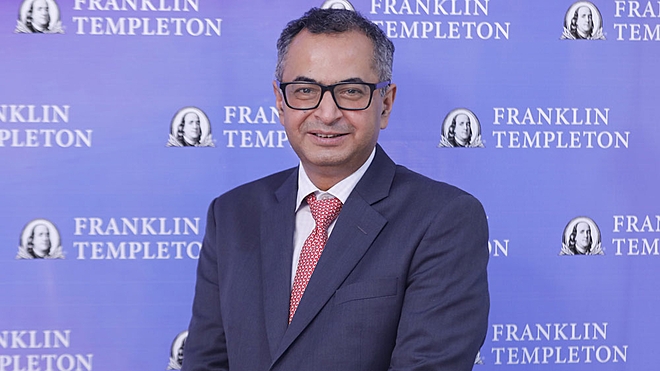
In the past few years, Franklin Templeton India's fixed-income division has undergone a significant transformation, with Rahul Goswami, CIO and MD, India Fixed Income, at the helm. He took charge during a time when rebuilding investor trust was crucial. Goswami mentions that several measures have been implemented to address gaps and strengthen the investment process. He also highlights the importance of an approach focused on "minimising the probability of errors" and "ensuring investor interest is well protected".
In this interview, Goswami discusses his experience of working with Franklin Templeton's fixed-income division, why the low to medium-duration segment offers the best risk-reward for investors today and how RBI policies influence his approach to debt fund strategies. He also explains his optimism about the fund house launching more fixed-income schemes this year.
You stepped in to lead Franklin Templeton's fixed-income division during a crucial phase. How has the journey been so far?
It has been a great learning experience; things have turned out better than most of us initially expected. When I took over, the primary focus was on further strengthening our processes, enhancing risk controls and building a more robust team. The goal is to ensure that we are well-positioned to deliver on expectations entrusted to us by our investors.
Over the last few months, we have successfully launched a few new strategies, including the recently introduced Franklin India Low Duration Fund. The response from investors and distributors has been very encouraging. They have been actively engaging with us and are optimistic about participating in our new and existing bouquet of offerings.
Overall, we're on a strong footing. The work is ongoing with evolving market conditions, and we expect to introduce more strategies over the next 12 months to cater to different investor needs. The market environment remains dynamic, but with a solid foundation in place, we are confident about navigating it effectively.
Since 2020, Franklin has focused on rebuilding investor trust. What has changed in your approach to liquidity and risk management?
A lot has changed since 2020, and further strengthening liquidity and risk management has been a top priority. We have significantly enhanced internal controls across operations, compliance, investments and risk management - going beyond regulatory requirements.
The entire approach is geared toward minimising the probability of errors and ensuring that investor interest remains well-protected. In investing, if you reduce the number of mistakes, your performance automatically improves.
The fixed-income suite of funds offered by FT India AMC currently includes 11 schemes, and we are launching more funds this year after having identified gaps spanning major categories in the high credit space targeting various duration segments.
I am working closely with Avinash Satwalekar, our Franklin Templeton India President, on our long-term India fixed-income strategy. We are also looking at various best practices followed by our global team that could be integrated into our India strategy.
As mentioned earlier, our primary focus will be further strengthening investment processes, with disciplined execution and risk management as our key guiding principles. We will look to expand the fixed-income product suite further over time to meet client demand. India offers an excellent opportunity for long-term participants like us, and we aim to continue bringing innovative products, solutions and global best practices to our investors and partners in India.
How does RBI's policy direction influence your approach to debt fund strategies?
Shaping debt fund strategies isn't just about tracking RBI's policies. It's about understanding the broader economic landscape. RBI is a key player in the fixed-income market, but we must also factor in other domestic and external developments and macro conditions.
RBI has done a commendable job, particularly in its timely rate hikes and pauses. It raised rates at the right time and avoided going overboard, which has helped maintain economic stability. But beyond RBI, we also closely monitor other domestic factors, including government finances. The fiscal consolidation efforts have been significant, bringing the fiscal deficit down from 9.5 per cent in 2021 to a target of 4.4 per cent, adding to market confidence.
At the same time, global factors like global yield movements, geopolitical developments and commodity price fluctuations play a key role. All these elements together guide our strategy, ensuring that we are not just reacting to one specific move but proactively managing risks and opportunities in the market.
Where do you find the most favourable risk-reward profile for investors building a core fixed-income portfolio?
Given the current interest rate environment and the flatness in the yield curve, we believe the low to medium-duration segment offers a relatively attractive risk-reward balance for investors building a core fixed-income portfolio. This range provides a good mix of stability and reasonable yield without exposing investors to excessive duration risk.
Right now, starting from the six-month and stretching up to five-year maturity buckets seems like a prudent allocation strategy. As market conditions evolve, there may be opportunities to extend the duration and take advantage of higher yields in longer tenures. However, at this stage, we think the shorter to medium duration space offers the most favourable positioning from a risk-adjusted return perspective.
How does Franklin structure the debt portion of its hybrid funds?
The debt portion of our hybrid funds follows the same risk and credit framework as our standalone fixed-income strategies. The board mandate remains consistent: to keep the investments in securities with a long-term rating of AA and above. This ensures that credit quality remains high across all our funds, including hybrid strategies.
While the overall strategy aligns with our core fixed-income approach, there could be minor adjustments on duration and exposures based on the specific hybrid fund category. These adjustments help ensure the debt component complements the equity allocation while maintaining a strong risk-return profile.
However, the fundamental principles of risk management, credit selection and duration positioning remain the same across all fixed-income allocations, whether in pure fixed-income or hybrid strategies.
Also read: Interview with V Srivatsa of UTI Mutual Fund
Ask Value Research 
 New episodes every Friday













 New Process Alert
  Seems like you've uploaded a wrong QR code. Please upload the QR code downloaded from MF Central platform.


