




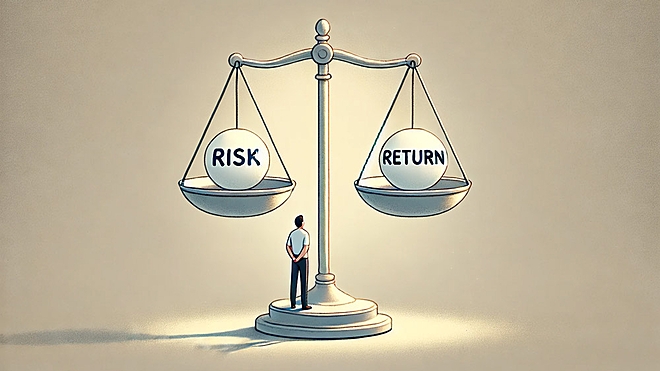
Investing can sometimes feel complicated, especially with all the numbers and jargon. SEBI, the regulator for mutual funds in India, wants to make it easier for you to evaluate and compare all equity-oriented mutual fund schemes. That's where the concept of Risk-Adjusted Returns (RAR) and the Information Ratio (IR) comes in. Let's break it down in simple terms.
Why compare risk and returns?
Imagine you and a friend invest Rs 1,000 each. You invest in a fixed deposit and earn Rs 50, while your friend invests in stocks and earns Rs 50 too. Same return, right? But you took no risk, and your friend did.
Similarly, mutual funds can generate similar returns, but some take more risk than others. Risk-adjusted returns help measure how much "extra return" a fund manager generates for the risk taken.
What is the information ratio?
Information ratio is a way to calculate risk-adjusted returns. It answers the question: Is the fund manager good at generating more return than the benchmark (like Nifty or Sensex) without taking unnecessary risks?
Here is how it is calculated:
IR = (Fund's return — Benchmark's return) / Risk (Volatility of excess returns)
In simple words:
- Fund's return: How much money the fund made.
- Benchmark's return: How much money the benchmark index made (e.g., Sensex).
- Risk: Fluctuations in the fund's performance compared to the benchmark.
A higher information ratio means the fund manager is generating better returns for the risk they're taking.
Suggested read: How to statistically analyse funds?
How does this help you?
Think of mutual funds as racehorses and benchmarks as the track. Some horses are faster (give higher returns), while others are slower but more consistent (less risky).
The information ratio:
- Tells you if the fund is beating the benchmark.
- Shows how efficiently the fund manages risk.
For example:
- A fund with an IR of 0.5 means the fund manager is generating decent returns for the risk taken.
- An IR of 1 or higher is exceptional — consistent outperformance with controlled risk.
- A negative IR means the fund is lagging behind the benchmark.
How will mutual funds share this?
Starting April 2025, all equity mutual funds must display the IR on their websites daily for 1-year, 3-year, 5-year, and 10-year periods. The Association of Mutual Funds in India (AMFI) will also maintain this information in an easy-to-use format, so you can compare funds.
Why is this important for you?
Investors often focus only on returns, but returns don't tell the full story. Higher returns could mean higher risk. By checking the IR, you can:
- Avoid funds that take unnecessary risks.
- Choose funds that deliver consistent, reliable performance.
How to use this information?
- Stick to your goals: Look at funds whose risk profile matches your investment goals.
- Compare within categories: Compare IR only within similar types of funds (e.g., large-cap funds vs. large-cap funds).
- Ask questions: If a fund has a low IR, ask why. Is the fund manager struggling? Is the risk too high?
Suggested read: How to evaluate your fund's performance
Investor education matters
SEBI is ensuring that fund houses teach investors about IR and its importance. AMCs (fund companies) will use their education budgets to explain these concepts using social media and other channels.
In summary
The information ratio provides a clearer picture of mutual fund performance by balancing returns against the risks taken to achieve them. Think of it as a performance scorecard for fund managers, helping you identify those who consistently deliver stable, risk-adjusted returns. By focusing on this metric, you can make more informed choices and invest with greater confidence.
And if you're looking for even more clarity in selecting the right funds, Value Research Fund Advisor offers personalised, data-driven recommendations to align your investments with your goals. Take the guesswork out of investing and start making smarter decisions today!
Also read: Which mutual fund to choose during a market downturn
This article was originally published on January 22, 2025.
Ask Value Research 
 New episodes every Friday









 New Process Alert
  Seems like you've uploaded a wrong QR code. Please upload the QR code downloaded from MF Central platform.


