





After a rough start in January this year, which saw volatility shoot up, the markets, both in India and abroad, are seeing a cooling period. Are these signs that the markets are settling down?
Year 2016 has been rocky for investors. Fears of a contagious fallout of the Chinese slowdown on global economies spooked markets worldwide. On December 31, 2015, the India Volatility Index (VIX), a barometer of market volatility in the near term, closed at 13.87. The VIX trended up for most of January this year, peaking at 20.96 on January 20. Chart 1 shows how volatility has rocked Indian markets in recent times.
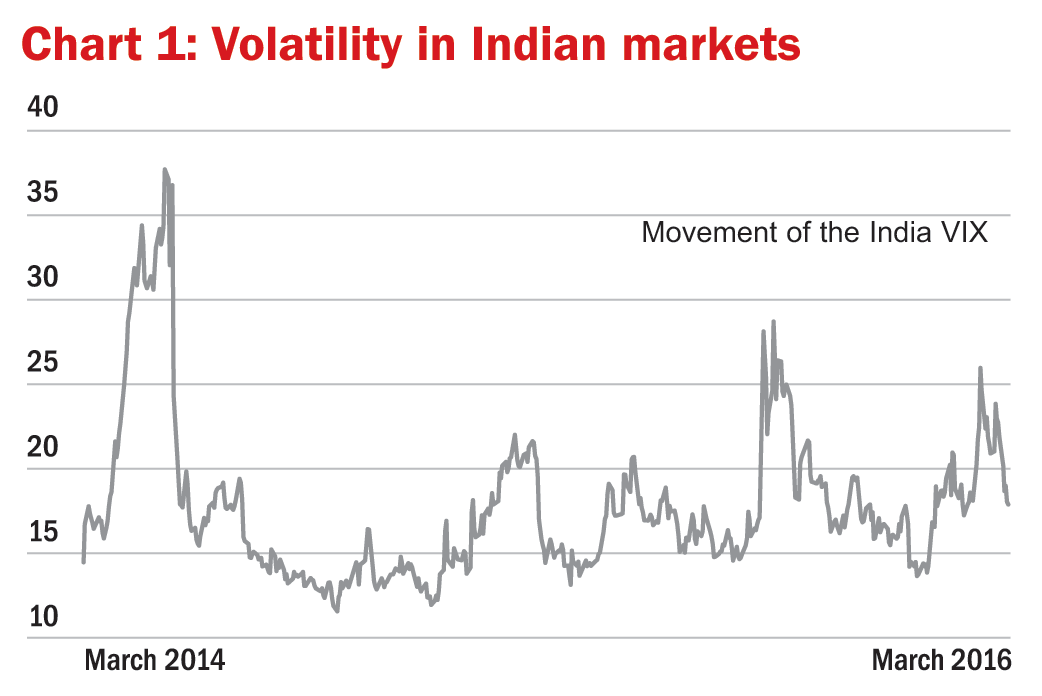
February 2016 was a much worse month for the markets than January. Continued global slowdown fears and their impact on the domestic financial sector saw the benchmark Sensex fall over 800 points on February 11, 2016, closing at 22,951.83 - its lowest closing since May 8, 2014. That day alone investors lost ₹3 lakh crore. The VIX shot up to 25.96. It was up 87 per cent from the levels it closed at in 2015.
The VIX has been on a pretty much downhill trend ever since. With the Index at 17.88, it has fallen by 45 per cent from its February highs. The fall in volatility in India is not an exception. Major indices across the world have been seeing the same pattern. Charts 2 and 3 show how volatility has remained in the US and the eurozone through the Chicago Board Options Exchange (CBOE) S&P 500 index (SPX) and the eurozone volatility index.
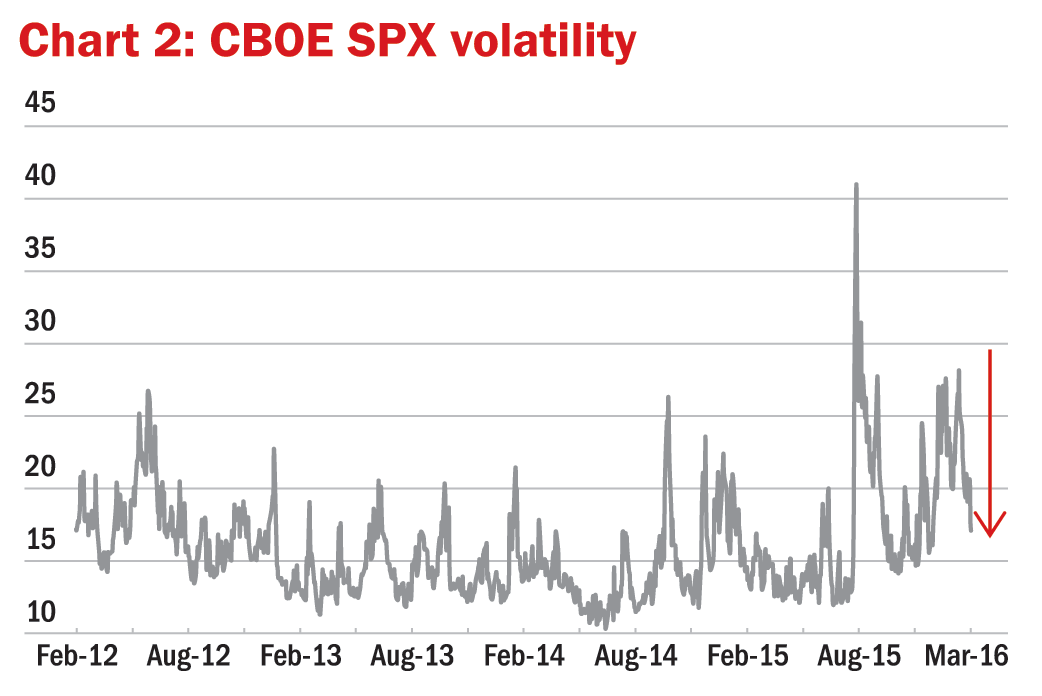
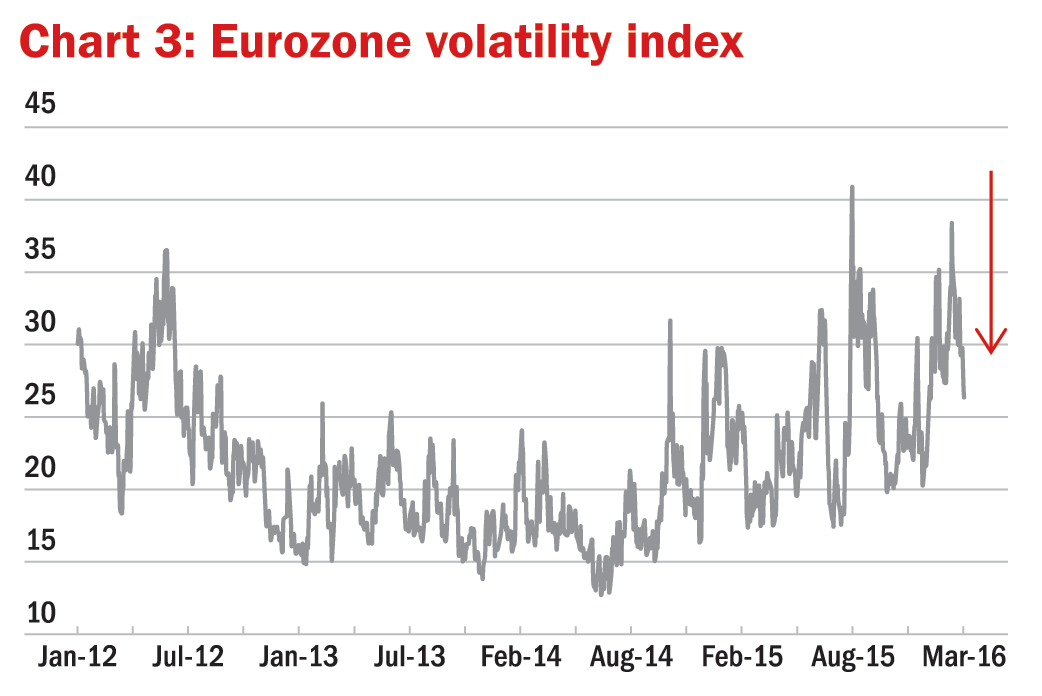
Don't let the fall in volatility fool you though. The lull in the global volatility may just be waiting for another negative news. Amongst other, there are a couple of significant factors that can have a significant impact on global volatility. The first is how China navigates its slowdown and whether there is any hard landing, as many market pundits have predicted. The second is how the US Fed adjusts its monetary policy as a response to the global slowdown. The third factor could be the fluctuations in crude prices, which could significantly affect the countries dependent primarily on oil revenues. The fall in volatility, therefore, should be the time to tighten our belts.
Ask Value Research 
 New episodes every Friday


 New Process Alert
  Seems like you've uploaded a wrong QR code. Please upload the QR code downloaded from MF Central platform.


