




 VRO Team

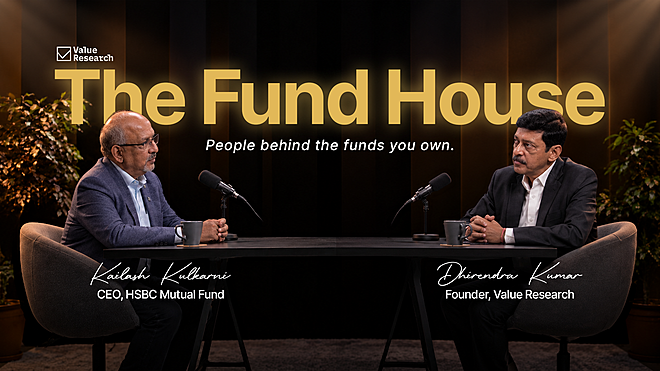
Kailash Kulkarni built L&T Mutual Fund through two acquisitions, sold it to HSBC for $425 million, the largest deal in Indian mutual funds, and then took charge of the buyer. I have watched fund houses change hands for more than three decades and have not seen that before. Three years on, the merger has held. The investment team stayed, the investors stayed, and assets have nearly doubled. When I sat across from him, my question was the one an investor would ask: if she held both fund houses in 2022 and did nothing, is she better off today?
He said yes, and then answered the harder questions that followed. The industry grew faster than HSBC in the first eighteen months. “Did we lose out for the first one and a half years? The answer is yes.” Distributors who had backed L&T took time to come across. Once they did, HSBC's share of net sales grew faster than the industry's over the past year. Fund house chiefs usually explain a lost year. He admitted it in one sentence and moved on to what came after.
Asked what he would do differently, he said the house had done a “relatively poor job” of telling investors who it is and what its funds have done. Most of its schemes are in the top two quartiles over three years. The record is better than its reputation, and he knows it.
The small-cap fund, the jewel of the old L&T stable, lost 10.6 per cent in 2025 and sits in the bottom quartile over three years. He does not blame the market. “If small caps are underperforming, you will not see our product full of large caps. We prefer to be in the space we are meant to be in.” He says the fund is back in the top quartile over the last six months. On debt, the funds sit mid-pack because they hold far less lower-rated paper than peers, and he is comfortable with that: “the quality chasers stay with us.” An investor should judge any fund by what it delivers across a full cycle. A fund that stays true to its label makes that judgement possible.
I pressed him to name one fund where HSBC's process had demonstrably improved outcomes. “It's not one fund,” he said. What he described instead was a research desk that can call its own analyst anywhere in the world on the day a supply chain breaks, and fortnightly calls between the Indian equity team and the global one. That is a real change, even if it does not show up as a single fund's rank.
His yardstick for the merger is not the one the industry uses. “AUM has always been an output and never an input.” He counts clients, not assets. He says HSBC will not “add to the clutter” of near-identical funds, and its launches so far bear that out. His ambition is a top-10 spot. The gap is large. He has one year of better numbers to show for it. He will need more.
The full edited interview is in the October issue of Mutual Fund Insight. Watch the conversation here.
Ask Value Research 

 New episodes every Friday




 New Process Alert
  Seems like you've uploaded a wrong QR code. Please upload the QR code downloaded from MF Central platform.


