




 Sakshi/AI-Generated Image
Summary: Artificial intelligence is disrupting the Indian IT sector by changing its core billing model, not just the technology it delivers. This story explores why the market has turned pessimistic, how today's AI transition differs from past disruptions, and why an index approach may be the more sensible way to invest through the uncertainty.
For nearly two decades, the BSE IT index built some of the largest fortunes in Indian equities. That reputation has taken a beating over the last year. The index has fallen by around 29 per cent over the last 12 months, making it one of the worst-performing sectoral indices over both the last five and 10 years. Stock prices now imply the sector will grow at 0-2 per cent a year, well below the 6-7 per cent it delivered before the pandemic. The market has decided the model is broken.

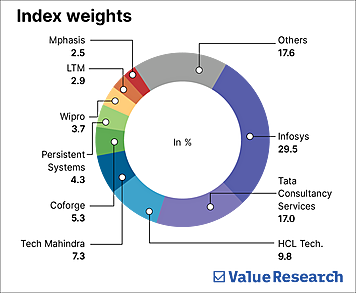
Billed by the person
For 30 years, Indian IT sold time. Global enterprises outsourced complex technology work, and IT companies staffed it with engineers, billing by the number of people deployed.
Artificial intelligence automates a large share of that work directly. When a contract that once required 500 engineers needs 300, revenue drops by 40 per cent overnight, even though the underlying work still gets done. Sector revenue growth has already collapsed from the high teens during the pandemic years to roughly 2 per cent today. This is not a slowdown in the usual sense. It is a change in how the work gets billed.

It has been here before
This is not the first time the obituary has been written for Indian IT. Digital transformation raised the same fears in 2013. Cloud computing did the same in 2017-18. Both times, legacy work shrank and eventually became a small share of a much larger revenue pie built from the disruption itself. What sets this cycle apart is that AI is the first disruption to hit the core billing model of IT services directly, rather than shifting where the work sits. This one changes how many people it takes to deliver the same work, and the replacement cycle for the technology driving it is measured in months, not years.

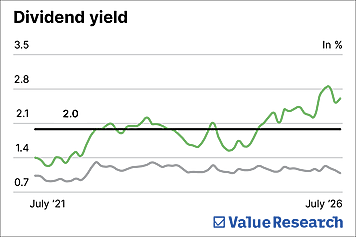
No need to pick a winner
The natural response to this kind of disruption is to go stock-picking: find the companies adapting fastest and avoid the rest. That is harder than it sounds. Which billing model, client mix, and technology bets end up winning is genuinely difficult to forecast this far in advance, even for those who study these businesses closely.
An index sidesteps that problem entirely. It does not need to identify the one company that gets the transition right. It only needs the sector, in aggregate, to work through the disruption the way it has before, with new revenue pools eventually replacing old ones.


The honest trade-off
The case for the BSE IT index is the same one that has always applied to indices: broad, low-cost exposure to a sector’s eventual outcome, without having to correctly call which company delivers it. That case gets stronger, not weaker, in a period like this, precisely because the sector’s near-term future is genuinely uncertain even to specialists.
Valuations have already compressed sharply from their pandemic-era peaks, which lowers the price of being wrong. This transition could still take longer than earlier ones, given how directly it hits the sector’s billing model. But that is a risk indexing is well placed to absorb.
This article was originally published on August 01, 2026.
Ask Value Research 











 New Process Alert
  Seems like you've uploaded a wrong QR code. Please upload the QR code downloaded from MF Central platform.


