




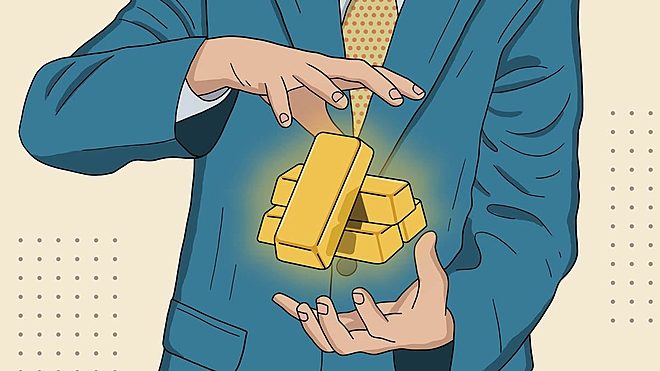
 Illustration: Anand Kumar
Summary: Gold was expected to surge during the crisis, but instead, it declined. The reason lies not in sentiment, but in a deeper shift in who buys gold and why.
Summary: Gold was expected to surge during the crisis, but instead, it declined. The reason lies not in sentiment, but in a deeper shift in who buys gold and why. For 5,000 years, gold has had one reliable job: when the world catches fire, people reach for it. The metal does not pay interest, generate earnings or do anything particularly useful. But in a crisis, it holds its value when everything else does not. That, at least, is the story. Someone forgot to tell the market. The Gulf has been in open conflict since late February. The Strait of Hormuz, through which roughly 20 per cent of the world’s seaborne oil travels every day, has effectively shut. More than 150 tankers sit anchored outside. Gulf production has fallen by at least 10 million barrels per day. Brent crude has crossed $110 a barrel. Strikes have hit Qatar’s LNG facilities, sending European gas prices up 50 per cent. Saudi refineries have been droned. Every variable that has historically pushed gold higher is present. And yet, gold has fallen more than 10 per cent from its January 2026 peak of $5,597 per ounce, and today sits under $4,900. That is not noise. It deserves a serious explanation. When the rules changed When the United States a
This article was originally published on April 01, 2026.

 New episodes every Friday











 New Process Alert
  Seems like you've uploaded a wrong QR code. Please upload the QR code downloaded from MF Central platform.


