 Widely read:


 Aditya Roy/AI-Generated Image


If you are a regular reader of this column, you already know what I am going to say. I have written, more than once, that news is not your portfolio's friend. The first reaction to any dramatic event is rarely the right one. The long-term investor who sits on his hands while the television screams is almost always vindicated. I know – I keep saying the same thing. And here I am, saying it again.
For Indian households, there is something more immediate than any stock index: a cooking gas shortage is developing, and more could follow. So let me be clear about something before I make my usual argument. The disruption is real. It is not imaginary. People will face shortages. There will be months of genuine difficulty for ordinary families. I am not asking you to pretend otherwise.
Suggested read: News is not your portfolio’s friend
But here is what fifty years of oil shocks teach us, if we are willing to study them rather than merely experience them. In October 1973, Arab oil producers imposed an embargo during the Arab-Israeli War. Oil prices quadrupled within months. In 1979, the Iranian Revolution disrupted supplies and triggered another oil shock, later reinforced by the Iran-Iraq War. In 1990, Iraq’s invasion of Kuwait during the Gulf War sent prices spiking and sparked widespread predictions of prolonged turmoil in global energy markets. In 2008, oil briefly touched $147 a barrel, and many commentators argued that the age of cheap energy had permanently ended.
Each of these moments brought real suffering, not just market volatility. Each produced a wave of headlines about how the world had changed forever. And each was eventually absorbed by technological change, new supply sources, demand adjustments, and the global economy's sheer adaptive capacity. The Strait of Hormuz has been described as the world's most dangerous chokepoint since before most retail investors were born. It will presumably remain one long after this crisis finds its resolution.
Suggested read: The most expensive map in the world
This is not an argument for complacency about the present. It is an argument for proportion. The investor who sold equities in a panic during the 1990 Gulf War and waited for things to "settle down" missed one of the great bull markets of that decade. The one who fled when oil hit $147 in 2008 did not know, and could not have known, that within six months prices would be below $40. Markets do not wait for anyone's comfort level to return.
The reason I keep repeating the "ignore the news" argument is that the temptation to act on dramatic events never goes away. Some years ago, during the Covid crisis, a few readers wrote to tell me I had been guilty of repeating the mantra "stick to the basics" too often. I told them they were completely wrong – I had actually been repeating it for twenty-five years, and Covid had nothing to do with it. That was in 2020. Here we are in 2026, and I am still at it, with no intention of stopping. What is not hardwired into us is the patient recognition that most of what feels urgent today will look like a footnote ten years from now. Investors who have stayed with equity mutual funds across two decades know this in their bones. Those who are newer to investing are about to find out.
For the Indian retail investor, there is one additional layer worth noting. India has consistently managed its energy relationships with a pragmatism that confounds anyone looking for clean lines. It bought Russian oil when Western nations would not. It has maintained working relationships across sharply opposing geopolitical camps. This is neither admirable nor contemptible – it is simply how a large, complex economy navigates a messy world. It also means that the most alarming scenarios for India's energy supply are typically the least likely to occur.
So yes, there will be disruption. Your cooking gas will cost more. Inflation numbers will look ugly for a few months. TV news will be even more shrill and unwatchable than it usually is. But your long-term investment portfolio? Leave it alone. The oldest story in the book has only one ending, and you already know what it is.
Also read: Understand and control
Ask Value Research 
 New episodes every Friday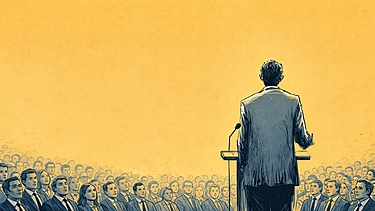








 New Process Alert
 Seems like you've uploaded a wrong QR code. Please upload the QR code downloaded from MF Central platform.


