 Widely read:


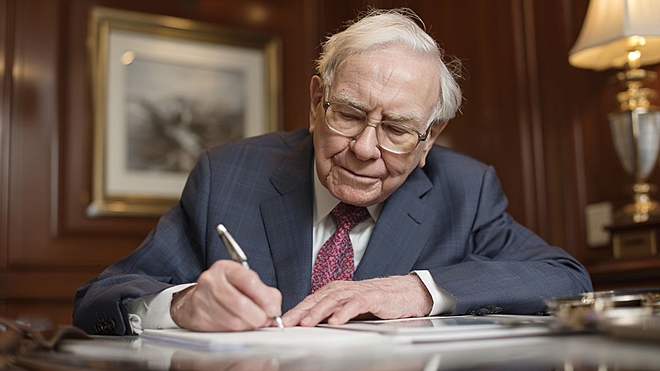 Aditya Roy/AI-Generated Image
Summary: A single line from Buffett on luck sparked thoughtful notes from readers who’ve survived booms, crashes and hard-earned lessons. Across views, one theme stood out: skill matters, but behaviour matters more, and only experience teaches where luck ends, and judgment begins.
Some weeks, the inbox feels like a mirror—reflecting not just reactions, but lived experience. The latest Editor’s Note on Warren Buffett’s candid admission about luck did that. It struck a nerve with readers who’ve tasted both sides of the investing cycle: wind-at-your-back phases that make you feel invincible, and humbling corrections that remind you who’s actually in charge.
If Buffett, at 95, can say “I drew a ridiculously long straw at birth,” readers felt compelled to ask what that means for the rest of us—those who didn’t win the timing lottery, didn’t meet the right mentors early, or didn’t have the compounding runway he did. What followed was a rare, honest discussion about what success is really made of.
When confidence meets reality
Pradeep Kumar Nair Palliyill appreciated the topic instantly: “Lovely to see you bring another important one to the fore, if not the most important.” He likened today’s misplaced bravado to fables of old, wondering why advisors around him insist that SIPs make investors immune to market falls. That overconfidence, he suggests, isn’t far from the illusion the column warned against.
Pankaj Bajaj connected it to careers, recalling how the 2003–14 boom made 30–40 per cent increments feel normal—till 2008 delivered a reality check. “The current generation has seen a lot in the last year,” he wrote, “and I hope they start taking a reality check too.”
Navin Joshi admitted he needed the message right now. After earning strong profits from swing and intraday trades, he found himself taking increasingly risky bets. The column, he said, “was an eye-opener and well-timed for me.”
Others offered practical reminders. Devendra Veer listed them like rules of engagement: no one can forecast price extremes, avoid the noise, study companies yourself, and learn fast. And Atul Bansal captured Buffett’s sheer compounding runway in one line: “Did you know Warren Buffett made most of his money from the age of 65 to 95?”
Skill, luck, and the judgment to know the difference
Not everyone bought into the luck argument fully. Varun Acharya pushed back gently: he believes in smart, hard work over luck. “If I ever get a coincidence of a dip and a long bull run,” he said, “people will call me ‘lucky genius’. But I don’t believe in luck.” He hopes to pick three stocks and hold them for 50 years—a plan that itself requires a fair bit of good fortune.
Harkaran Singh reduced it to basics: consistency, patience and SIPs—a business that requires “little or no effort” because fund managers do the heavy lifting.
Gopala Krishnan stressed that “knowledge is more important than luck” because luck comes rarely, while a bad turn can wipe out years of effort.
And Ajmer Singh Mann took a philosophical route, calling success an admixture of heredity, environment and adaptability: “A powerful seed cannot grow without a proper milieu.” What we call luck, he suggested, might simply be being in the right environment at the right time.
Experience remains the only true teacher
If there was one response that captured the emotional core of this conversation, it came from H M Prabhu. Quoting the line about Buffett’s fortunate timing, he said he wished this humility “arrived before sixty.” He had to learn it the hard way—through bear cycles, missed EMIs and scars that younger investors simply don’t have yet. “My kids understand what I say,” he wrote, “but they don’t ‘get’ it. One must experience a bear cycle to get it.”
And Arvind Aggarwal closed the loop with a long-range investor’s playbook. Having been through multiple cycles, burned his hands in the early 90s and adjusted allocations through recent corrections, he shared his current discipline: booking gains at regular intervals, maintaining a debt cushion for downturns and accepting that timing is never certain—only behaviour is.
A lesson that keeps repeating
The thread tying these voices together is simple: you can’t separate skill from luck, but you can decide how much of your future depends on each. Markets will always produce phases that make ordinary investors feel like geniuses, and corrections that reveal the truth.
Buffett’s humility isn’t just admirable. It’s instructional. And judging by the inbox this week, readers recognised that the line between fortune and ability isn’t just thin—it’s movable, slippery and often visible only in hindsight.
Credits
Pradeep Kumar Nair Palliyill, Pankaj Bajaj, Navin Joshi, Devendra Veer, Atul Bansal, Varun Acharya, Harkaran Singh, Gopala Krishnan, H M Prabhu, Ajmer Singh Mann, Arvind Aggarwal
This article was originally published on December 01, 2025.
Ask Value Research 
 New episodes every Friday










 New Process Alert
 Seems like you've uploaded a wrong QR code. Please upload the QR code downloaded from MF Central platform.


