 Widely read:




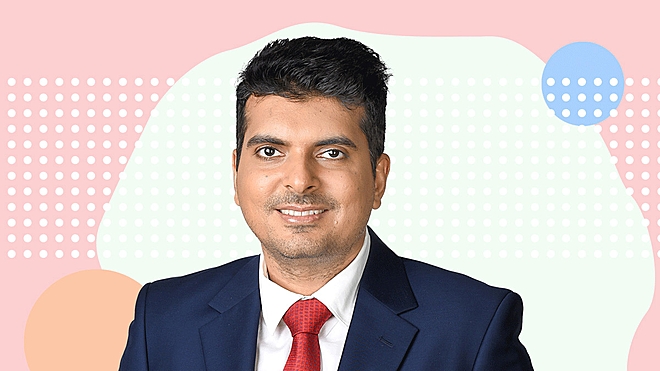

Summary: In the past year, consumption growth in India remained subdued owing to a variety of factors. However, Mirae Asset’s Siddhant Chhabria is of the view that a revival of the sector is around the corner. He breaks down the reasons this exclusive interview.
Consumption has had a difficult year. Earnings growth slowed sharply as wage growth weakened, inflation stayed elevated and government capex lost momentum, all of which weighed on urban demand. But Siddhant Chhabria, Research Analyst and Fund Manager at Mirae Asset Investment Managers (India), believes the tide is turning. With monetary and fiscal stimulus now in play, inflation cooling and GST cuts easing pressure on stressed categories, he expects a meaningful revival in consumption over the near term.
Presently, Chhabria manages the Mirae Asset Great Consumer Fund, with an asset base of Rs 4,769 crore. In this interview, he breaks down why the consumption fund has a large-cap tilt, how he navigates elevated valuations, the discipline that guides his stockpicking strategy and the factors driving the resilient performance of his consumption fund.
Over the last year, we've seen a sharp divergence between earnings momentum and stock prices. What risks are you watching most closely right now?
To begin with, if you look at the last 12 months, we've seen a sharp slowdown in earnings to a single-digit territory in large caps, while mid caps have been in double digits. The slowdown was driven by a deceleration in government capex and sharp inflation.
We also observed a sharp slowdown in wage growth in corporate India, which ultimately affected consumption in urban areas, resulting in significant earnings cuts. A year back, even the valuations were on the higher side. Additionally, we observed geopolitical risk unfold. Over the past year, we've not only seen a price correction but also a time correction, which has been very healthy for the markets, incrementally from a stock-picking point of view.
However, we are now seeing both monetary and fiscal stimulus in effect, along with very benign inflation and expectations that tariffs will eventually be reduced. So, at the current juncture, we are more constructive on a cyclical recovery playing out in earnings, and one can expect compounding returns in the near to medium term. What we are closely monitoring, I think now, is the pace of recovery in these earnings and the pockets in which it is coming faster.
The recent GST cuts are expected to support parts of the consumption basket. How meaningful of an uplift do you actually expect? And can such policy triggers truly revive a lagging category, or are these effects typically short-lived?
We can't look at GST benefits only in isolation. I believe several factors are at play, one of them being monetary stimulus. Second, we've seen income-tax cuts at the start of this financial year, and the 8th Pay Commission is also expected to be announced over the next 12 to 18 months. Inflation is also moderating, which was a significant headwind for consumption. Add GST cuts to that, so it not only benefits from an affordability standpoint, but also targets those segments that were under stress, particularly those in mass consumption.
Another benefit is that GST cuts could create an opportunity for market leaders to gain market share from unorganised players. For example, let's say in biscuits or footwear, where the GST rates were on the higher side, such as 12 or 18 per cent. Now at 5 per cent, organised players do have an opportunity to gain from unorganised players because it's broadly a level playing field. Thus, one must also study the aspects of GST tailwinds. Therefore, we believe that, when combined, these factors create a scenario with a much more constructive outlook than over the last couple of years.
Your portfolio leans heavily toward established large caps. Is this a structural preference rooted in quality and scale, or where today's risk-reward appears strongest?
I think there are various factors at play. One is, as I mentioned earlier, we are market-cap agnostic from a thematic perspective; however, if you look at the benchmark, it has a significantly higher share of large caps. And when we construct the portfolio, we don't deviate too far from the benchmark. So, that is also one of the factors why our large-cap allocation could be higher.
Second is, of course, from a stock-picking point of view. Over the last year or so, we've seen more value emerge in large caps. And some of the themes, for example, autos, retailing or even the platform companies, some of them fit into the large-cap space. And hence, I think the outcome is a large-cap allocation of more than 60-odd per cent, with the remaining in mid and small caps.
You are most overweight in the consumer discretionary sector, yet it's also highly cyclical. How do you time entries in such segments, and what guardrails help you avoid buying at peaks when optimism is high?
The consumer discretionary sector is cyclical to an extent; different themes are prevalent at any given point in time. As I mentioned earlier, travel performed well. However, another trend that has really played out post-Covid is the K-shaped pattern of consumption, where the premium end has performed very well and continues to do so, as the premium-end or upper-middle-class consumer has not faced any macroeconomic headwinds.
However, some of these stocks have performed well and remain part of the portfolio. Still, incrementally, I think the mean reversion, when we talk about it in consumption, is more at the bottom end of the pyramid, and that is where we are focusing more on, because I think that is where it's sort of a contra call, where there is an opportunity to play mean reversion and that is how I think the construct is.
Stepping back from sectors, how would you describe your core investment philosophy? What principles anchor your decision-making as a fund manager?
The core philosophy is clearly focused on growth, but at a reasonable valuation. And from a portfolio construction point of view, it would be more like a barbell approach, where at one end, one would want to invest in strong businesses that are compounding at healthy earnings growth, let's say 1.5x GDP.
On the other hand, one would want to consider some contrarian ideas that have been overlooked by the markets, simply because the near-term story is impaired, but the long-term story remains intact. The idea is to maintain a portfolio discipline by avoiding highly concentrated portfolios and being benchmark-aware. Another thing is that, when managing a thematic fund, it's essential to remain true to the theme by not investing in B2B businesses and instead focusing entirely on B2C as a space.
Your fund has been among the stronger performers within the consumption category. What factors, in your view, have enabled this steady outperformance?
I think clearly portfolio discipline has been one of the key factors. However, at the same time, stock picking across sub-sectors within themes at different points in time has also been beneficial. Additionally, I believe that my dual role has also contributed to the performance. I'm a discretionary analyst for the house, while also managing the consumption fund. I think ideations have converted much faster in the fund, which has also contributed to this.
You explained how you approach stock selection, but in a theme like consumption, where valuations are often elevated, how do you decide when to exit a stock? What specific triggers or conditions lead you to reduce or sell a holding?
Of course, valuation, as I mentioned earlier, is a part of portfolio discipline. So, if we believe that the stock price is significantly above our intrinsic value, I think the discipline aspect clearly comes into play, and we reduce the weights.
The other aspect is whether we believe there is a risk to the business's fundamentals, such as market share or competitive intensity. Or, lately, we've seen a significant shift in consumer trends, with the newer generation of consumers becoming a larger part of the consumption market. If companies can't execute well to keep up with that, it has been a factor. And of course, a sell call also comes out when you see more attractive opportunities elsewhere, so a switch call, I think, also plays a role. I think these have been the factors. And, of course, if there is any corporate governance issue, that would clearly be another reason that could trigger a sell.
Also read: Premiums in mid and small caps don't sustain; be cautious: Franklin Templeton's Ajay Argal
Ask Value Research 

 New episodes every Friday









 New Process Alert
  Seems like you've uploaded a wrong QR code. Please upload the QR code downloaded from MF Central platform.


