




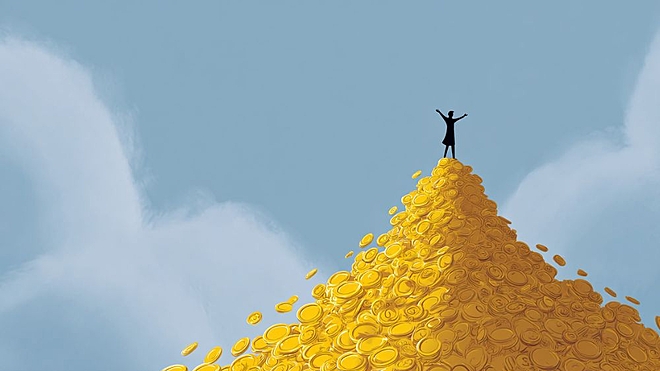
 Aditya Roy/AI-Generated Image

We look at how this auto stock turned Rs 1 lakh to Rs 3.67 crore with half the gains coming from dividends alone.
For most investors, dividends are an afterthought. They’re seen as modest cash payouts—reliable, steady, and frankly, not all that exciting. The real money, after all, is supposed to come from a stock’s price appreciation.
But Eicher Motors turns that notion on its head, when you account for dividend reinvestment.
Back in 2009, a Rs 1 lakh investment in the company would’ve grown to Rs 1.7 crore by FY24, thanks purely to the rise in its stock price. That alone makes it a standout performer.
But when you consider the role of its dividends, it becomes a super-compunder!
Over the same 15-year period, the company paid out around Rs 35 lakh in dividends on that initial investment. Had you simply reinvested those dividends back into the stock as and when received, they would have compounded into Rs 1.97 crore on their own. Yes, the reinvested dividends alone would’ve created more wealth than the stock’s price gains!
Put together, your total corpus would have swelled to Rs 3.67 crore—with over half of it driven by the compounding power of dividends reinvested over time.
Turns out, the quiet power of dividends, when put back to work, can roar just as loud as capital appreciation.
How Eicher became a compounding machine
Such compounding doesn’t happen by accident. Eicher’s performance was the result of clear focus and long-term thinking.
Unlike most auto players chasing volume and mass appeal, Eicher zeroed in on a niche no one else was serious about: premium motorcycles. Starting in 2004, the company spent several years doing just market research—trying to understand what bikers loved.
That homework paid off. In 2009, Eicher relaunched Royal Enfield with a single-minded goal: build motorcycles for people who were passionate about riding. The focus was on creating a premium experience and identity.
By 2014, it had turned its eyes outward. Recognising that India wasn’t the only place where bike culture thrived, Eicher developed two models tailored for international markets—especially Europe.
These decisions compounded just like the stock. Sales grew, brand loyalty deepened, and with minimal direct competition in its niche, Eicher today has built an 80 per cent market share in a 14 lakh unit market that it has practically created.
But remember dividends don’t work in a vacuum
Eicher’s story is a striking reminder that dividends aren’t just pocket change. When reinvested patiently, they become compounding’s secret weapon—quietly supercharging your wealth over time.
But here’s the catch: dividend reinvestment is no magic trick. It works only when backed by a business that delivers consistent, high-quality returns over time. Without a solid underlying engine—like Eicher’s focused strategy and brand moat—even the most generous dividends won’t compound into crores.
In the end, it’s not just the dividends. It’s the business behind them.
Also read: Senco Gold's profits are booming. So, why isn't the stock?
Ask Value Research 

 New episodes every Friday











 New Process Alert
  Seems like you've uploaded a wrong QR code. Please upload the QR code downloaded from MF Central platform.


