




 AI-generated image
The annual meeting has long transcended national borders, drawing a devoted international contingent eager to soak in the atmosphere and wisdom. Last year, around 800 foreign visitors made the journey, and the overall demographic mix continues to tilt towards global shareholders. This pilgrimage from corners far beyond the American Midwest stands as a testament to the worldwide influence wielded by Berkshire Hathaway and its chairman.
However, this year, the journey has become significantly more complicated for some, particularly shareholders hailing from China. Rising U.S.-China political tensions, exacerbated by the friction surrounding President Trump's tariff policies, are casting a long shadow over international travel plans. What was once a straightforward trip for dedicated investors has become fraught with new anxieties.
The challenges are not merely abstract concerns; they are manifesting in tangible ways. Xin Jin, an investor from Guangzhou, expressed worry about making the trip this year despite his deep admiration for Buffett. Another investor based in Shanghai, a veteran of three previous meetings, decided to forgo the 2025 event altogether, citing the increasingly "hostile environment". Adding to the apprehension is China's own risk alert regarding travel to the U.S., which points to deteriorating economic and trade relations and domestic security issues as reasons for caution. Practical hurdles compound these worries: fewer third-party travel agencies are organising group trips to Omaha this year, and there are palpable fears among potential attendees about encountering "unnecessary and unfounded issues with customs" upon arrival.
This geopolitical chill extends subtly into the meeting experience itself. The special receptions once hosted by Buffett and Munger specifically for international visitors have been discontinued. While the official reason is the sheer growth in numbers making such events logistically challenging, it marks the end of a cherished perk. One only needs to recall anecdotes like Buffett spending two and a half hours meticulously signing one item per person back in 2009 to appreciate the level of personal interaction that was once possible. The sheer scale of the event's success has, perhaps inevitably, eroded some of that intimacy. For long-distance travellers, this shift, coupled with the new travel anxieties, might alter the calculus of making the expensive and time-consuming journey.
The difficulties faced by Chinese shareholders serve as a stark reminder that even an event often perceived as existing in a sphere above politics - the "Woodstock for Capitalists" - is not immune to the hard realities of international relations. The "soft power" appeal of Buffett and the Berkshire model collides with the friction points of global diplomacy, directly impacting the ability of shareholders to engage with the company they invest in. It's a microcosm of how geopolitical headwinds can buffet the interconnected world of global finance.
Also read: The tariff tightrope and the $334 billion safety net
This article was originally published on May 03, 2025.
Ask Value Research 

 New episodes every Friday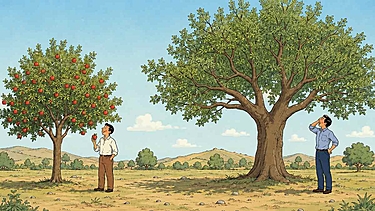










 New Process Alert
  Seems like you've uploaded a wrong QR code. Please upload the QR code downloaded from MF Central platform.


