 Widely read:


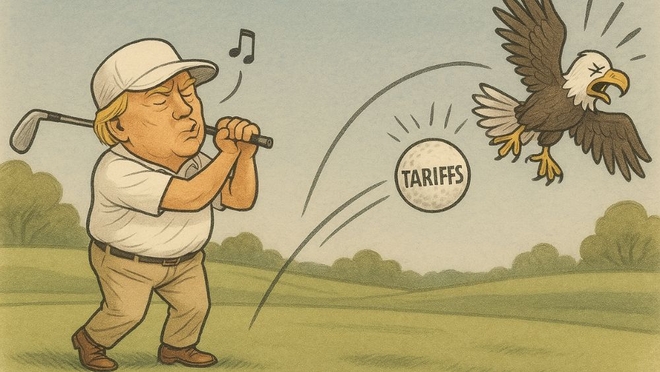 AI-generated image

The financial world is in turmoil after Trump's surprise tariff announcement, sending shockwaves across global markets. The US stock market had its worst single-day drop since March 2020:
- The S&P 500 plunged 4.8 per cent, its worst decline in over four years.
- The Dow dropped 1,100 points (2.5 per cent), and the Nasdaq tumbled over 5 per cent.
- Market fears of a global trade war and recession are escalating as the new tariffs take effect.
- Tech, retail, and consumer stocks were hit hard. Nvidia was downgraded by HSBC, Apple fell sharply, and companies reliant on global supply chains suffered major losses.
- Investor sentiment is at extreme fear levels. The AAII survey shows that 61.9 per cent of investors are pessimistic, the third-highest level in history.
- Gold surged to an all-time high as investors sought safety in precious metals.
As Jim Rickards (American lawyer and investment banker) put it, "This is economic nationalism on steroids—markets are pricing in chaos before the ink's even dry on these tariffs."
Liz Ann Sonders (Chief Investment Strategist at Charles Schwab) warned, "Investors are running for the exits like it's 1929 all over again; the question is whether this is a panic or a prophecy."
How will this impact India?
India is not immune to these global tremors, and investors should brace for a turbulent day in the markets.
- Yesterday, the indices closed strong (Sensex +592 points, Nifty +166.65), but today could be a different story.
- Foreign investors are selling. FIIs are already pulling out money, and continued outflows could weaken the rupee.
- Sectors like IT, auto, and pharma could be under pressure due to higher export costs from the 26 per cent US tariff on Indian goods.
- Resistance levels to watch: Nifty faces key resistance at 23,650-23,800—if it breaks, further downside is possible.
Mohamed El-Erian (an economist) cautioned, "This isn't a correction; it's a wake-up call—tariffs this broad could unravel a decade of supply chain stability."
Diane Swonk (chief economist at KPMG US) added, "The US consumer will pay for this 'liberation' with higher prices—retail stocks are the canary in the coal mine."
Peter Schiff (a stockbroker) summed up the market turmoil, "Trump just lit a match under global trade, and Wall Street's the first to feel the heat."
The currency and commodities picture
- The US dollar is under pressure, with the euro rising to 1.11 per USD.
- Bitcoin slid to $81,000, reflecting a broader risk-off sentiment.
- Oil dropped 6 per cent as OPEC+ ramped up production to counteract the economic slowdown.
- Gold continues to shine. With panic in the air, investors are rushing into safe-haven assets.
What's next for Indian investors?
While today may be volatile, markets move in cycles. Panic selling isn't a strategy—smart investing is. Stick to these key principles:
- Defensive sectors: Energy and utilities have been resilient. Stocks in these sectors tend to hold steady in turbulent times.
- Gold: It hit a record high, and with market panic rising, demand will likely remain strong. A small allocation to gold could act as a hedge against volatility.
- Quality stocks: Look for strong, debt-free companies with solid cash flow. These companies are more likely to withstand the turmoil than highly leveraged ones.
- Hedging against the rupee: A weakening rupee could make export-driven sectors like IT more attractive in the long run, though near-term volatility is expected.
- Keep cash ready: Market dips often present great buying opportunities. Having liquidity to buy quality stocks at lower prices can be a winning strategy.
As Bill Nygren (a famed value investor) suggests, there are opportunities in the chaos: "Volatility creates opportunities. We just have to be ready for them."
Also read:
A simple financial framework to build wealth
Buffett's 1989 letter on avoiding costly myths and mistakes
Disclaimer: This content is for information only and should not be considered investment advice or a recommendation.
For grievances: [email protected]
Ask Value Research 

 New episodes every Friday











 New Process Alert
 Seems like you've uploaded a wrong QR code. Please upload the QR code downloaded from MF Central platform.


