 Widely read:


 Anand Kumar
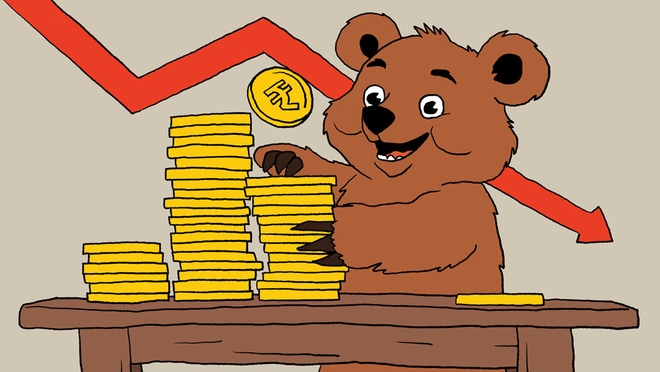
When markets decline as they did in 2020 or more recently from October 2021 until June 2022 or, like right now, from September 2024 until March 2025, we can have lengthy discussions about how ugly the rear-view mirror (the result of past investment) looks. Still, the following rules about investing in equities are eternal:
- When the rear-view mirror looks disastrous, that's when the windscreen starts to brighten up, although you may not immediately see it that way.
- People who invest when the results of existing investments look great and hold back when the results of existing investments look bad will never create wealth.
- Contrary to perception, wealth is not created in bull markets; wealth is created by investing in bear markets, which shows up in the appreciation of the investment reports when bears go into hibernation.
- The last 32-year CAGR (annual return) of India's nominal GDP growth is around 12.5 per cent, the annual returns of corporate earnings of indices like Sensex are around the same, and the growth in Sensex value is of a similar magnitude plus dividend yield, say 14 per cent annual return. So, if the last 32 years of compounded growth of the economy and markets are an average of 12.5 per cent and 14 per cent, respectively, how can you earn more than 14 per cent on your investment if you were to buy just the index?
Arithmetically, suppose you invest when the recent average is well below 14 per cent. In that case, you stand to gain because somewhere in the near future, the average has to go above 14 per cent to reconcile with the long-term average of 14 per cent!
But how do investors respond to volatility and decline in markets? Let me share that with my personal experience of dealing with an investor.
There was an investor who invested in March 2015 when Nifty was close to 8,900, and by the end of February 2020, at the pre-Covid peak when five years were over, the investor had an annual return of about 12 per cent in an active multi-cap fund; well ahead of the benchmark annual return which back then was more like 7-8 per cent for those five years. When this investor spoke to me in early April 2020, obviously, she did not care for the position in February 2020. She was quite upset because the five-year annual return was 4 per cent. After all, what is long term and what is the use of investing if the return is less than FD rates after five years?
She decided she wanted out. Insisting on determining the fate of an equity investment and seeking liquidity from it exactly after the market has nosedived is like your boss deliberately fixing your annual appraisal, specifically on your worst day at work. If the only intention is to catch you making a blunder and draw a conclusion, then that's fine, but if the intention is to treat an investment like an investment, may it be your employee or your mutual fund, then there's a different way to conduct the affairs.
Anyway, coming back to our investor, we referred to historic portfolio values at various dates and explained that as recently as February 2020, one saw about 12 per cent compounded. By the end of March 2020, there was a 35-40 per cent decline. Arithmetically, the entire five-year annual return declined by 7-8 per cent. Explanations don't make people happy, numbers do, but then happy or unhappy, how one responds to situations is what matters. She continued to be unhappy, and over the next few months, we had to stay connected and make efforts to avoid redemption at an inopportune juncture. Ultimately, the investor prevailed, and she redeemed in November 2020 when Nifty crossed the February 2020 high level of around 12,500. Anchoring bias, anyone? By then, the annual return had improved from 4 per cent to 10 per cent. We now know that if the investor had waited for some more time, even until the end of FY21, the then six (instead of five years) year annual return would have been more than the earlier 12 per cent noted in February 2020. And if she had waited until date, she would have been a raging fan of investing in equities, writing articles in famed publications.
So, what are the learnings?
Belief and conviction in the concept of equity need to be demonstrated at the troughs, not at the peaks. When money doubles in a year, everybody has faith and belief; what you do when it falls a quarter or half will eventually count.
Equity returns are non-linear and lumpy. What was built over five years can be destroyed in a matter of weeks, and that which can be destroyed in weeks can be regained in short periods, too. The wise investor takes advantage of the irrational mood swings of the markets rather than becoming a party to them. "Be greedy when others are fearful, be fearful when others are greedy" is not just meant to be a soft board pin-up. We need to control our psychology so that we are not the "others"! The time horizons of investing cannot be cast in stone; a few days, weeks, and months ahead or behind can have a disproportionate impact due to the non-linearity.
Avoid jumping to conclusions. Famous American novelist F Scott Fitzgerald said, "The test of first-rate intelligence is the ability to hold two opposing ideas in mind at the same time and still retain the ability to function". Another famous American novelist, Jack London, said, "Life is not always a matter of holding good cards, but sometimes, playing a poor hand well". When things do not work out as expected, instead of re-visiting and re-calibrating, we humans crave closure and conclusion. In the equity investing journey, there is nothing like black vs white, right vs wrong, or good vs bad; there is only context and perspective. One needs to stay away from drawing fateful, definitive conclusions because what works is careful calibration and probabilities.
Equities are for optimists. Something that economic analysis will not be able to model; if one generally believes that humans or businesses run by humans are the next dinosaurs or the slightest hint of trouble in your portfolio makes you lose sleep, or you are currently thinking foreign portfolio investors will run their positions down to zero, then equity investing is not for you.
Predicting macroeconomics is not only difficult but impossible. Investing in equity while predicting macros is like ignoring the proverbial butterfly effect. It's usually a chaos.
Be countercyclical. Never assume good times will last forever. Apply that to the bad times, too. When the going is good, and you get way more than what you expected, do not extrapolate it into the future; take some money off the table. When things are going bad, do not extrapolate that either and do some bottom fishing. People who are successful in avoiding being part of "others" in the "be greedy when...." adage are the ones who always have a small window open in their mind to account for possibilities that alternate with prevailing public wisdom. If you think exactly how and what others think, you are the "others". Learn to be countercyclical.
Talking of cycles, we all, at least all my generation, have spent some time staring at a pendulum. When a pendulum swings left, we don't know where it will stop. But, the further it swings to the left, the more sharply it will swing to the right. After it hits the right extreme, it swings towards the centre, but when it reaches the centre, it will again swing to the left. You can apply the cyclicality of a pendulum to markets. With the economy's growth, per capita incomes, capital formation, productivity, demand, corporate earnings and cash flows, the centre keeps shifting to the right. In each cycle of the pendulum, the right extreme shifts further right, the centre shifts right too, and the pendulum never goes back as far left as its previous left extreme. The system is gamed to reward you for being countercyclical and for believing in a far-right tail.
Also read: The power of visualisation
Ask Value Research 
 New episodes every Friday











 New Process Alert
 Seems like you've uploaded a wrong QR code. Please upload the QR code downloaded from MF Central platform.


