 Widely read:


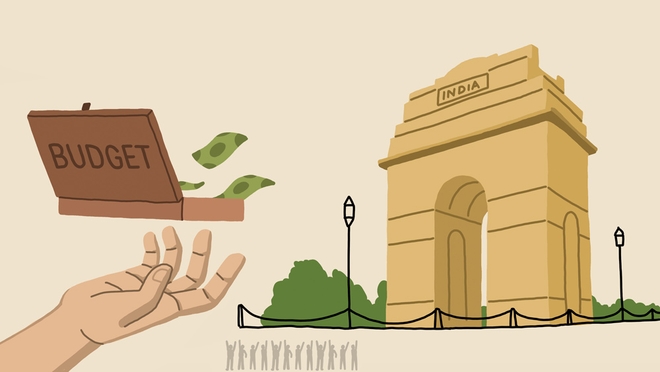
A Budget responds to the context in which it is prepared and presented. This year's budget has come in a macro context of declining real GDP growth. Since mid-2023, the economy has slowed steadily in all but one quarter. The real GDP growth rate has slowed from over 8 per cent to less than 6.5 per cent over just a year. This economic slowdown can be seen in corporate earnings weakening, household debt rising, and household savings rate slowing. Punishing food inflation over the last two years has been a drag on household consumption, as wages have stagnated in real terms over the past decade. The single most important engine of growth and job creation, private investments, have remained lacklustre over this decade despite lower corporate tax rates and government support ranging from production-linked incentives to protection via high import tariffs. According to the World Bank database, India's manufacturing sector contracted from 15 per cent of GDP in 2014 to 13 per cent, and exports of goods and services contracted from 23 per cent of GDP in 2014 to 21.8 per cent. Remember, even before Covid, GDP growth in 2019-20 was just 4 per cent. Then, there's the global context in which the much-dreaded tariff wars have begun unfolding. The day the budget was presented, US President Donald Trum
This article was originally published on March 01, 2025.
This story is not available as it is from the Wealth Insight March 2025 issue
Read other available articlesAdvertisement
 New episodes every Friday











 New Process Alert
 Seems like you've uploaded a wrong QR code. Please upload the QR code downloaded from MF Central platform.


