




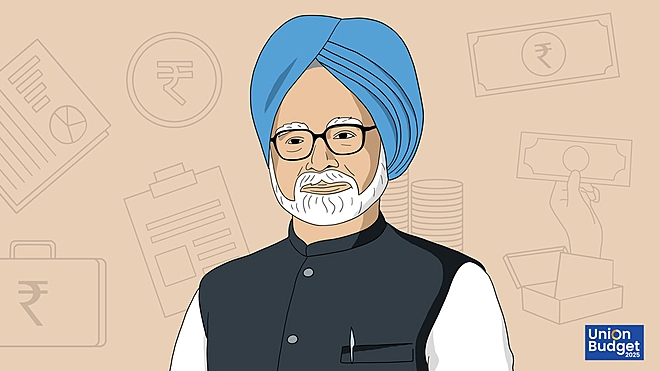
When a nation stands at the crossroads of crisis and opportunity, transformative leadership can redefine its destiny. The Union Budget of 1991, presented by Finance Minister Dr Manmohan Singh, was such a moment. Amidst a crippling economic crisis - marked by depleting foreign reserves, spiralling inflation, and a looming balance of payments default - this landmark Budget dismantled the Licence Raj, opened India to global markets, and paved the way for liberalisation. With bold reforms and a vision for inclusive growth, the 1991 Budget marked the beginning of India's journey as a global economic powerhouse.
Crisis at the crossroads
By mid-1991, India was staring into an abyss of economic turmoil. Foreign exchange reserves had dwindled to a perilous $1.2 billion, barely enough to cover two weeks of imports. Inflation had surged beyond 13 per cent, and the fiscal deficit had swollen to an unsustainable 8.4 per cent of GDP. Compounding the crisis, the Gulf War had driven up oil prices, intensifying the country's balance of payments problem.
To avert a default on international obligations, India had to pledge 67 tonnes of gold to secure emergency loans. Against this backdrop, Dr Singh opened his Budget speech with urgency: "The crisis in our economy is deep and pervasive. We have lived beyond our means." Bold and transformative action was not just necessary - it was unavoidable.
Key reforms: Breaking the chains
Dismantling the Licence Raj
For decades, industrial growth was stifled by bureaucratic red tape. The 1991 Budget began dismantling the Licence Raj, allowing industries to expand without government approval.
Impact: Private enterprises thrived, leading to innovation and job creation.
Opening the economy
Foreign direct investment (FDI) was liberalised, with caps raised to 51 per cent in priority sectors, attracting global capital and expertise. The rupee was partially devalued, making Indian exports more competitive.
Impact: India transitioned from protectionism to globalisation, making trade a key growth driver.
Public sector reforms
Loss-making public enterprises were identified for disinvestment, shifting their focus to strategic areas. This move aimed to reduce the financial burden on the government.
Impact: A more efficient allocation of resources and increased private sector participation.
Fiscal discipline
Dr Singh introduced austerity measures, reducing subsidies and government expenditure to rein in the fiscal deficit. Taxes were rationalised to encourage compliance.
Impact: Fiscal consolidation laid the foundation for sustainable growth.
Balancing reforms with humanity
While the reforms were revolutionary, Singh's approach was grounded in compassion. He assured citizens that "adjustment will have a human face," allocating resources for poverty alleviation and rural development. His vision was to ensure that growth was inclusive, benefiting all sections of society.
Why it was a game-changer
The 1991 Budget was much more than a crisis response - it was the dawn of a new era. By shifting from a state-controlled economy to one driven by markets and competition, it ushered in an era of liberalisation, privatisation, and globalisation.
- In 1991, GDP growth hovered at 1.1 per cent. By 2023, India became one of the world's fastest-growing economies, contributing over 7 per cent to global GDP.
- FDI, once restricted, now flows freely, enabling startups to thrive in industries like tech and renewable energy.
A visionary legacy
Dr Singh concluded his speech with a rallying call for unity and determination: "We are capable of building a prosperous, self-confident India. Let us work together for this goal."
The Budget of 1991 is remembered not only for rescuing India from the brink of economic collapse but also for setting it on a path to global prominence. Its ripple effects continue to shape India's economy, inspiring policies like Atmanirbhar Bharat and fostering a spirit of resilience and innovation.
The epochal Budget reminds us that bold decisions in moments of crisis can redefine a nation's destiny - a lesson as relevant today as it was in 1991.
Continue your journey through "Blueprints of a Nation"
Revisit the previous chapter: The 1973 Black Budget: India's bold economic leap
Discover the next chapter: The Dream Budget of 1997: Simplifying taxes, igniting growth
Follow the unfolding story of how the Union Budget has served as a blueprint for India's growth and progress since independence.
Ask Value Research 

 New episodes every Friday








 New Process Alert
  Seems like you've uploaded a wrong QR code. Please upload the QR code downloaded from MF Central platform.


