 Widely read:



What is the right mindset and strategy to achieve the Rs 100 crore goal?
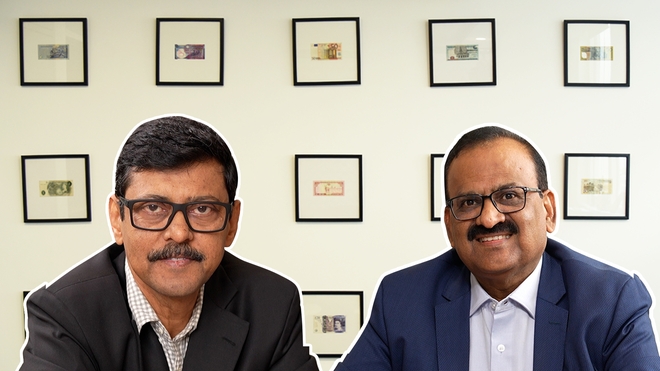
K S Rao: If I look back 10 years, the Rs 100 crore figure would have been equivalent to Rs 50 crore. Let me give you some perspective. When I started my career in the mutual fund industry in 1992, the fund house I worked for had a scheme called the Children's Gift Growth Fund. On the child's birthday, parents would give an annual SIP as a gift. Over 18 years, this could make the child a "lakhpati".
Now, if Mr Amitabh Bachchan were running Kaun Banega Crorepati (KBC) 30 years ago, it might have been called "Kaun Banega Lakhpati". Fast-forward to 2047, I can look at Viksit Bharat. Probably, Rs 100 crore may not seem unrealistic if approached with the right mindset.
Today, planning and execution are much simpler. Thirty years ago, creating a financial plan was a monumental task. Today, resources like Mutual Fund Insight provide clarity on wealth creation. The kind of mindset required is that Rs 100 crore is possible if you resolve to achieve it. As the saying goes, Sankalp Se Siddhi - once you make this your goal, everything else will become irrelevant.
This goal of Rs 100 crore could be a combination of other goals, like retirement planning or funding other aspirations. But how do you plan for it? I call it your GPS - Goal Positioning System - to reach your Rs 100 crore. SIPs (Systematic Investment Plans) are an excellent tool for this. Annual SIPs can make someone a "lakhpati," while monthly SIPs can help create crorepatis.
SIP is a great tool. You can always track where you're reaching, whether your goal is near or a little far-fetched. There's another GPS for it; you need to have a growth mindset, be prosperity-centric, and have a strategic approach to reach the Rs 100 crore target.
Suggested read: Don't time the markets by stopping and starting SIPs
Dhirendra Kumar: Most people should aspire to ambitious goals. If you aim for Rs 100 crore but end up with Rs 80 crores, that's still far beyond what most people achieve.
This goal is possible because the investment landscape has been so democratised. It has become possible for the small guy to participate. The habits required to build Rs 100 crore are the same as those needed to accumulate Rs 1 lakh. The first step, however, is the hardest. Starting small, with Rs 5,000 or Rs 10,000 when you have limited resources, is tough. However, once this habit forms, it becomes easier to direct larger surpluses toward investments.
The number - Rs 100 crore - looks big, but inflation is so consistent that the sum looks so real. So, it is good to have an ambitious target. To move on this roadmap, staying the course is essential. Also, investment mechanisms are safer and more accessible, making it possible for anyone to start.
Suggested read: Stretching towards the impossible
What are the stages of an investor's journey?
Dhirendra Kumar: Any investor's journey is a progression. The beginner's mindset is the hardest because you have to cut expenses to start saving. Once you develop some surplus, you grow accustomed to investing it to grow it faster or grow it well. So, the growth mindset is not that difficult. But this requires discipline because distractions will arise once you come close.
Accumulating wealth after a stage when you've had little money proves to be difficult because everything will seem like a desire you cannot fulfil. Then comes reconciling with stability, which is another difficult phase. Without being used to it, you might lose sleep, become anxious, or fall prey to get-rich-quick schemes.
Suggested read: Time, pragmatism and pessimism
Many of the ideas we have, come when we have little to no money. Once you've accumulated something sizable and built significant resources, you should think strategically. You might aspire to philanthropic goals, major personal goals, consumption goals, etc. You can be aspiring for something entirely different and take a different direction altogether. It is important to know how you're going to spend the money as a resource. Finally, the legacy stage comes into play - deciding whether to leave wealth for successors or society. All of these things are a function of the resources you have.
There is another advantage of having Rs 100 crore of your own accumulation. Accumulating this wealth will give you a different confidence compared to someone who is not yet financially independent.
Suggested read: A beginner's journey
What's the first step to begin your journey toward Rs 100 crore wealth creation?
K S Rao: Once your goalpost is set - Rs 100 crore, for instance - you need a plan. The next step is professional help, if possible. A coach or advisor can help strategise your investments. Then comes a strategic action plan. This can be another GPS - your goal set, you have professional guidance, and you have a strategic plan.
The initial action could be starting an SIP. You can consider SIPs as stepping stones into the prosperity zone. Start with whatever amount you can and commit to it. The moment you have this target, everything which is coming in will be channelled into achieving this goal. An SIP may not be the sole way to reach the goal, as you may receive inheritances or windfall on your journey.
Suggested read: Start now for a lifetime of wealth
I look at SIPs from multiple angles. First, you should take care of the savings money because, on the journey to Rs 100 crore, you can ensure that all your liquid money gets channelled into an investment. Second is choosing an asset class, as it is going to be long-term, so you'll need to pick wisely. Lastly, I can set a philanthropic goal, which gives me a lot of confidence.
In mutual funds, we have a system called step-up SIP. If somebody is starting a career at 20-25 years and investing till 60-65, even with a Rs 10,000 SIP with a 15-20 per cent annual step-up, it is perfectly possible to achieve it.
Suggested read: What is step-up SIP?
Is there a perfect plan to begin your journey to Rs 100 crore? What are the dos and don'ts?
Dhirendra Kumar: There's no one-size-fits-all plan because everyone's circumstances differ. Some may have dependents or inheritance money; others may not. But no one can see inescapable realities - in a 10-year period - such as market volatility. Markets will rise sharply and fall suddenly. On both occasions, you'll be tempted to run away. If you're not getting acclimatised to the market and you run away, your losses will be permanent. Staying the course during these phases is crucial.
Suggested read: The beginner investor's dangerous journey
Then, you'll have all kinds of weird ideas that, starting tomorrow, the world will change. In India, for every investor, the world has changed multiple times in the last 30 years. There will be opportunities and threats. And there'll be conmen of a different level. The moment you have some meaningful net worth, many people will be eyeing you. In every market, there will be professional conmen, and you have to escape that.
Suggested read: Too good to be true
A robust roadmap builds confidence to help you question everything. A coach can help refine strategies, but foundational habits like disciplined investing and understanding compounding must be developed individually. Delayed gratification, awareness of inflation, and the power of compounding are critical lessons for long-term success.
K S Rao: When there is any target that looks insane to reach, then you have to minimise your distractions. With immense wealth, your distraction is to divert it into something else. Also, when chasing such goals, it means when you start out, you won't even anticipate most pitfalls. So, ensure you have the right emergency fund before you start out.
SIPs and - what I call - TIPs (Targeted Investment Portfolios) are effective tools. Educate yourself on three fundamental concepts:
1. Delayed gratification: Resist the urge to withdraw or overspend.
2. Inflation impact: Recognise how inflation erodes purchasing power.
3. Power of compounding: Understand how long-term investments multiply wealth.
If you understand the power of compounding, you'll never want to break your investments. If you consider the impact of inflation, you'll keep adding to your investments. Lastly, if you focus on delayed gratification, you'll never use the money for anything else. By internalising these, you can build and sustain wealth.
How do you harness the power of compounding to outpace inflation?
K S Rao: The secret lies in time. The longer your money is invested, the greater the compounding effect. The power of compounding can only work when you start SIPs. For example, if you start with Rs 10,000 monthly SIPs and as you get your increments every year, you can step up the SIP by 10 per cent annually.
Invest in growth assets like equities, which hedge against inflation while accelerating wealth creation.
If 30 years back, Rs 10 lakh was enough, what about today and the future?
Dhirendra Kumar: To put this into perspective, Rs 10 lakh 30 years ago was a significant retirement corpus. Today, that amount equates to Rs 1 crore due to inflation. Similarly, Rs 1 crore today might need to grow to Rs 10 crore 30 years from now to maintain purchasing power. Make sure you have an ambitious savings goal. You can't really do it with less, and having more will not hurt you. The prospect of outliving savings in your lifetime is very scary.
Suggested read: The inflation solution
A combination - discipline, starting early, and increasing your amount - is needed. You really don't need to be financially sophisticated. If you can do all of it, you will derive 80-90 per cent of the benefits.
Viewer's Question
I have savings of Rs 55 lakh, all in a liquid fund. I am saving money to buy a house worth Rs 2.2 crore now. What should be my roadmap? - Ravinder
Dhirendra Kumar: The framework for buying a home is different from wealth creation. Your EMI payments for the house should not exceed 30 per cent of your income, regardless of the loan tenure.
Housing loans are desirable because they finance a tangible asset, save on rent, and provide psychological comfort - they can help you become more ambitious with your investments. If Ravinder's Rs 55 lakh cover the down payment and borrowing fits within the recommended limit, he should go ahead.
If the purchase is a few years away, liquid funds may not be ideal.
Also read: A pyramid of investing needs
This article was originally published on January 10, 2025.
Disclaimer: This content is for information only and should not be considered investment advice or a recommendation.
For grievances: [email protected]
Ask Value Research 
 New episodes every Friday











 New Process Alert
 Seems like you've uploaded a wrong QR code. Please upload the QR code downloaded from MF Central platform.


