





Interarch Building Products IPO will open for subscription on August 19, 2024, and close on August 21, 2024. We break down the strengths, weaknesses, and growth prospects of this non-conventional construction company to help investors make an informed decision.
Interarch Building Products IPO in a nutshell
-
Quality:
During FY22-FY24, Interarch Building Products' average
ROE
and ROCE were 15.1 per cent and 22.2 per cent, respectively.
-
Growth:
Its revenue and net profit grew 24.5 and 124.4 per cent per annum, respectively, over FY22-FY24.
-
Valuation:
Post the IPO, the stock will be valued at a
P/E
and P/B of 17.4 and 2.5 times, respectively.
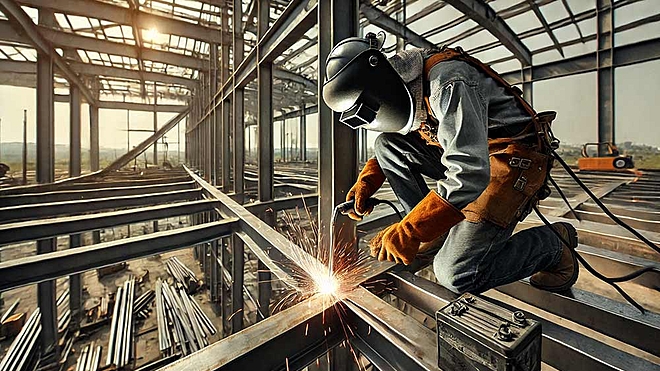
- Overview: Pre-engineered construction, a non-conventional method where building structures are prepared in the factories and assembled at the project site, is expected to gain traction due to its cost and time efficiency. The fact that it accounts for just 3-5 per cent of the overall construction sector (in FY24) works in favour of its growth prospects. However, sourcing high-quality steel, the main raw material used, from a few reputed suppliers like Tata Steel, JSW Steel, and SAIL reduces its bargaining power with suppliers.
About Interarch Building Products
Incorporated in 1983, Interarch Building Products operates in the integrated pre-engineered construction industry. It offers services in the design, engineering, and manufacturing of steel structures, as well as on-site project management for installation and erection. The company has four manufacturing factories in northern and southern India, with a capacity of 141,000 metric tonnes per annum. A portion of the fresh issue from the IPO will be used to upgrade these facilities. Between FY15 and FY24, Interarch executed 677 projects and boasts Berger Paints, Grasim Industries, and Timken India among its clients, making it one of the key organised players in this business.
Strengths of Interarch Building Products
-
Interarch is
one of the top six players
in the non-conventional construction industry that have grown at a faster pace (11.4 per cent) than the rest of the industry (7 per cent) between FY19-FY24.
- With a track record of over 30 years, Interarch boasts the second-largest manufacturing facility among the integrated pre-engineering building (PEB) players. This has helped the company undertake projects from clients like Berger Paints and Grasim Industries.
Weaknesses of Interarch Building Products
- During FY22-FY24, the share of repeat orders in Interarch's revenue has risen from 58 per cent to over 81 per cent. Although repeat business is beneficial, for a small and fast-growing company like Interarch, this figure should be reducing. Such dependence on existing customers is a potential threat-if any key clients exit, it can hamper the company's revenue growth going forward.
Interarch Building Products IPO details
| Total IPO size (Rs cr) | 600 |
| Offer for sale (Rs cr) | 400 |
| Fresh issue (Rs cr) | 200 |
| Price band (Rs) | 850-900 |
| Subscription dates | August 19-21, 2024 |
| Purpose of issue | For capex, IT upgradation and working capital requirements |
Post-IPO
| M-cap (Rs cr) | 1,497 |
| Net worth (Rs cr) | 588 |
| Promoter holding (%) | 59.9 |
| Price/earnings ratio (P/E) | 17.4 |
| Price/book ratio (P/B) | 2.5 |
Financial history
| Key financials (Rs cr) | 2Y growth p.a. (%) | FY24 | FY23 | FY22 |
|---|---|---|---|---|
| Revenue | 24.5 | 1,293 | 1,124 | 835 |
| EBIT | 122.9 | 105 | 99 | 21 |
| PAT | 124.4 | 86 | 81 | 17 |
| Net worth | 21.5 | 388 | 344 | 263 |
| Total debt | 30.6 | 13 | 18 | 8 |
|
EBIT is earnings before interest and taxes
PAT is profit after tax |
||||
Key ratios
| Ratios | 3Y average | FY24 | FY23 | FY22 |
|---|---|---|---|---|
| ROE (%) | 15.1 | 19.4 | 20.4 | 5.4 |
| ROCE (%) | 22.2 | 27.6 | 31.4 | 7.8 |
| EBIT margin (%) | 6.5 | 8.1 | 8.8 | 2.5 |
| Debt-to-equity | 0 | 0 | 0.1 | 0 |
|
ROE is return on equity ROCE is return on capital employed |
||||
Risk report
Interarch Building Products and its business
-
Was the company's earnings before tax more than Rs 50 crore in the last 12 months?
Yes. The company reported a profit (before tax) of Rs 115.8 crore in FY24.
-
Will the company be able to scale up its business?
Yes. Due to the government's increased spending on infrastructure, the rising focus on manufacturing and the buoyant real estate market bodes well for the construction industry. Given the cost and time efficiency of PEB over traditional construction methods, the company will be able to scale up its business.
-
Does the company have recognisable brands with client stickiness?
Yes. Due to its well-proven track record and strong execution skills, the company is able to get repeat orders from its clients. The share of repeat orders (on revenue) increased from 58 per cent to over 81 per cent during FY22-FY24.
-
Does the company have a credible moat?
No. Although the company has over 30 years of operating history and one of the largest manufacturing facilities in the industry, there are still many unorganised and strong organised players present to give it a tough fight.
Management
-
Do any of the company's founders still hold at least a 5 per cent stake? Or do promoters hold more than a 25 per cent stake in the company?
Yes. Post the IPO, the promoters' stake will be 59.9 per cent.
-
Do the top three managers have more than 15 years of combined leadership?
Yes. Its managing director and whole-time director have been with the company since its incorporation in 1983.
-
Is the management trustworthy? Is it transparent in its disclosures, which are consistent with SEBI guidelines?
Yes. There is no information to suggest otherwise.
-
Is the company's accounting policy stable?
Yes. There is no information to suggest otherwise.
-
Is the company free of promoter pledging of its shares?
Yes. No shares have been pledged.
Financials
-
Did the company generate a current and three-year average return on equity of more than 15 per cent and a return on capital employed of more than 18 per cent?
Yes. Its three-year average ROE and ROCE were 15.1 and 22.2 per cent, respectively. In FY24, its ROE and ROCE were 19.4 and 27.6 per cent, respectively.
-
Was the company's operating cash flow positive during the last three years?
Yes. The company reported positive cash flow from operations during FY22-FY24.
-
Is the company's net debt-to-equity ratio less than one?
Yes. The company is net cash positive as of FY24. This means it has a negative net debt-to-equity ratio.
-
Is the company free from reliance on huge working capital for day-to-day affairs?
Yes. Although receivables and inventories comprise almost half of its balance sheet, the company has been able to manage the requirements with negligible short-term financing.
-
Can the company run its business without relying on external funding in the next three years?
Yes. Since the company was able to generate free cash flows during FY22-FY24, and is also net cash positive as of FY24, it may not need any external funding in the next three years.
-
Is the company free from meaningful contingent liabilities?
No. Its contingent liabilities as a percentage of total equity were around 29 per cent as of FY24.
Valuations
-
Does the stock offer an operating earnings yield of more than 8 per cent on its enterprise value?
No. After listing, the stock will offer an operating earnings yield of 7.65 per cent on its enterprise value.
-
Is the stock's price-to-earnings less than its peers' median level?
Yes. It will be valued at a P/E of 17.4 times compared to its peers' median of 61.9.
-
Is the stock's price-to-book value less than its peers' average level?
Yes. It will be valued at a P/B of 2.5 times compared to its peers' average of 2.61.
Disclaimer: This is not a stock recommendation. Investors should do their due diligence before investing.
Also watch: Should you invest in IPOs?
Ask Value Research 

 New episodes every Friday













 New Process Alert
  Seems like you've uploaded a wrong QR code. Please upload the QR code downloaded from MF Central platform.


