 Widely read:


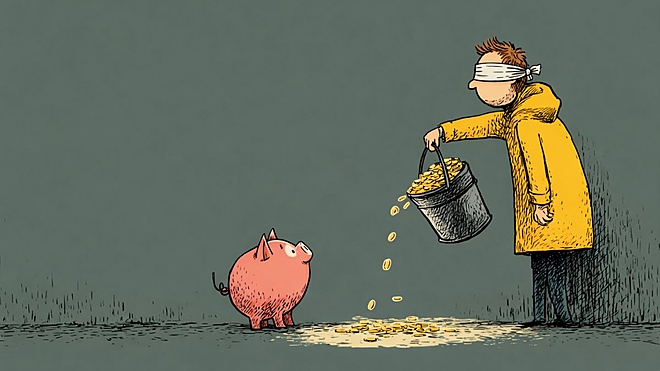 Aditya Roy/AI-Generated Image

A friend of mine used to write the most interesting stuff, and still does, about investing.
He is fond of using the word fool, but he doesn't do it the normal way - the way, say, a school teacher would. Instead, he imbues it with an enhanced meaning, making it easier to understand the markets. For example, I remember him once saying that banks were the default suppliers of foolishness in the markets. This idea of foolishness in this special sense makes it easier to understand why markets behave the way they do. What exactly is this foolishness? I think it's best defined by understanding what doesn’t count as foolishness.
We've all heard of the Efficient Market Hypothesis, which says that financial markets are 'efficient', meaning that the prices of stocks (or other securities) reflect all known information and therefore incorporate the collective beliefs of all investors about the future. For the hypothesis to be correct, people must have equal access to all information and have rational expectations.
I think the kind of foolishness we are talking about is everything that is the opposite of all those factors that make the market efficient. It's a bit like heat and cold in physics. You could say that the flow of knowledge and rational expectations keeps the markets efficient, or you could say that it's the flow of foolishness that keeps the markets inefficient. Isn't that a problem? No, it isn't, most certainly not. Inefficiency is what keeps the stock market interesting and profitable. If the markets were as efficient as the hypothesis says, then those who can identify and mark out foolishness would make less money.
Suggested read: Other people’s dumbness
Therefore, a steady and limitless supply of foolishness is the greatest of assets. Foolishness is the lifeblood of the stock market. Without foolishness, we would be nowhere. Instead of worrying about how well companies are doing and how much the economy is growing, smart stock investors should instead worry about whether an adequate supply of foolishness will be maintained. I'm happy to inform readers that if past trends continue, they have nothing to fear.
A long time back, I was roaming around this great country and visited 17 cities, and met and talked to investors in each. Although most of the people I met had disappointingly low foolishness levels, in each location, there were at least some who showed great promise and gave me hope that the supply of foolishness to the stock markets is in safe hands.
It'll take just a few examples for me to convince you that my optimism about the future of foolishness is well-founded. One crucially important observation I made was that the most promising suppliers of foolishness use a different calendar than the rest of the country. I met people who thought the term 'long-term' in long-term investing meant six months. I also met those who thought it meant three months and some who thought it meant one month. These are not isolated examples; there are a large number of people in this country who use such calendars. However, the definition of long-term that gave me most hope was, "When there are profits, it's short-term, when there are losses, it's long-term".
Don't ask, I don't know what that means either.
Also read: What is value investing?
Ask Value Research 
 New episodes every Friday










 New Process Alert
 Seems like you've uploaded a wrong QR code. Please upload the QR code downloaded from MF Central platform.


