 Widely read:





If someone wants to invest in just one fund, which one should it be - flexi-cap, mid-cap or a small-cap fund? - Jitendra
If you wish to hold just one fund, an ideal choice among flexi-cap, mid-cap and small-cap funds would be flexi-cap funds. This is because flexi-cap funds have several advantages over small- and mid-cap funds.
- Flexible investment mandate: A flexi-cap fund manager has the freedom to invest in all three market caps, viz., large, mid and small caps. Unlike mid- and small-cap funds, a flexi-cap fund manager can easily invest across market-cap without any limitations and can opportunistically shift the allocations between large, mid, and small caps.
- Less risky: Flexi-cap funds are less risky because they invest in different market capitalisation stocks. Mid- and small-cap funds concentrate your investment in one market cap (mid-cap and small-cap companies) which can be risky. Moreover, they also rise and fall more when compared to the market.
- Diversification: A flexi-cap fund not only invests in different market caps but also in different sector or industry stocks. They diversify their investment across various companies that belong to different market caps and sectors. Also from a diversification perspective, investing in three different market caps can reduce the risk while also providing some exposure to other market caps. This can also help in increasing your returns in the long run.
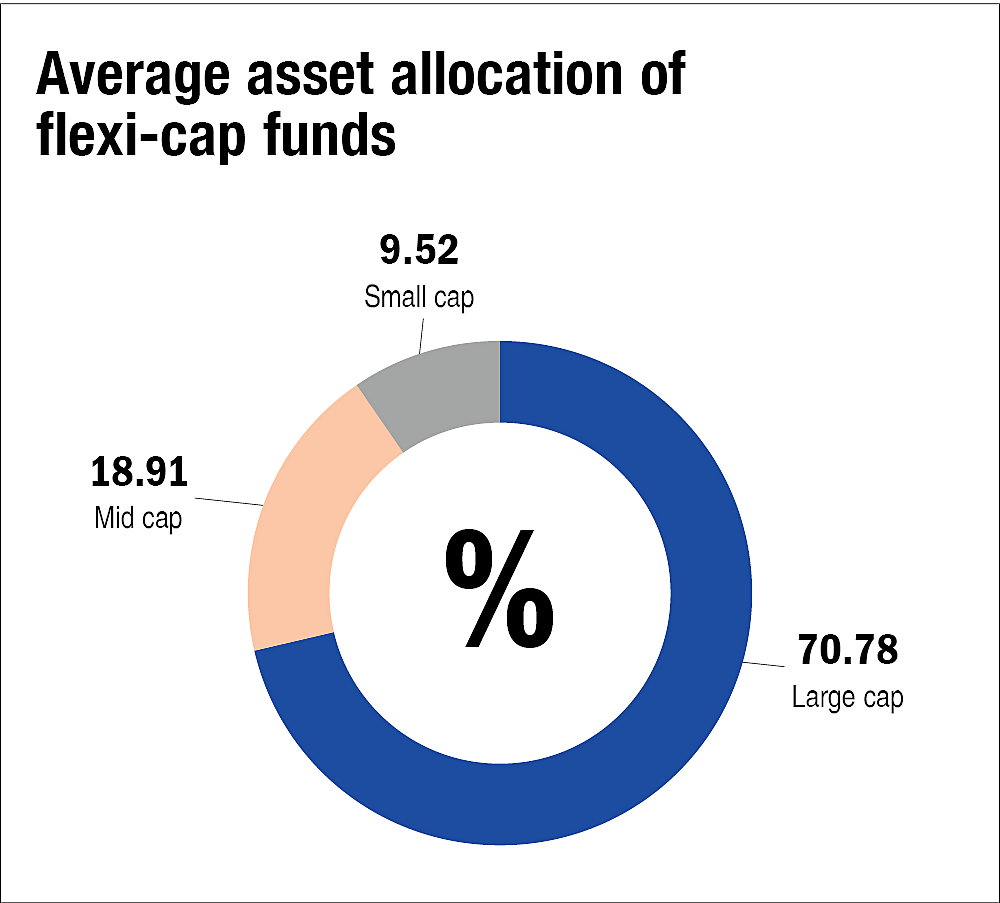
In a flexi-cap fund, you're not sticking to just large-cap stocks. You also get some exposure to small- and mid-cap stocks. If you observe the pie chart, you can see that flexi-cap funds invest about 71 per cent of their total assets in large caps, 19 per cent in mid caps and about 10 per cent in small caps. So investing in a flexi-cap fund can get you exposure to mid and small caps. Therefore, it's an all-in-one kind of fund.
This article was originally published on December 28, 2022.
Ask Value Research 

 New episodes every Friday









 New Process Alert
  Seems like you've uploaded a wrong QR code. Please upload the QR code downloaded from MF Central platform.


