 Widely read:



Before October 2017, actively-managed large-cap stocks would invest a larger percentage of money in small- and mid-cap stocks to generate alpha (returns made above the benchmark).
But ever since these funds were restricted by market regulator SEBI - these days, large-caps cannot invest more than 20 per cent of their money in small- and mid-caps - these funds have found it tough to deliver better returns.
As a result, these funds are resorting to trading on short-term price movements to stay among the top performers.
But has their short-termism paid off for their investors? Or are funds with a more patient approach - who follow a buy-and-hold strategy - winning the race?
Let's find out what the numbers have to say. (We calculated the average turnover of the funds in the last five years. Funds that bought and sold stocks above the average have been considered 'high turnover funds').
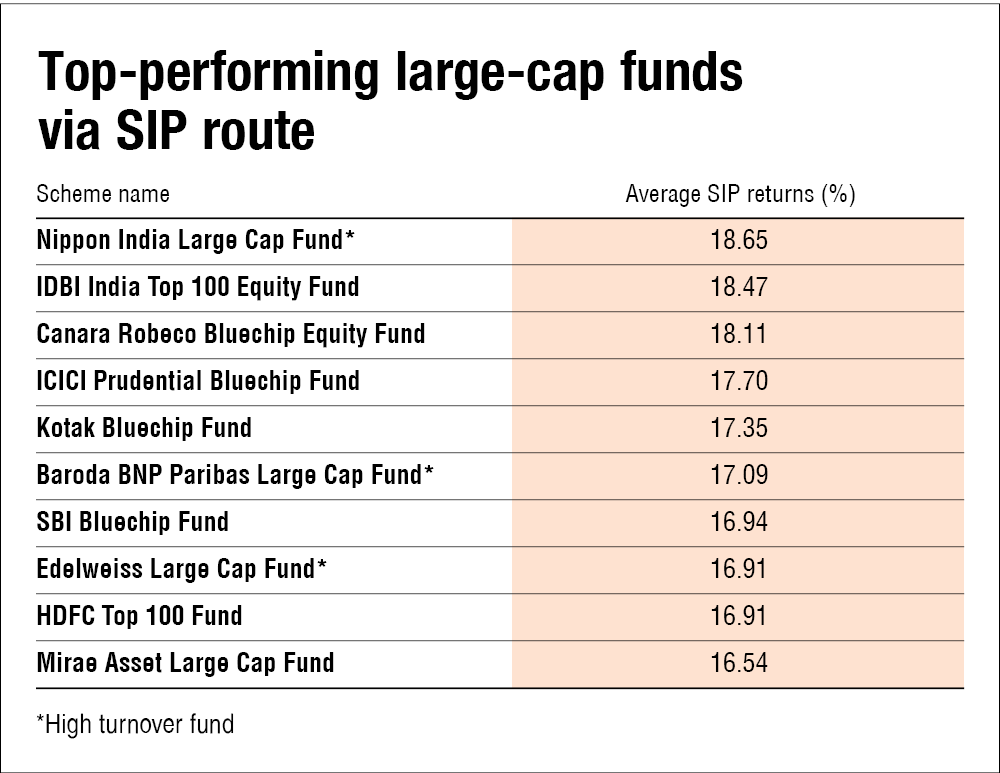
Top-performing large-cap funds via SIP route
Suppose you started an SIP at the start of 2018 and have remained invested, you will find that seven of the top 10 funds followed the buy-and-hold strategy.
Interestingly, the table is topped by Nippon India Large Cap Fund, which can be viewed as a 'high turnover fund'. But if you look at their portfolio, you'd observe that most of their high-performing stocks have been held for three to almost five years. A few heavyweight stocks they have held for nearly five years include Infosys, Tata Consultancy Services, Reliance and State Bank of India.
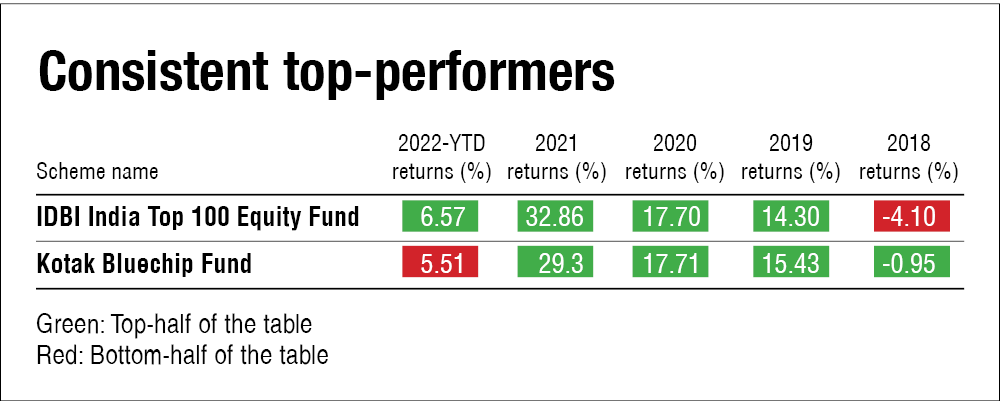
Consistent top-performers
No large-cap fund made it in the top-half of the best performers table for all five years.
However, two funds with a buy-and-hold strategy were among the standouts in four of the five years.
High turnover funds are conspicuously missing from this table.
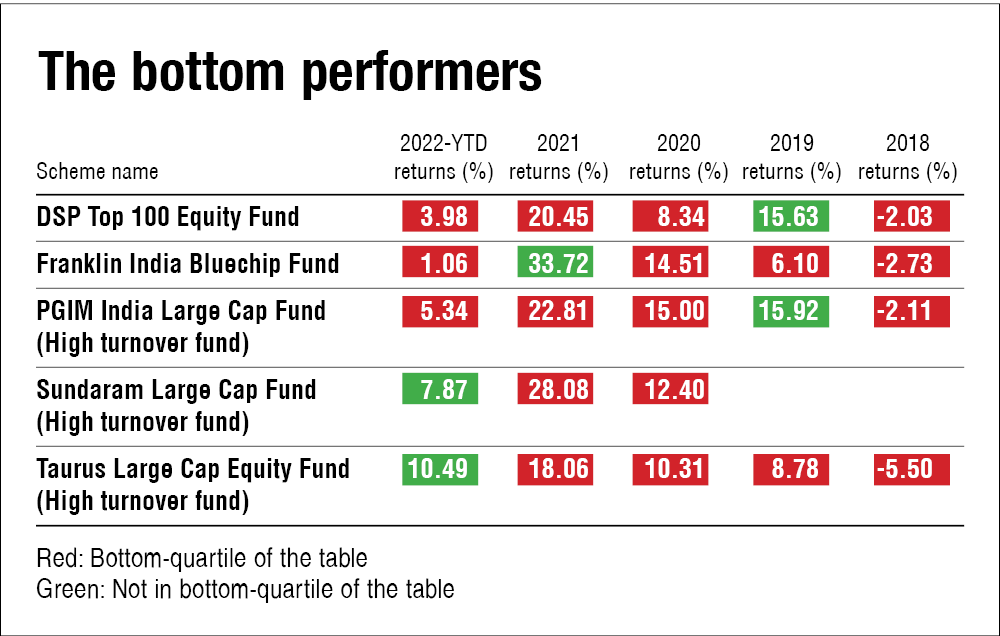
The bottom performers
At the opposite end of the spectrum, a few large-cap funds almost always found themselves at the bottom.
A total of five funds were in the bottom quartile for all but one year. Of these, three were funds with a high turnover ratio.
Our take
Even if you consider the top-performing funds through a lump sum route since the start of 2018, there'd be a 6-4 verdict in favour of large-caps funds that follow the buy-and-hold strategy. In other words, the more patient funds have usually outdone those that frequently chop and change their stock holdings in their relentless pursuit of generating alpha.
Put simply, buy and hold of quality stocks has been a time-tested strategy for long-term investing, and looks like it still holds true.
Suggested read: Equal-weighted vs market cap-weighted index fund: Which is better?
Disclaimer: This content is for information only and should not be considered investment advice or a recommendation.
For grievances: [email protected]
Ask Value Research 
 New episodes every Friday








 New Process Alert
 Seems like you've uploaded a wrong QR code. Please upload the QR code downloaded from MF Central platform.


