 Widely read:



Risk-o-meter tells you the risk level of a mutual fund and helps you make better investment decisions by comparing it with other funds that fall under the same category.

As you can see, the risk levels of mutual funds are categorised as Low, Low to Moderate, Moderate, Moderately High, High, and Very High.
How the risk level is assessed
Risk grades are assessed based on a mutual fund's underlying securities. Put simply, it depends on what kind of stocks or bonds are owned by that particular mutual fund.
How an equity fund is assessed
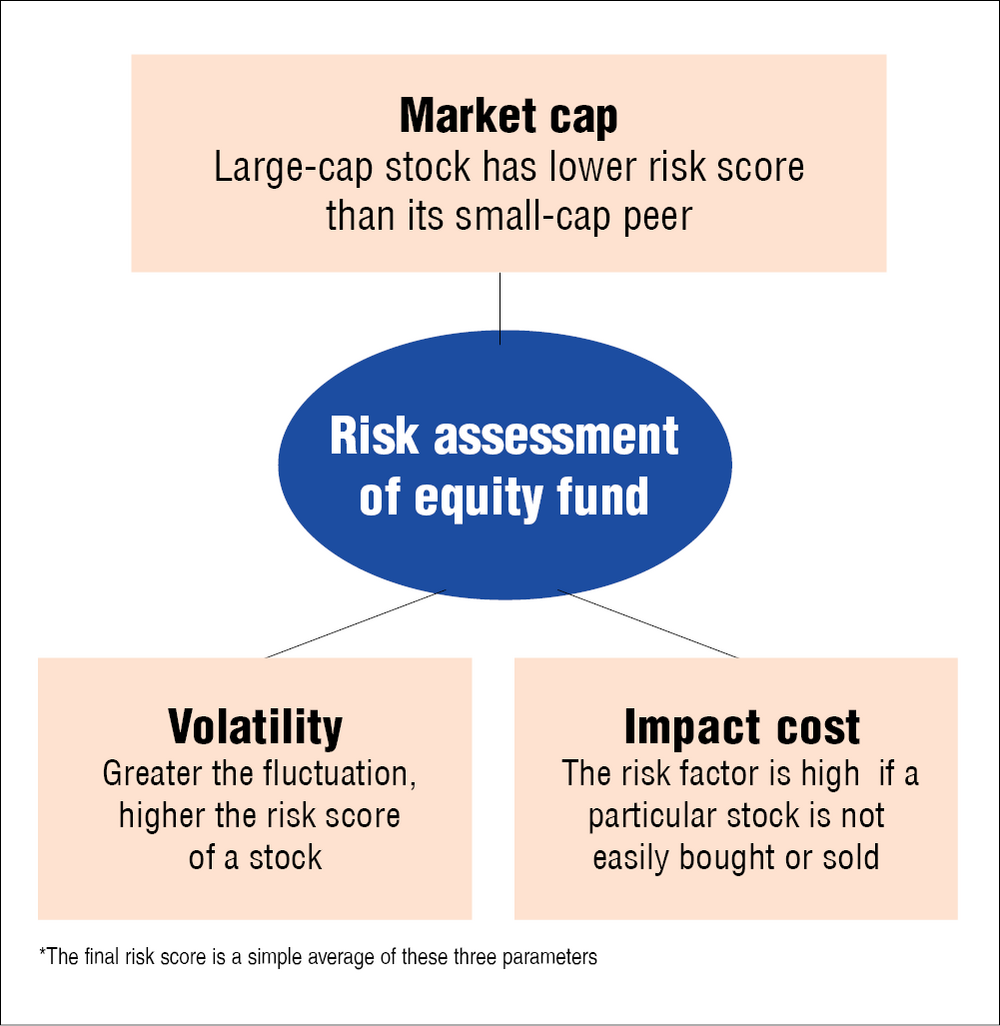
Are there any limitations?
We see that most equity funds have been assigned a standard 'Very High' risk without considering the fund's basic characteristics, which can mislead you.
For instance, a small-cap fund is far risky than a passive large-cap fund, but the risk-o-meter fails to capture the difference in risk levels.

However, risk-o-meter is relevant for debt funds
Because its criteria is well-equipped to highlight the risk signals in a debt fund's portfolio.
So, let's look at the criteria that examine the risk level of every single debt fund.
The risk-o-meter is updated every month. Should you monitor it constantly?
Ever since mutual fund houses were asked to disclose the risk-o-meter every month, investors have been receiving frequent emails with updates, if any.
While the aim was to ensure investors stay up-to-date with their fund's portfolio, we noticed (based on the visibility from portfolio disclosures) that many-a-time these changes were too subtle and academic.
For instance, we noticed that even a minor breach of the portfolio duration could prompt a change in the interest risk score and hence, trigger a change in the overall risk-o-meter status.
However, this may not necessarily mean any big shift in the fund's strategy; therefore, you shouldn't worry too much about the risk-o-meter notifications.
Having said that, you should be cautious if you notice a significant change in your fund's risk-o-meter.
Suggested read: What the PRC matrix tells about fund houses
This article was originally published on December 12, 2022.
Disclaimer: This content is for information only and should not be considered investment advice or a recommendation.
For grievances: [email protected]
Ask Value Research 
 New episodes every Friday






 New Process Alert
 Seems like you've uploaded a wrong QR code. Please upload the QR code downloaded from MF Central platform.


