




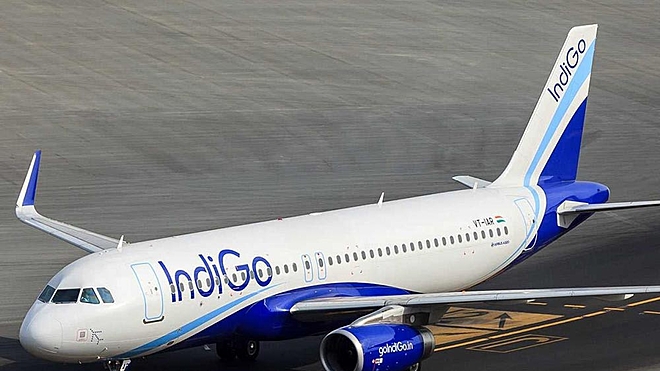
Now that the IndiGo inter-promoter fight is out in the open, it looks pretty inevitable that such a day would come. Of course, lots of things look inevitable only after they have happened but now that it's all out in the open, it's hard to see how this could have been avoided. Someone who owns 37 per cent of a very valuable business without any control wouldn't sit by permanently, especially if that person is from that industry and comes with a track record of running businesses well.
What makes it worse is that the 37 per cent share that Rakesh Gangwal holds is probably worthless in terms of realisability of its humongous 2.8 billion dollar value. Hypothetically, if Gangwal was to give up on IndiGo and want to sell out, why would anyone pay such a large sum of money for a stake that seems to be worth zero percent in terms of how much influence it carries on the management of the airlines? All that stake delivers is a 37 percent share of the future dividend stream that IndiGo may yield. That's just a pittance compared to its apparent market value.
When news first came of the letter that Gangwal had written to SEBI, most shareholders' and investors' thought was that this was something that would get sorted out. Against the backdrop of the 15%+ decline in the stock price, the commonest initial reaction was that surely if everyone involved could sit down across the table with the interests of the business at heart, some via media could be worked out. However, this goody-goody view ignores reality. This sit-across-table would surely have been tried many times. Things have come to pass precisely because none of that worked out.
There's a flipside too--many of the most valuable contributions of Rahul Bhatia and his group of people to the initial success of this business cannot be listed out in public. Let's be realistic. Back when IndiGo started, the core competence required to start an airline in India was to manage the government, and here I'm not using the word 'manage' in the corporate sense of the word. IndiGo's success has come about because uniquely among India's privately airlines, it's bosses were good at managing in both senses of the word, unlike say, Naresh Goyal, who turned out to be good at only one. For years now, any number of well-informed people in Delhi would tell you all kinds of stories about why IndiGo was such a well-connected airline. Maybe something has changed there, and maybe some of the past connections have become a liability now, but that's just speculation. It's possible that the oddities embedded in IndiGo's ownership structure are a reflection of such unmentionables but the past is now past.
The hard fact is that this is a large and important business with a substantial public ownership, and if it fulfils its potential, it has a huge future on a global stage. Unfortunately, it does look like that there's going to be a battle at its heart. Perhaps it's for the better that all this gets sorted out now, when IndiGo is a Rs 50,000 crore company rather than later when it could be many times that size.
Of course, the shareholders will be on tenterhooks while the battle is being fought but then, whoever said that equity investing was dull.
Ask Value Research 

 New episodes every Friday

 New Process Alert
  Seems like you've uploaded a wrong QR code. Please upload the QR code downloaded from MF Central platform.


