


A company should ideally show its generosity while paying dividends to investors. When it is generous to its 'related parties' and lends huge amounts of shareholders' wealth to them, investors should take note of it. Related parties are in relation to the company in question but don't make a part of the company's consolidated statement. For instance, a company's director would be termed a related party. Similarly, two subsidiaries of a parent are related parties for each other.
Not all advances made to related parties are bad. Only a closer scrutiny would reveal the clear picture. For example, one has to see the purpose of the loan, how much interest rate is charged, among other things, to ascertain whether these loans make any business sense to the lending company.
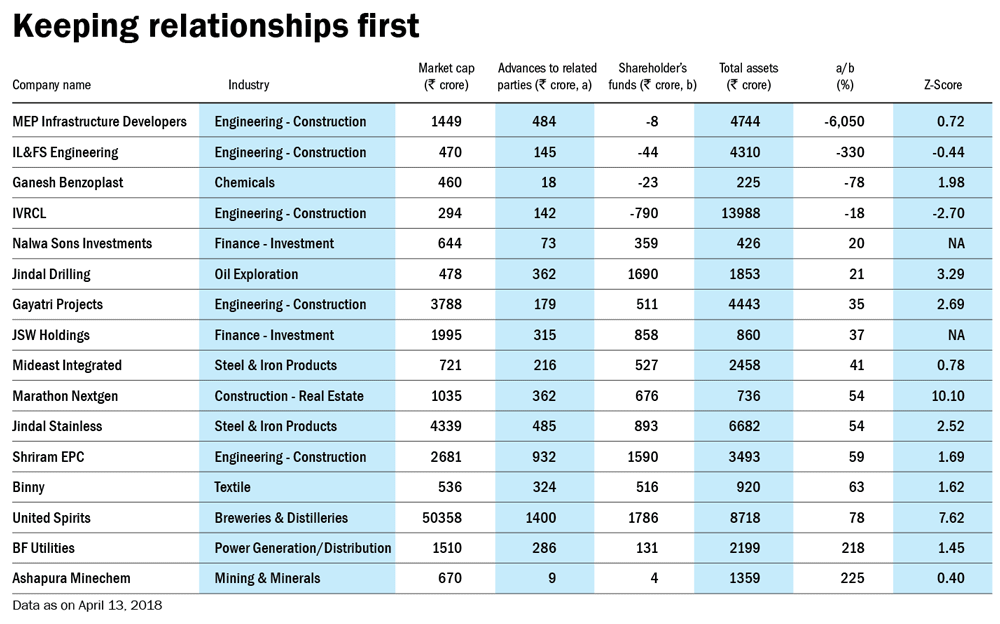
Take a look at the accompanying table, which mentions some 'large-hearted' companies that have offered advances of more than 20 per cent of their equity to related parties. Interestingly, some of them even have negative equity. In some cases, advances are more than 100 per cent of equity capital. If the company faces any default on the advances offered, that may significantly impact its financial position and may cause financial distress to its shareholders. What's more - their poor Z-Scores suggest their frail financial condition. The Z-Score is a metric of solvency. A score below three signals an inability to meet its financial obligations.
In general, investors should be particularly wary of companies that offer large loans to their related companies, especially at rates much below the market rate.
Ask Value Research 

 New episodes every Friday



 New Process Alert
 Seems like you've uploaded a wrong QR code. Please upload the QR code downloaded from MF Central platform.


