 Widely read:



About the company
Future Supply Chain Solutions (FSC) is a third-party logistics player. Integrated logistics services come under its ambit and the company primarily serves Kishore Biyani-promoted Future Group entities. It has three segments: Contract logistics, express logistics and temperature-controlled business. Contract logistics, which involves supply chain management and warehousing, and express logistics, which is related to time-sensitive deliveries, formed 70 and 22 per cent of its revenues in FY17 respectively. Temperature-controlled business was launched in 2016 for transportation of perishable food items in special vehicles and contributed 6 per cent to FSC's FY17 revenues. The company hires vehicles from third parties for its contract & express logistics business while for its temperature controlled business, it owns the specialized vehicles.
A Brief on Promoter's history
Future Supply Chain Solutions is part of Kishore Biyani promoted Future Group. The Group traces back its history to 1987 as garment manufacturer. It got listed on stock exchange in 1991 and expanded into retailing of fashion garments in big stores. In early 2000, the group expanded into other retail segments setting up Big Bazaar and Food Bazaar. Between 2005 and 2010, the group diversified into various businesses like insurance, capital advisory, real estate through joint ventures and acquisitions increasing its debt levels alarmingly. Since then, the group has had a number of demergers, which lead to restructuring and renaming of its entities. The Group currently has Future Enterprises, Future Retails & Future Consumers Limited as its major listed companies.
Pros
FSC's revenues have grown modestly at 10 per cent CAGR since 2012, but this is accompanied by higher operating margins of 13 per cent (five-year average). Incidentally, it is 4 per cent for its peers Mahindra Logistics and Tiger Logistics. The company's client base excluding Future Group entities is also well diversified across sectors, with no sector contributing more than 24 per cent to its FY17 revenues. This is unlike its peers (they have higher dependence on the automotive sector).
Cons
Though the company is growing and has plans to increase its warehousing space and vehicles for temperature-controlled business, it will not receive any proceeds from the IPO. This means that the company will have to rely on external debt to fund its expansion going forward. The company is dependent on Future Group entities for bulk of its revenues and this dependency has increased over the last three years. For FY17, the revenues from Future Group entities contributed 63 per cent to its total revenues (47 per cent in 2015). The company is also unable to collect money on time from its customers as its receivable days are 141 (peer average is 62 days) and accounts receivable as a percentage of the revenues stands at 39 per cent (peer average is 19 per cent) as on March 31, 2017. Its five-year average ROCE of 15 per cent is much below that of its peers due to higher capital employed. Its five-year average ROE of 2 per cent is due to losses in FY13 and FY14.
Who's selling?
This is an offer for sale of Rs 650 crore at the higher band (no fresh issue), with Rs 520 Crores of the issue proceeds going to Griffin Partners (investor) and Rs 130 Crores to Future Enterprises Limited (promoters). Post issue promoter holding would come down from 57% to 52% while Griffin Partners holding's would come down from 34% to 15%.
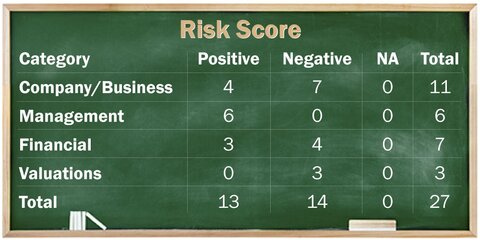
Size of the issue: About Rs 650 crore at the higher end of the price band.
Additional details
Offer period: December 6-8, 2017
Price band: Rs 664-660 per share
Revenue (FY17): Rs 561 crore
Profit after tax (FY17): Rs 46 crore

Company/Business
1. Are the company's earnings before tax more than Rs 50 crore in the last 12 months?
Yes, the company's earnings before tax was Rs 58 crore in FY17.
2. Will the company be able to scale up its business?
Yes. As more companies look for specialised logistics solutions, integrated logistics player would benefit. Furthermore, government plans like Bharat Mala and logistics park would create growing opportunities for the company. Post-GST, companies are restructuring and optimising their supply chain function with the help of integrated logistics player like Future Solutions, thus creating long-term business relationships.
3. Does the company have recognisable brand/s truly valued by its customers?
No. Logistics is a fragmented business where cost and efficiency plays a key role. The company is yet to prove its ability to get business for non-promoters client.
4. Does the company have high repeat customer usage?
Yes. Logistics services are generally of repeat nature only, but this company's majority customers are its group companies only,who are bound to give repeat orders.For non-promoter clients which only form 37% of its FY17 revenues the repeat pattern is not that significant.
5. Does the company have a credible moat?
No. The company has no competitive advantage in its operations yet.
6. Is the company sufficiently robust to major regulatory or geopolitical risks?
No. As a logistics player, the company is impacted by regulations (like GST) related to the movement of goods. Any significant change in such laws can affects its operations. The company's business partners can get affected by changes in the laws related to emissions and oil price deregulation.
7. Is the business immune to easy replication by new players?
No. A new player with innovative logistics solution or better pricing can take business away from Future Supply Chains Limited.
8. Is the company's product able to withstand being easily substituted or outdated?
Yes. The company provides logistics services ranging from transportation to warehousing. The need to transport and store goods is unlikely to be easily substituted or go out of date.
9. Are the company's customers devoid of significant bargaining power?
No. The company faces intense competition from private unorganised players as well as integrated multinational companies, giving its customers plenty of choice.
10. Are the company's suppliers devoid of significant bargaining power?
No. The company relies on truck owners for completion of its operations. If they find rates provided by FSC unattractive, they will deploy their vehicles elsewhere and exercise their bargaining power. For warehouses, though, the company has long-term contracts with the owner and the contract can be cancelled anytime by the parties involved.
11. Is the level of competition the company faces relatively low?
No. The logistics industry is fiercely competitive with many unorganised private players and international companies.
Management
12. Do any of the founders hold at least a 5 per cent stake in the company? Or do promoters hold more than 25 per cent stake?
Yes. Future Enterprises Limited hold 56 percent of the shares as on September 30, 2017. Promoter hold around 48 per cent of Future Enterprises Limited. This turns out to be around 27 per cent beneficial ownership of Future Supply chains Limited.
13. Do the top three managers have more than 15 years of combined leadership at the company?
Yes, the top three managers have more than 15 years of combined leadership.
14. Is the management trustworthy? Is it transparent in its disclosures, which are consistent with SEBI guidelines?
Yes, we have no significant reason to believe otherwise. However, in the past, the promoters have settled cases related to inadequate disclosures to Registrar of Companies amounting to Rs 12 lakh.
15. Is the company free of litigation in court or with the regulator that casts doubts on the intention of the management?
Yes, we have no significant reason to believe otherwise.
16. Is the company's accounting policy stable?
Yes, we have no significant reason to believe otherwise.
17. Is the company free of promoter pledging of its shares?
Yes. No promoter holding is pledged.
Financial
18. Did the company generate current and five-year average return on equity of more than 15 per cent and return on capital of more than 18 per cent?
No. The company's average five-year ROE and ROCE were 2 and 15 per cent respectively. However, this year the ROE is 17 per cent and ROCE is at 21 per cent.
19. Was the company's operating cash flow positive during the previous year and at least four out of the last five years?
Yes, the company's operating cash flow was positive in FY17 and it was positive in four out of the last five years.
20. Did the company increase its revenue by 10 per cent CAGR in the last five years?
Yes, the company's revenue increased at a CAGR of 10 per cent in the last five years.
21. Is the company's net debt-to-equity ratio less than one or is its interest coverage ratio more than two?
Yes. The net debt-to-equity is 0.05x as on September 30, 2017. The interest coverage ratio stands at 12.4x for 2017.
22. Is the company free from reliance on huge working capital for its day to day affairs?
No. The company lags in collecting money from its customers which is suggested by its receivable days of 141 days. It pays its suppliers (warehouse and vehicle owners) in around 95 days. Thus, it has to manage its operations by its own money for around 46 days (cash conversion cycle), which places reliance on working capital.
23. Can the company run its business without relying on external funding in the next three years?
No. The company will expand its temperature-controlled business by buying refers (vehicles) which would require capital outlay. It also has plans to increase its warehouse capacities, which will further require it to raise funds.
24. Have the company's short-term borrowings remained stable or declined (not increased by greater than 15 per cent)?
No. The company's short-term borrowings have increased to Rs 52 crore as on September 30, 2017 from NIL in March 31, 2017. The increase was primarily for funding day to day operations.
Stock/Valuation
25. Does the stock offer operating earnings yield of more than eight per cent on its enterprise value?
No. The post-IPO operating earnings yield of the company will stand at about 2 per cent at its current price band.
26. Is the stock's price-to-earnings less than its peers' median level?
No. The median P-E of its peers is 44, while P-E of Future Supply Chain Solutions is around 59 at its current band.
27. Is the stock's price-to-book value less than its peers' average level?
No. The average P-B of its peers is 4, while PB of Future Solutions is around 8 at its current band.
Disclaimer: This content is for information only and should not be considered investment advice or a recommendation.
For grievances: [email protected]
Ask Value Research 
 New episodes every Friday




 New Process Alert
 Seems like you've uploaded a wrong QR code. Please upload the QR code downloaded from MF Central platform.


