 Widely read:


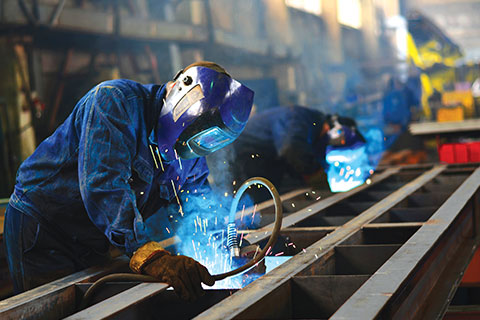
There are some truths in economics that go virtually unchallenged. One of them happens to be how countries move from being developing countries to becoming developed countries.
As Ruchir Sharma writes in The Rise and Fall of Nations: Ten Rules of Change in the Post-Crisis World, "The early steps have always involved manufacturing goods for sale to foreigners, not to locals. In a study of 150 emerging nations looking back fifty years, the Emerging Advisors Group, a Hong Kong-based economic research firm, found that the single-most powerful driver of economic booms was sustained growth in exports, especially in manufacturing."
Hence, manufacturing exports are basically what has helped countries move out of poverty over the last 50 years. And this includes a whole host of countries in South East Asia as well as countries like Japan, Taiwan, South Korea and China.
In fact, success at manufacturing exports came to these countries because of an industrial revolution. As Dani Rodrik writes in a research paper titled 'Premature Deindustrialisation', "It was the industrial revolution that enabled sustained productivity growth in Europe and the United States for the first time, resulting in the division of the world economy into rich and poor nations. It was industrialisation again that permitted catch-up and convergence with the West by a relatively smaller number of non-Western nations - Japan starting in the late 19th century, South Korea, Taiwan and a few others after the 1960s."
And given this success, it isn't surprising that countries which are still poor look towards manufacturing success to deliver the economic growth necessary to pull them out of poverty. In fact, this is precisely the idea behind the Make in India programme launched by the Narendra Modi government to turn India into a manufacturing powerhouse.
The question is how effective is the strategy in this day and age. Can manufacturing expertise turn around the fortunes of a country? Or is there a little more to it than just that?
As Ryan Avent writes in his book The Wealth of Humans: Work and its Absence in the Twenty-First Century, "In America... manufacturing employment peaked as a share of total employment in the early 1940s and declined at a remarkably steady rate thereafter... Remarkably, manufacturing now accounts for less than 10 per cent of American employment."
In the case of America and Western Europe, the decline of the manufacturing sector as a proportion of the economy and in terms of the number of people employed has been one of the reasons why countries have become so dependent on low interest rates and excessive debt for creating economic growth. Nevertheless, the decline of manufacturing only started once these countries had reached a certain stage of development and had been pulled out of poverty.
But that doesn't seem to be happening in what is now called the emerging world. As Avent writes, "In the emerging world, de-industrialisation is occurring at even earlier stages of development - an ailment economist Dani Rodrik has labelled 'premature de-industrialisation'. When manufacturing's share of total value added in the South Korean economy peaked in 1988, real income per person in South Korea was about $10,000 or just less than half the American level at the time. When that same peak was reached in Indonesia in 2002, its real income per person was roughly $6,000, or about 15 per cent of the American level. And when India reached that point in 2008, its real income per person was only about $3,000 or about 6 per cent of the American level of income at that time."
Rodrik writes something similar where he says, "Industrialisation peaked in Western European countries such as Britain, Sweden, and Italy at income levels of around $14,000 (in 1990 dollars). India and many sub-Saharan African countries appear to have reached their peak manufacturing employment shares at income levels of $700." The broader point is that countries are reaching their peak industrialisation levels at lower levels of income. This has happened to India as well. In fact, there is a significant variation between different Indian states.
Only in one Indian state has the registered manufacturing share of the state's GDP crossed the 20 per cent level. This was Gujarat in 2011. As Amrit Amirapu and Arvind Subramanian point out in Manufacturing or Services? An Indian Illustration of a Development Dilemma, "Gujarat has been the only state in which registered manufacturing as a share of [the] GDP surpassed twenty per cent and came anywhere close to [the] levels achieved by the major manufacturing successes in East Asia."
In fact, other states like Maharashtra and Tamil Nadu, which are known to be manufacturing heavyweights, achieved their peak in 1986 and 1990, respectively. At its peak, the registered manufacturing in Maharashtra was at 18.9 per cent of the state's GDP. In the case of Tamil Nadu, it was at 18.1 per cent.
Registered manufacturing in Haryana peaked in 2003 at 17.3 per cent. For West Bengal, it peaked at 12.3 per cent in 1982. Among the recent peaks are Himachal Pradesh, at 16.4 per cent in 2011, and Madhya Pradesh, at 12.5 per cent in 2008. Hence, registered manufacturing as a share of the state GDP has been going down for most states (with the exception of Gujarat and Himachal Pradesh), with the peak having been reached many years ago.
Let's take the example of Uttar Pradesh, India's most populous state. As the Economic Survey of 2015-2016 points out, "It reached its peak share of manufacturing in output at 10 per cent of [the] GDP in 1996 at a per capita state domestic product of about $1,200 (measured in 2005 purchasing power parity dollars). A country like Indonesia attained a manufacturing peak share of 29 per cent at a per capita GDP of $5,800. Brazil attained its peak share of 31 per cent at a per capita GDP of $7,100. So, Uttar Pradesh's maximum level of industrialisation was about one-third that in Brazil and Indonesia; and the decline began at 15-20 per cent of the income levels of these countries."
And unless a state as big as Uttar Pradesh sees some serious manufacturing activity, how can India hope to create any sort of equitable economic growth?
All this leads to a more fundamental question: Does manufacturing prowess still guarantee economic growth? And if not, what are the other things that the Indian government should be betting on?
This article was originally published on March 03, 2017.
Disclaimer: This content is for information only and should not be considered investment advice or a recommendation.
For grievances: [email protected]
Ask Value Research 
 New episodes every Friday


 New Process Alert
 Seems like you've uploaded a wrong QR code. Please upload the QR code downloaded from MF Central platform.


