


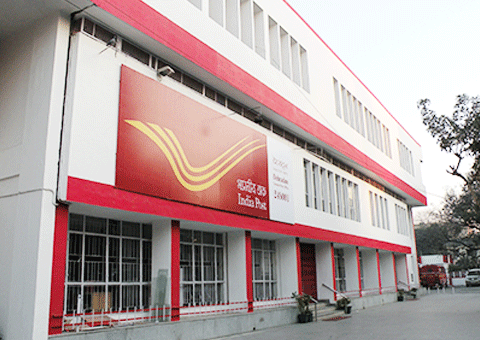
No matter how many of the private sector licensees drop out, the postal department's payment bank seems well on its way to start operating in just about a year from now. It's also a certainty that the postal payments bank will have a huge reach among a part of the populace that is yet unbanked. This is a great opportunity but a recent statement by Minister Ravishankar Prasad indicates that this is also a great risk. Let's see where the risk comes from.
Payment banks, as most of us would already know will be a limited kind of bank which can take deposits, issue cheque books, facilitate payments, issue debit cards but are limited to taking no more than ₹1 lakh from each customer. What they can't do is to give loans of any kind to customers--they must keep 75 per cent of their money in government securities and the rest as deposits in normal banks.
Since public postal services began some 400 years ago, post offices across the world have provided a variety of services apart from mail-related ones. These have ranged from food, medicines and tobacco to boarding and lodging for travellers. However, the non-postal service most commonly offered has been that of savings and deposits, sometimes extending to being a proper bank. For example, the US post office ran a full-fledged Postal Savings Service from 1911 to 1967.
The Indian Post Office's has been running banking services since 1882. From the customer's' perspective, the post office has effectively been a bank for 134 years now. Customers can choose from savings deposits, fixed deposits, recurring deposits, PPF, Senior Citizens Savings, National Savings Certificates and many other financial products. They can get cheque books and if they have accounts in one of the 25,000 branches that have a live connection to the central system, they can get ATM-cum-debit cards too. The postal department's reach is unrivalled.
Last week, according to news reports, while describing the Postal Department's bank plans, Minister Prasad said that the government has cleared a proposal for the bank to have 650 branches. The plan is to eventually use the entire force of postal workers as mobile access points for the bank. Payment banks will be allowed to sell third party financial services so clearly, this is an amazing opportunity for anyone who'd like to get access to this vast, unserved market.
He was also reported as having said that '60 international consortiums' were interested in working with India Post's payments bank to supply third party insurance and banking products. "50 top names are here including Barclays and others. Talks are on and a huge matrix will be created". This enthusiasm is understandable. After all, we generally take it for granted that the injection of private and specially foreign expertise is generally a good thing for the market for any kind of product and its customers.
However, the question that he should probably be asking is whether this is necessarily true in financial products. Anyone who is aware of what insurance companies and their salesmen in private banks have done to customers would find it impossible to share the Minister's enthusiasm. Banks have used the blind confidence that customers have in them to push products that have earned them the maximum commissions while emptying customer's pockets. So far, IRDA and RBI have been unable or unwilling to curb these kind of offensive sales practices.
Therefore it's hardly a surprise that '50 top names are here', lining up at the postal department. Mr Prasad's new bank can deliver to them a vast new generation of victims that must have the 50 salivating. Financial services are not like telecom, and freely allowing private and foreign players to replicate their previous rapacious conduct on a new, poorer and less literate market would be disastrous. What these 50 are hoping for must not be allowed to happen. Since the time that payment bank licences were given out, the government itself has launched schemes that cover basic savings and insurance requirements. For a long time to come, the postal payment bank should focus on these rather than delivering its customers to those adept at fleecing customers.
Ask Value Research 

 New episodes every Friday


 New Process Alert
 Seems like you've uploaded a wrong QR code. Please upload the QR code downloaded from MF Central platform.


