




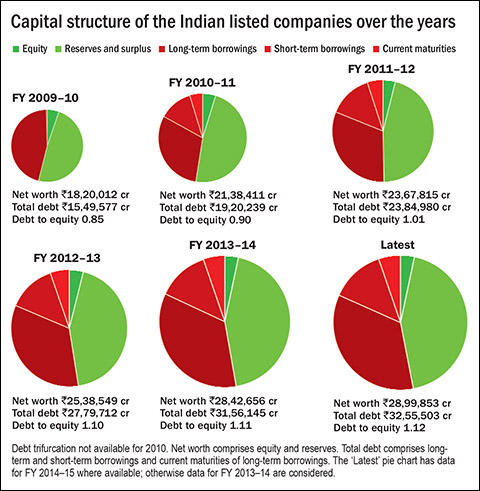
Indian corporate debt is at a record high. Not only is the absolute amount of debt of the Indian listed companies very high, the debt-to-equity ratio has also gone above 1.12. In financial year 2007, the debt-to-equity ratio was 0.77. It was 0.83 at the time of subprime mortgage crisis of 2008. The current debt-to-equity ratio means that the combined debt of all the listed companies in India is more than their aggregate net worth now. The ballooning debt level is a reason for worry now, especially for the companies which are highly leveraged. Despite many instances of restructuring and stake sales by debt-laden infrastructure companies last year, the overall debt level of the listed companies has still gone up to a new level.
The reason behind rising debt to equity is that companies' profits are not growing fast enough to add to their reserves. On the other hand, the equity market has remained choppy, so investors have stayed away from the primary market, making it difficult for companies to raise new equity. These factors have led companies to borrow more to pay the bills for the revenue and capital expenditures. Their expansion has come at the cost of huge interest. The anticipated recovery is also taking more time to happen, adding to their frustration.
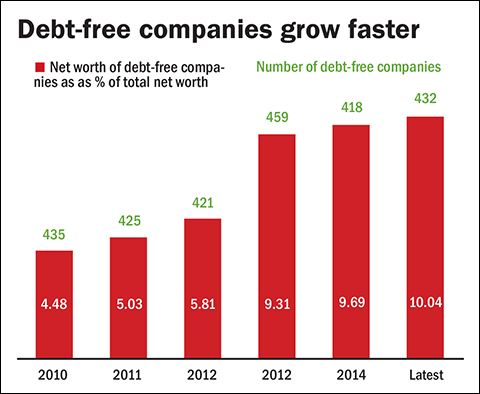
The lesson for the stock investor is: Invest only in companies with low debt levels or the companies which generate healthy profits to pay off the interest and still give high returns on shareholder's equity. In the past five years, debt-free listed companies have been able to increase their net worth more than the debt-laden companies. The combined net worth of the debt-free companies contributed to around 5 per cent of the total net worth of all the listed companies in 2010. Now it accounts for 10 per cent. However, the number of debt-free companies has almost remained the same.
However, this analysis based on aggregate debt may not be true for individual companies as the numbers are biased in favour of large figures in the list. Still, it gives a rough sketch of what to avoid going ahead.
Ask Value Research 

 New episodes every Friday


 New Process Alert
  Seems like you've uploaded a wrong QR code. Please upload the QR code downloaded from MF Central platform.


