


There are several signs that things will fall back in place says Raamdeo Agrawal, Joint Managing Director at Motilal Oswal Financial Services in this interview with Chirag Madia, where he stresses that the worse is over for the markets and things can only get better soon
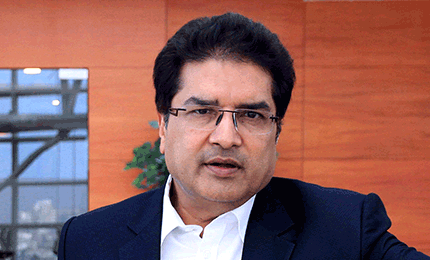
Is the current situation in the equity markets unique? When was the last that we experienced such a situation?
I don't think there is anything unique in the markets. Everyday is a different market; today's opinion in today's market, tomorrow's opinion is tomorrow's market. With so much news flowing around, global and local factors and internet; I mean there is no same day. If 2001 was different, 2011 was completely different, and so for me everyday is a different day. But it's
a very normal market where investors come to buy and sell
and where some sectors do well while others don't perform up
to the mark.
So I don't find it any extraordinary situation, but investors have withdrawn from the markets. But I must say that, we have a big event in the next two months (general elections) and clearly there is lot of euphoria and talk of policy change and its impact on the markets.
We have seen some participation from retail investors in recent past, but it seems foreigners are much more excited than retail investors. Currently there are emotional outbursts in the market, but that doesn't change corporate profits in any way. There are many other factors that contribute to the corporate profits. Ultimately, corporate profits and their growth or de-growth is the most important thing in the market, but opinions keep changing. Today the opinion is that National Democratic Alliance (NDA) led by Narendra Modi might come to power and all of a sudden there will be a boom in corporate profits. If that happens their euphoria is justified if it doesn't happen then once again the markets will find its own level.
Do you believe that the economy has rebounded?
I think that the economy is bottoming out at current levels as there are signs of projects getting cleared, easing inflation, current account deficit (CAD) coming under control and a stabilising currency. Even the recovery in the global market is very powerful which is good for India. I think things are falling in place, but we are yet to see a pick up in the investment cycle. Even now, cost of money remains high, some projects are not taking-off and there are lots of policy issues in the power sector. Power is one sector where there are many projects but there is no clarity about the tariffs and lots of projects are stuck. Likewise, infrastructure projects are stuck because there are no bidders as they are all leveraged. Issues on land and environment are yet to be addressed successfully. I think it will take another three-four quarters for the economy to do a meaningful bounce back.
How important are the election results for the markets in the long run?
I would say its more like a change of management in any company and similarly elections are of significant importance for the country. I don't think personalities are important here, the most vital aspect is to look at the quality of the mandate. We have seen how the Congress suffered because of a coalition government where lots of powers were taken away by coalition partners. Till the elections gets over we will continue to see such emotional outburst, but after that everything will depend on policy announcements and governance.
I would say that, whether it's National Democratic Alliance (NDA) or United Progressive Alliance (UPA), they should come with a clear majority. We will be in a much better situation if the regional parties have lower bargaining power. Such a position will lead to very forceful policy decisions by the government and investments will start happening.
We might also witness a turnaround in the corporate performance. There is a clear opinion in the market that, NDA led by Narendra Modi might come to power with a thumping majority. Some people say that, if they get 300 plus seats then a tsunami of money is waiting to enter Indian markets. If policy reforms are taken up by the next government then it will be positive for the markets. But if in some case that scenario doesn't materialise and we get some fractured mandate then we might witness sell off by foreign institutional investors (FIIs).
Should any type of stocks or sectors be a complete no-go, according to you?
Our investment philosophy is 'QGL' which represents buying quality stocks with growth and longevity. Basically we need such quality companies to grow at reasonable rates. Next, we look at growth which should be consistent. Finally, there should be longevity in the business. So QGL becomes the foundation and that is the crux for our company selection. But suppose once these three qualities are met, but the stocks are not available very cheap; we buy those that are available at a reasonable price. For us there is nothing like staying away from one stock or any particular sector. We can buy anything and everything if its meets our 'QGL' criteria.
Recent SEBI guidelines have asked fund houses to hike their net worth to Rs 50 crore? What is your reaction to this? Does this change your plans in any way?
I think they are trying to avoid small time players in the mutual fund industry and I believe it's a step in the right direction. But, new guidelines don't change our plan in the asset management business. Our net worth is somewhere around Rs 20 crore and we will hike it to Rs 50 crore as per the guidelines in the next three years.
With all your experience, what advice would you give for a young investor who is just getting interested in equities? How does one start learning? How did you start?
First thing I would suggest to them is that, they should not get too much worried about the daily market movements. One has to realise that, they will make money if the company makes it, so it is always important to look at the quality of the company before investing. One shouldn't go too much in the names of company but each company should be evaluated on its own merit. I would say that 99 per cent of the time should be devoted in understanding the business, looking at its long term prospects, analysing balance sheets and the quality of management.
If these criteria are met then only should they look at the valuations. Till you don't understand the business, don't buy into any stock, even if their valuations are cheap. Investors should also read a lot. I read six newspapers (five domestic and one international) every morning. Starters should also look at books like, 'One Up on Wall Street' by Peter Lynch, 'Common Stocks and Uncommon Profits' by Philip Fisher and 'Intelligent Investor' by Benjamin Graham. They should also look at reading the annual letters of Warren Buffett.
Even today we are students in this industry constantly reading and trying to understand businesses. I and Motilal Oswal started this organisation way back in 1987 with zero capital and from there we have built up this institution. We entered this industry because we wanted to make money and we found that the stock markets are the best way to make money. Also being Charted Accountants helped us because we understood numbers and it required no capital.
What kind of person should go in for equity mutual funds, and what kind should go for investing in equities directly?
I would say that each and every investor should have exposure to equities as it's the better asset class to beat inflation compared to traditional debt products. Young investors should invest for the longer term of 20-30 years, as short term market movements should have least impact on their investments. Once an investor enters the stock market, they should be good stock pickers and must possess ideas to buy undervalued stock. But if some investors are not good at picking the right company, then they should invest through mutual funds. Investors who are not even willing to take management risk should look at investing in index funds. In the last 30-35 years Indian index have given post tax return of 16.5-17 per cent which is very good. I believe that Indian indices are very bluechip indices and investors should invest in these.
Do you think retail investors will ever come back to equities like earlier times?
No they are not coming, but like each time when everything will look rosy they will enter the markets. They will come few months before the peak of the markets and again like always they will find themselves stuck when the markets start correcting. This story we have seen in the past and will continue to see in future also, nothing is going to change in the near future. Investors will keep learning from their mistakes, like I have learned from three 'boom and bust' cycle in my career. It's always better to book profits when the markets are at elevated levels and this is the lesson learnt in the markets. One thing is sure that the stock markets are the biggest 'spectacle' in the world and those who ran out will also come back with the same vigour. I am quite confident that, the number of retail investors coming back to the market will be higher than what we saw in the last many occasions.
One sees a lot of relative novices dabble in day trading in F&Os, and then getting their fingers burnt. What's your advice to people like that?
I can't give them advice because I myself have never invested through F&O. One should ask this question to speculators. Frankly speaking, for me there is nothing like good investment or bad investment. If anyone is good at doing something he should continue doing it. But as a layman they should never dabble in F&O, its better for them to stay away from equity markets but don't come to F&O by just not knowing anything. We have seen that most investors don't buy options instead they sell it. But they don't realise that by getting minimum premium they are exposing themselves to unlimited liabilities. Its a sheer irony in India that options are bought by foreigners and sold by retail investors.
Should investors watch economic and political macros at all? Should they focus on a bottom up approach?
No at all, they shouldn't look at any data points. Instead they should have complete faith in the optimistic future of India. They should focus more on fundamentals of a company than looking at economic and political macros. Having said that, they should be aware about the macro condition but their investment decisions should not be solely dependant on macro factors. They must follow the simple mantra of buying high quality companies at reasonable price and they will never regret their decisions. I believe that, 99 per cent of problems are because investors buy into low quality company. If investors buy superior quality companies, most of their problems would get solved. Likewise, the next step should take them to valuations and if it's too high they shouldn't buy and instead wait for the price to come to reasonable levels. If by any chance they can spot the opportunity at cheap levels, they are into a multi-baggers situation.
Many money managers across the globe look at investment strategies of well-known names like Warren Buffett, Peter Lynch, Philip Fisher or others. Have you ever done this?
Yes, we follow the strategy of Warren Buffett, but we have also learnt different investment approach from people like Peter Lynch and Philip Fisher. We have learnt how to look at cash flows, quality of the company, operating leverage and governance factors from reading books by these leaders. We have applied the knowledge from books to pick up the stocks.
Ask Value Research 

 New episodes every Friday


 New Process Alert
 Seems like you've uploaded a wrong QR code. Please upload the QR code downloaded from MF Central platform.


