




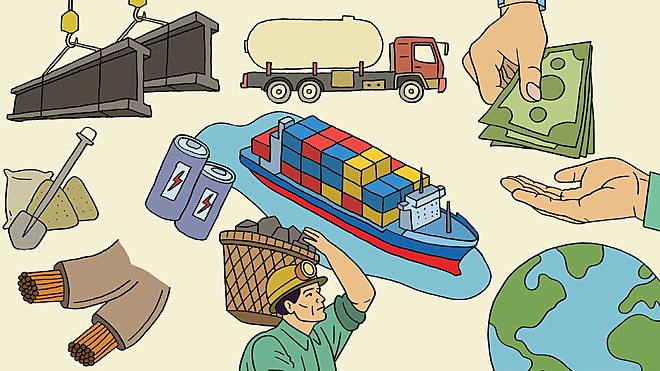
 Illustration: Anand Kumar
Summary: Commodity booms breed a particular kind of confidence — the numbers look strong, and questioning the story starts to feel unnecessary. But across steel, shipping and mining, the same expensive mistake keeps repeating. A look at why being right about the commodity has rarely been the same as making money from the stock.
Summary: Commodity booms breed a particular kind of confidence — the numbers look strong, and questioning the story starts to feel unnecessary. But across steel, shipping and mining, the same expensive mistake keeps repeating. A look at why being right about the commodity has rarely been the same as making money from the stock. Commodity booms create a particular kind of confidence. The facts look strong; the numbers keep improving and questioning the story starts to feel unnecessary. In 2007, the story was China building entire cities from scratch, steel demand doubling and copper heading to levels nobody had previously imagined. The data supported the thesis and after a few years, not many investors were spending much time thinking about what could go wrong. Today, the story revolves around broken supply chains, years of underinvestment and tight energy markets. The thesis has merit. The risk is assuming that today’s unusually strong conditions are permanent rather than temporary. That assumption, more than any accounting fraud, geopolitical crisis or interest rate cycle, has historically been the single most expensive mistake commodity investors make. The China story offers one of the clearest lessons in commodity investing. Between 2000 and 2024, China’s crude steel output grew from roughly 128 million tonnes to over one billion tonnes annually. China added more steel capacity in a single generation than most countries built across an entire century. Iron ore imports surged from under 100 million tonnes a year to over a billion tonnes. The cement numbers are even more striking: China consumed more cement between 2011 and 2013 alone than the United States consumed during the entire 20th century. That is not a typo. That is the scale of what the market was trying to extrapolate forward indefinitely. Mining projects across Australia, Brazil and Africa were sanctioned on the assumption that this trajectory would continue. The global steel industry collectively invested hundreds of bil
This article was originally published on July 01, 2026.

 New episodes every Friday











 New Process Alert
  Seems like you've uploaded a wrong QR code. Please upload the QR code downloaded from MF Central platform.


